

Are you struggling to find the right belt size for your drill press? Using the wrong belt can cause your machine to underperform or even get damaged.
But measuring the drill press belt doesn’t have to be confusing or time-consuming. You’ll discover simple steps to measure your drill press belt accurately, so you can keep your tool running smoothly and avoid costly mistakes. Keep reading, and you’ll learn how to get it right the first time.

Credit: www.reddit.com
Tools Needed
Measuring the drill press belt requires some basic tools. These tools help you get accurate measurements. Accurate measurements ensure the belt fits perfectly and works well.
Gathering the right tools before starting saves time. It also prevents mistakes during the measurement process. Here are the essential tools needed for measuring a drill press belt.
Measuring Tape Or Ruler
A flexible measuring tape works best for this task. It can wrap around pulleys and measure belt length easily. A ruler can work too, but it is less flexible.
String Or Thin Cord
Use string or thin cord to measure the belt path. Wrap it around the pulleys where the belt sits. Mark the length on the string to get the exact belt size.
Marker Or Pen
A marker helps mark the string or cord at the measurement point. This makes it easy to measure the marked length with a ruler or tape.
Caliper (optional)
A caliper measures the belt width and thickness. This tool ensures you select the correct belt size. It is optional but useful for precise measurements.

Credit: www.reddit.com
Identify Belt Type
Identifying the belt type is the first step to measure a drill press belt accurately. Each drill press uses a specific belt style. Knowing the belt type helps you find the correct size and fit. It ensures your drill press runs smoothly and safely.
Belts come in different shapes and materials. Some are flat, while others have grooves or V-shaped profiles. Each type serves a unique purpose and matches certain pulleys. Identifying the belt type saves time and avoids mistakes.
Examine The Belt Shape
Look closely at the belt on your drill press. It may be flat or have a V shape. Flat belts are smooth and wide. V-belts have angled sides that fit into pulley grooves. Knowing the shape is key to choosing the right belt.
Check The Belt Material
Belt materials vary from rubber to leather or synthetic blends. Rubber belts are common for modern drill presses. Leather belts appear on older machines. Material affects durability and grip. Identifying it helps you pick a long-lasting belt.
Measure Belt Width And Thickness
Use a ruler or caliper to measure the belt’s width. Also, check its thickness. These dimensions help match the belt to the pulley size. Accurate measurement prevents slipping or damage to the drill press.
Look For Manufacturer’s Markings
Many belts have numbers or letters printed on them. These markings show the belt type and size. Note these codes before buying a replacement. They guide you to the exact belt your drill press needs.
Locate Belt Path
Start by identifying the belt path on the drill press. Measure the distance along the pulleys where the belt sits. This helps find the correct belt size for smooth operation.
The belt path is the route the drill press belt follows around the pulleys. Knowing this path helps you measure the belt correctly. Without knowing the belt path, you might get the wrong belt size.
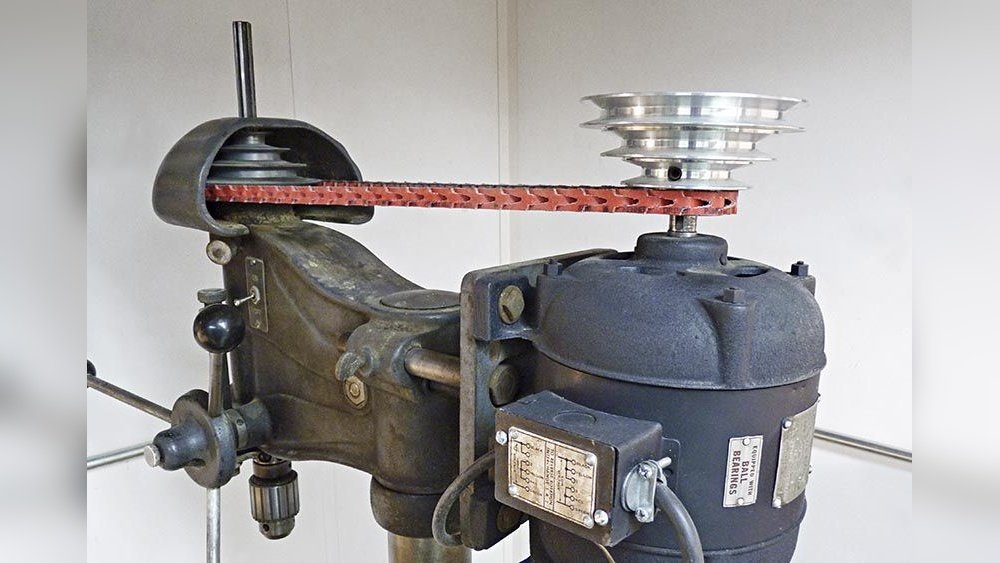
Start by opening the drill press cover. The belt and pulleys sit inside this area. The belt connects the motor pulley and the drill spindle pulley. These pulleys control the drill speed.
Identify Motor Pulley
Find the motor pulley first. It is usually near the back or side of the drill press. The motor pulley is smaller and attached to the motor shaft. The belt wraps around this pulley and moves the drill.
Identify Spindle Pulley
Next, locate the spindle pulley. It is bigger and connected to the drill spindle. The belt also loops around this pulley. The spindle pulley changes the drill speed by moving the belt.
Trace The Belt
Look closely at how the belt travels around both pulleys. The belt loops in a figure-eight or simple circle pattern. Follow the belt path from one pulley to the other. This path shows the exact length you need to measure.
Note Any Tensioners
Check if your drill press has belt tensioners. These parts adjust the belt tightness. They may change the belt path slightly. Keep this in mind when measuring the belt length.
Remove Old Belt
Removing the old belt from a drill press is the first step to measure the belt properly. It helps to avoid mistakes and get an exact size for the new belt. The process is simple but needs care to prevent damage to the machine parts.
Turn Off And Unplug The Drill Press
Make sure the drill press is off before starting. Unplug it from the power source. Safety is important. Avoid any accidental start while working on the belt.
Access The Belt Area
Open the drill press cover or belt guard. This part covers the belt and pulleys. Use a screwdriver if needed. Clear access helps to see and remove the belt easily.
Loosen The Tension
Find the tension adjustment lever or bolt. Loosen it to reduce belt tension. This step makes the belt loose and easy to take off. Do not force the belt to avoid damage.
Remove The Old Belt
Slide the belt off the pulleys gently. Check for cracks or wear on the belt. Keep the old belt to compare the size with the new one. This helps to buy the correct replacement belt.
Measure Belt Length
Measuring the belt length on a drill press is important for proper fit and function. A belt that is too tight or too loose can cause problems. The correct length helps the drill run smoothly and safely. Use simple tools to measure the belt length accurately.
Using A Tape Measure
Turn off the drill press before starting. Remove the old belt if possible. Place the tape measure around the pulleys where the belt runs. Follow the path the belt takes, wrapping the tape around each pulley. Note the length shown on the tape. This number is the belt length needed. Repeat the process to be sure of the measurement.
Using A String Method
If no tape measure is available, use a piece of string. Wrap the string around the pulleys exactly where the belt fits. Mark or cut the string where it meets the start point. Lay the string flat and measure it with a ruler. This length equals the belt length. Double-check the string measurement before buying a new belt.
Compare Belt Sizes
Comparing drill press belt sizes helps ensure you buy the correct replacement. A belt that is too long or too short will not fit properly. This can cause slipping or damage to the machine. Taking time to compare sizes saves effort and money.
Matching the new belt to the old one is the best start. Measure the length, width, and thickness accurately. Write down these numbers for easy reference. Check your drill press manual for recommended belt sizes.
Measure The Existing Belt
Remove the belt from the drill press carefully. Use a soft tape measure to find its length. Lay the belt flat and measure the full loop. Note the width by measuring the belt’s flat side. Check the thickness with a ruler or caliper.
Check Manufacturer Specifications
Look at the drill press manual or label. Find the belt size recommended by the maker. This ensures the belt matches the machine’s needs. Some models use specific belt types or materials.
Compare With Replacement Belts
Use your measurements to compare belts online or in stores. Match length, width, and thickness closely. Avoid belts that differ greatly in size. Small differences can cause poor performance.
Consider Belt Type And Material
Belts come in leather, rubber, or synthetic materials. Check which type fits your drill press best. Material affects grip, durability, and noise. Choose one that matches your machine’s needs.
Test Fit Before Final Use
Place the new belt on the drill press pulleys. Check for tightness and alignment. The belt should fit snugly without stretching. Adjust or replace if it feels loose or too tight.
Select Replacement Belt
Measuring a drill press belt is easy with a few simple steps. First, remove the old belt and lay it flat. Then, use a tape measure to find its length for the right replacement belt.
Choosing the right replacement belt is key for your drill press. The belt must fit well to work properly. A belt that is too loose or tight can cause problems. It can slip, wear out quickly, or damage the machine.
Check the drill press manual for belt size and type. If you don’t have the manual, measure the old belt carefully. Knowing the exact length and width helps find the right match.
Belts come in different types like V-belts, flat belts, and round belts. Most drill presses use V-belts. These have a trapezoid shape that fits into pulleys. Knowing the belt type ensures compatibility with your machine.
Look at the old belt’s shape and texture. This helps identify the belt style quickly. Matching the type prevents slipping and noise issues.
Measure Belt Length And Width
Use a tape measure or string to find the belt length. Wrap the string around the pulleys and mark the length. Then, measure the string with a ruler.
Measure the belt width with a caliper or ruler. Accurate measurements prevent buying a wrong size. The belt should sit snugly in the pulley grooves.
Check Belt Material And Quality
Belt materials vary in durability and flexibility. Rubber and neoprene belts are common. Choose a belt with good strength and heat resistance.
Higher quality belts last longer and reduce machine wear. Avoid very cheap belts that break easily. Investing in a reliable belt saves time and money.
Install New Belt
Measuring a drill press belt ensures the new one fits perfectly. Use a tape measure along the belt’s path for accuracy. Check the length twice before buying a replacement.
Prepare The Drill Press
Start by unplugging the drill press for safety. Remove the belt cover carefully. This gives access to the pulleys and old belt. Clean the area to avoid dirt in the new belt.
Remove The Old Belt
Loosen the motor mount or adjust the tension lever. Slide the old belt off the pulleys. Check the pulleys for wear or damage. Clean the pulleys before installing the new belt.
Install The New Belt
Place the new belt over the smaller motor pulley first. Then, loop it around the larger spindle pulley. Make sure the belt sits evenly on the pulley grooves. Avoid twisting or stretching the belt.
Move the motor to tighten the belt. The belt should have slight tension. Too tight or too loose can cause slipping or wear. Test by pressing the belt; it should give slightly.
Reattach The Belt Cover And Test
Secure the belt cover back in place. Plug in the drill press. Turn it on at low speed to check belt movement. Listen for unusual sounds or slipping. Adjust tension if needed before full use.
Adjust Belt Tension
Adjusting the belt tension on a drill press is important for safe and smooth operation. The right tension keeps the belt firm but not too tight. A loose belt slips, while a tight belt wears out fast. Proper tension helps the drill press work efficiently and extends the belt’s life.
Check the belt tension regularly. Over time, belts stretch and need tightening. Follow these steps to adjust the belt tension correctly and keep your drill press running well.
Loosen The Motor Mount Bolts
Start by loosening the bolts that hold the motor mount. These bolts allow the motor to move and adjust the belt tension. Use a wrench or socket to loosen them, but do not remove the bolts completely. Just loosen enough to slide the motor.
Move The Motor To Adjust Tension
Push the motor away from the drill press spindle to tighten the belt. Pull the motor closer to loosen it. The belt should have a small amount of give but not be floppy. About half an inch of play in the middle is ideal.
Tighten The Motor Mount Bolts
Once the belt tension feels right, tighten the motor mount bolts. Secure the motor firmly in place. Check the belt tension again after tightening to make sure it did not change. The belt should stay firm and not slip under pressure.
Test Belt Performance
Measuring a drill press belt ensures it fits well and works smoothly. Check the belt’s length and tension to keep your drill press running properly. Proper belt performance helps avoid slipping and maintains steady power.
Understanding Belt Tension
Check the belt tension before testing performance. A loose belt slips and causes poor power transfer. Press the belt gently with your finger. It should feel firm, with slight give. Tighten or loosen the belt as needed for proper tension.
Running The Drill Press
Turn on the drill press at low speed. Watch the belt carefully during operation. The belt should run smoothly without wobbling or slipping. Listen for unusual noises like squeaking or grinding. These sounds often indicate belt problems.
Observing Drill Press Speed
Measure the drill speed using a tachometer or compare it to the machine’s rated speed. A belt in good condition maintains steady speed. Slow or inconsistent speed suggests belt wear or wrong size. Replace the belt if speed drops significantly.
Checking For Belt Wear
Look for cracks, fraying, or glazing on the belt surface. Worn belts lose grip and slip under load. Check the belt edges for damage or uneven wear. Replace any belt showing signs of wear to ensure safe operation.
Credit: www.alibaba.com
Frequently Asked Questions
How Do I Measure A Drill Press Belt Size?
Measure the belt’s length by wrapping a flexible tape around its outer edge. Note the total circumference in inches or millimeters. This helps you find the correct replacement belt size easily and ensures proper fit and function.
What Tools Are Needed To Measure Drill Press Belts?
You only need a flexible measuring tape or a piece of string and a ruler. Wrap the string around the belt, mark its length, then measure the string with a ruler. These simple tools give you an accurate belt length.
How To Check If Drill Press Belt Tension Is Correct?
Press the belt midway between pulleys; it should deflect about 1/2 inch with moderate force. Too loose or too tight belts affect performance and wear. Proper tension ensures smooth operation and longer belt life.
Can I Measure The Drill Press Belt Without Removing It?
Yes, you can measure the belt length while it is still on the pulleys. Use a flexible tape or string to measure the outer circumference. This method saves time and avoids disassembly, but accuracy may vary slightly.
Conclusion
Measuring your drill press belt is simple and important. It helps keep your machine working well. Use a tape measure or string to find the belt length. Make sure the belt fits snugly but not too tight. Check the belt often to avoid problems while drilling.
Taking time to measure correctly saves money and effort. Stay safe and keep your tools in good shape. Now you can measure your drill press belt with confidence.
