


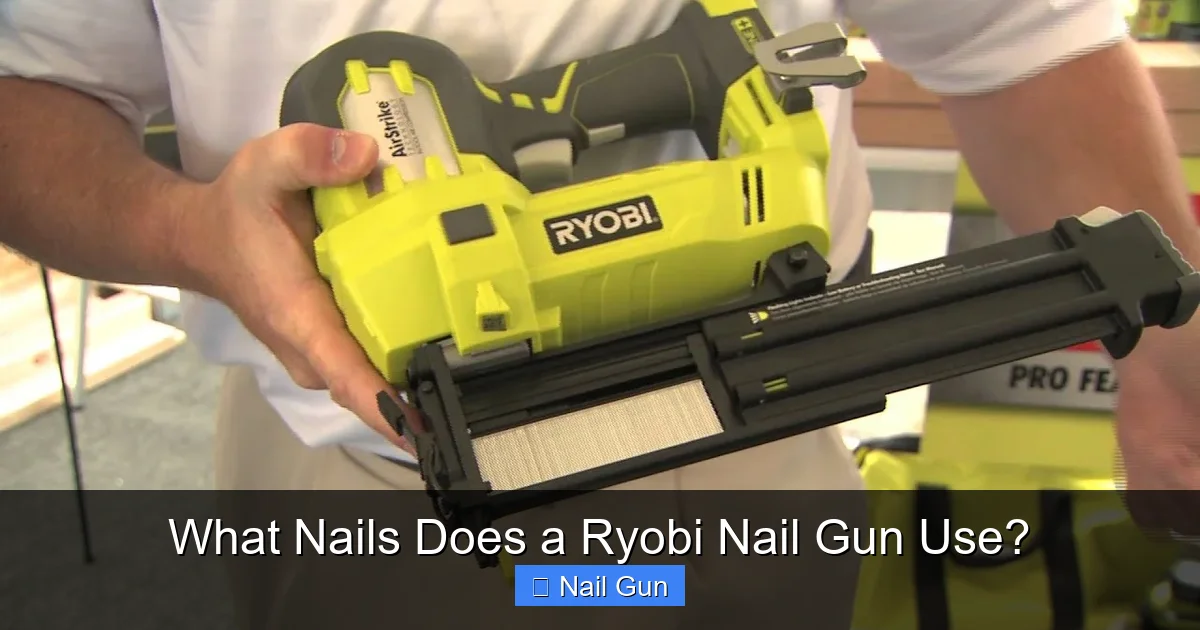
Ryobi nail guns are designed to work with specific types and sizes of nails depending on the model. This guide explains which nails are compatible, how to choose the right ones, and tips to avoid jams and damage.
Key Takeaways
- Ryobi nail guns use different nails based on the model: Framing nailers use 2- to 3½-inch nails, while finish nailers accept 15- or 16-gauge nails from 1 to 2½ inches.
- Always check your tool’s manual: The user guide lists exact nail specifications, including gauge, length, and type (clipped head or full round).
- Use only recommended nail types: Using incorrect nails can cause jams, misfires, or damage to the tool.
- Clipped head nails are common in Ryobi tools: Many Ryobi nailers are designed for high-capacity magazines that use collated clipped head nails.
- Match nail type to your project: Choose nails based on material thickness and application—framing, trim, or finish work.
- Buy quality nails from trusted brands: Cheap or off-brand nails may not feed properly or could damage your nail gun.
- Store nails properly: Keep them dry and clean to prevent rust and feeding issues during use.
What Nails Does a Ryobi Nail Gun Use?
If you’ve just bought a Ryobi nail gun or are thinking about getting one, you’re probably wondering: What nails does a Ryobi nail gun use? The answer isn’t one-size-fits-all. Ryobi makes several types of nail guns—framing nailers, finish nailers, brad nailers, and staplers—and each one requires specific nails to work safely and efficiently.
In this guide, you’ll learn exactly which nails are compatible with your Ryobi nail gun, how to choose the right ones for your project, and tips to keep your tool running smoothly. Whether you’re building a deck, installing trim, or tackling a DIY furniture project, using the correct nails is essential for strong results and tool longevity.
Understanding Ryobi Nail Gun Types
Before diving into nail types, it’s important to know which Ryobi nail gun you have. Ryobi offers a range of pneumatic and cordless nailers, each designed for different tasks.
Framing Nailers
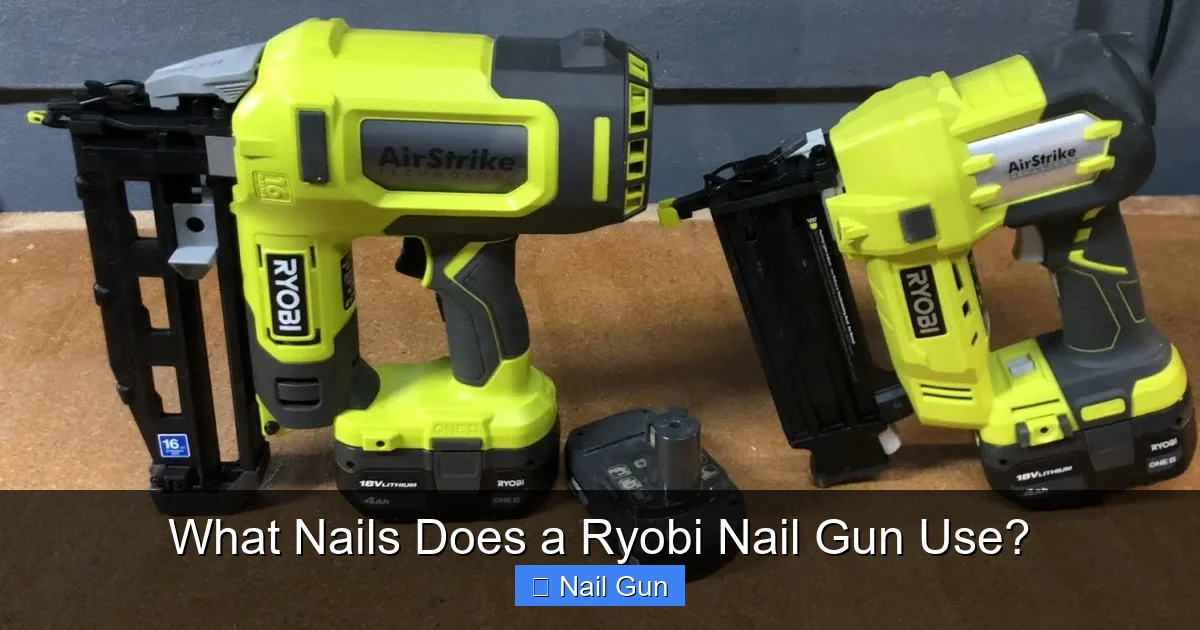
Ryobi framing nailers, like the P320 or P325 models, are built for heavy-duty jobs such as building decks, framing walls, or constructing sheds. These tools typically use 2- to 3½-inch nails with a 0.113 to 0.131-inch diameter (gauge). Most Ryobi framing nailers accept clipped head nails, which allow more nails in the magazine compared to full round head nails.
Visual guide about What Nails Does a Ryobi Nail Gun Use?
Image source: storables.com
Finish Nailers
For trim work, crown molding, or baseboards, Ryobi finish nailers like the P321 or P322 are ideal. These use 15- or 16-gauge nails ranging from 1 to 2½ inches long. They often use straight collated nails and are compatible with both clipped head and full round head designs, depending on the model.
Brad Nailers
Brad nailers, such as the Ryobi P323, are perfect for delicate trim and thin materials. They use 18-gauge brad nails that are typically 5/8 to 2 inches long. These nails are thinner and leave smaller holes, making them great for finishing work where appearance matters.
Staplers and Pin Nailers
Some Ryobi tools combine functions. For example, the P324 is a 2-in-1 brad nailer and stapler. It uses 18-gauge brad nails or ¼-inch narrow crown staples. Pin nailers, like the P326, use ultra-thin 23-gauge headless pins for invisible fastening on delicate moldings.
How to Find the Right Nails for Your Ryobi Nail Gun
Now that you know the types of nailers, let’s walk through how to pick the right nails.
Step 1: Check the User Manual
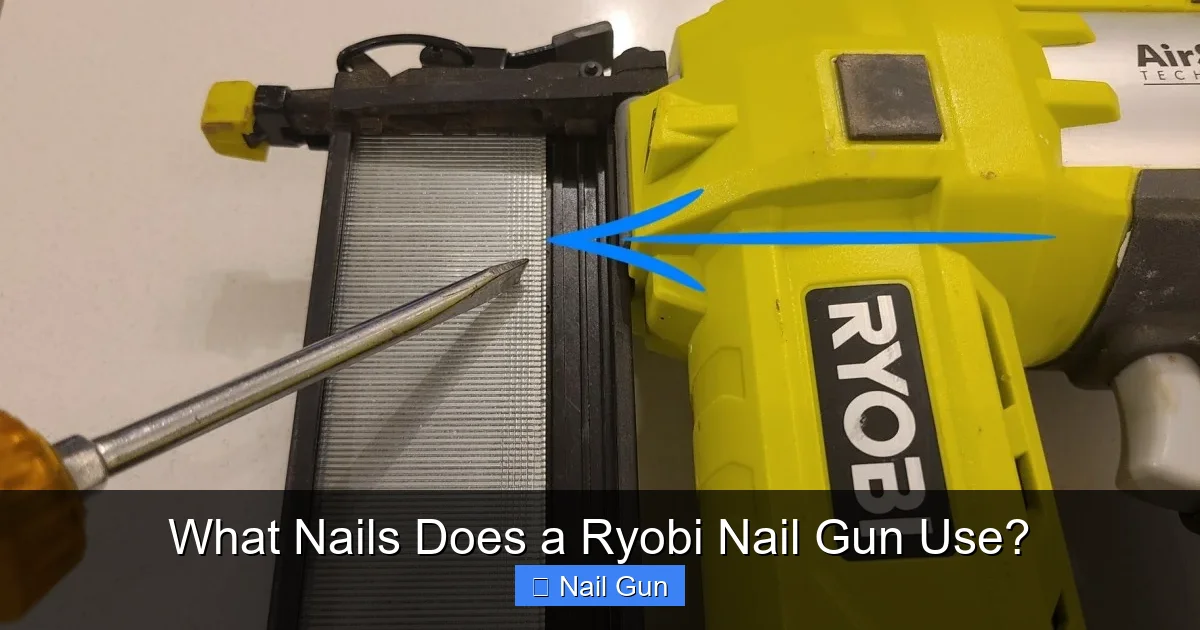
The most reliable way to know what nails your Ryobi nail gun uses is to consult the user manual. Look for a section titled “Specifications” or “Compatible Fasteners.” It will list:
Visual guide about What Nails Does a Ryobi Nail Gun Use?
Image source: images.saymedia-content.com
- Nail gauge (diameter)
- Nail length range
- Head type (clipped or full round)
- Collated or loose
For example, the Ryobi P320 framing nailer manual states it accepts 20- to 3½-inch, 0.113- to 0.131-inch diameter, clipped head nails.
Step 2: Look at the Tool Itself
Many Ryobi nail guns have a label near the magazine or nosepiece that lists compatible nail sizes. This is a quick reference when you’re on the job site and don’t have the manual handy.
Step 3: Match Nails to Your Project
Even within the correct size range, nail choice matters. Here’s how to match nails to common tasks:
- Framing: Use 3¼-inch, 0.131-inch nails for structural lumber. Shorter nails (2-inch) work for lighter framing.
- Trim and Molding: 16-gauge, 2-inch finish nails are standard for baseboards and door casings.
- Delicate Trim: 18-gauge brad nails prevent splitting thin wood.
- Upholstery or Paneling: Use 23-gauge pin nails for nearly invisible holds.
Types of Nails Compatible with Ryobi Nail Guns
Ryobi nail guns are designed to work with specific nail styles. Here’s a breakdown of the most common types.
Clipped Head Nails
These are the most common nails used in Ryobi framing and some finish nailers. The heads are partially cut (“clipped”) so more nails can fit in a collated strip. This increases efficiency on large jobs. Most Ryobi cordless framing nailers are built for clipped head nails.
Full Round Head Nails
Some Ryobi models, especially older or professional-grade ones, support full round head nails. These provide slightly more holding power and are required for certain building codes. Check your manual—some tools can use both types with an adapter.
Collated vs. Loose Nails
Ryobi nail guns use collated nails—nails held together by plastic, wire, or paper strips. This allows for rapid firing. Loose nails won’t work in these tools. Always use the correct collation type (e.g., plastic strip for framing, paper tape for finish nails).
Galvanized and Stainless Steel Nails
For outdoor projects, use hot-dipped galvanized or stainless steel nails to resist rust. Ryobi nailers can drive these, but ensure they’re within the size range. Avoid using corroded or damaged nails—they can jam the tool.
Tips for Using Nails Safely and Effectively
Using the right nails is only half the battle. Follow these tips to get the best performance from your Ryobi nail gun.
Buy Quality Nails
Cheap nails may have inconsistent diameters or poor collation, leading to jams. Stick to reputable brands like Bostitch, DeWalt, Paslode, or Ryobi’s own compatible nails. Look for nails labeled “for Ryobi” or “universal fit.”
Store Nails Properly
Keep nails in a dry, sealed container. Moisture causes rust, which can damage the magazine and cause misfires. If nails get wet, let them dry completely before use.
Load Nails Correctly
Always disconnect the air supply or remove the battery before loading. Slide the magazine open, insert the nail strip with the heads facing the correct direction (usually toward the nose), and close the magazine securely.
Adjust Depth Settings
Most Ryobi nailers have a depth adjustment dial. Set it so nails are driven flush with the surface—not too deep (which can split wood) or too shallow (which weakens the hold). Test on scrap wood first.
Maintain Your Nail Gun
Clean the magazine and nosepiece regularly. Use tool oil (for pneumatic models) or a dry cloth (for cordless) to remove dust and debris. A well-maintained tool feeds nails smoothly and lasts longer.
Troubleshooting Common Nail Issues
Even with the right nails, problems can happen. Here’s how to fix common issues.
Nail Jams
If your Ryobi nail gun jams, first turn it off and remove power. Open the magazine and gently remove the jammed nail. Check for bent nails or debris. Reload with fresh, undamaged nails.
Misfires or Weak Drives
This could mean the nails are too short, the air pressure is too low (for pneumatic models), or the battery is weak (for cordless). Check your power source and ensure nails are within the recommended length.
Nails Not Feeding
If nails don’t advance, the magazine spring may be weak or the collation may be damaged. Replace the nail strip or check for obstructions. Also, ensure you’re using the correct collation type.
Double Firing
This happens when the trigger is held and the tool fires multiple nails per press. Release the trigger fully between shots. Some Ryobi models have a selective fire mode—use “bump” mode carefully.
Conclusion
So, what nails does a Ryobi nail gun use? The answer depends on your specific model, but in general:
- Framing nailers use 2- to 3½-inch, 0.113- to 0.131-inch clipped head nails.
- Finish nailers use 15- or 16-gauge nails from 1 to 2½ inches.
- Brad nailers use 18-gauge brad nails.
- Pin nailers use 23-gauge headless pins.
Always refer to your user manual, choose quality nails, and match the fastener to your project. With the right nails and proper care, your Ryobi nail gun will deliver professional results for years to come.
