

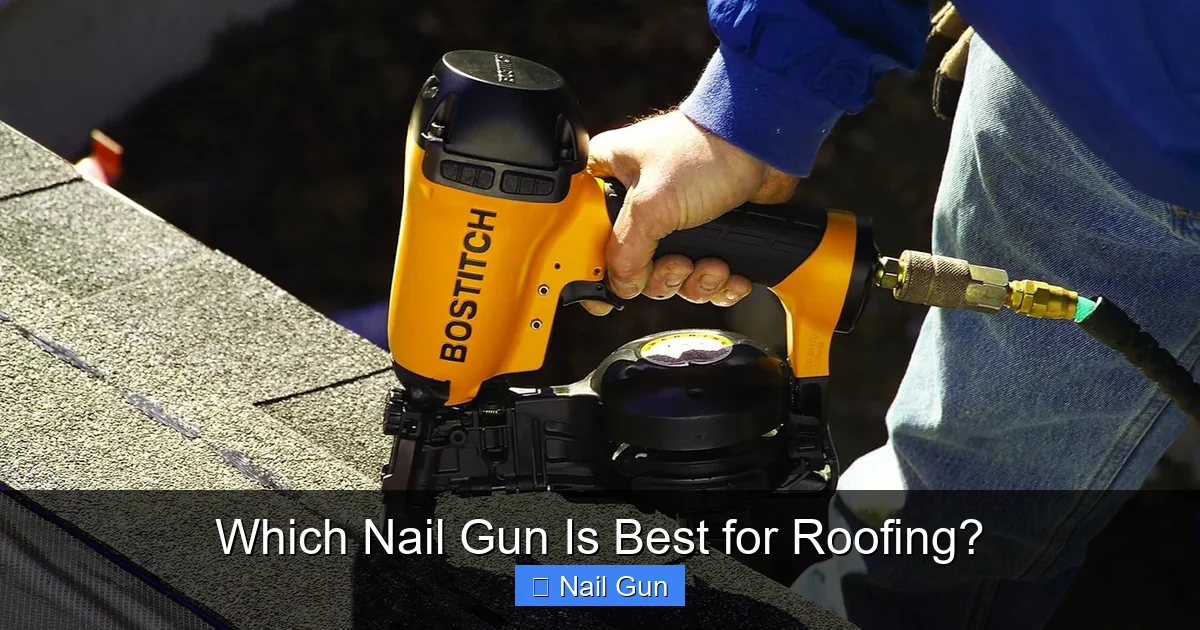
Choosing the right nail gun for roofing can save time, reduce fatigue, and improve safety. This guide breaks down the top options, key features to consider, and expert tips to help you pick the perfect tool for your next roofing job.
Key Takeaways
- Coil nail guns are ideal for large roofing jobs because they hold more nails and reduce reload frequency.
- Look for a pneumatic nail gun with adjustable depth control to prevent over-driving or under-driving nails.
- Weight and ergonomics matter—choose a lightweight model to reduce fatigue during long workdays.
- Roofing nails should be 1¼” to 2″ long and made of corrosion-resistant materials like stainless steel or hot-dipped galvanized.
- Always wear safety gear including gloves, eye protection, and a hard hat when using a nail gun on a roof.
- Popular brands like Bostitch, DeWalt, and Hitachi offer reliable roofing nailers with strong warranties and customer support.
- Proper maintenance extends tool life—clean and lubricate your nail gun regularly.
Which Nail Gun Is Best for Roofing?
If you’re tackling a roofing project—whether it’s installing shingles, underlayment, or decking—you need the right tool for the job. A quality nail gun can make all the difference between a smooth, efficient workflow and a frustrating, time-consuming ordeal. But with so many options on the market, how do you know which nail gun is best for roofing?
In this guide, we’ll walk you through everything you need to know to choose the perfect roofing nail gun. You’ll learn about the different types of nail guns, key features to look for, top brands, and practical tips for safe and effective use. Whether you’re a DIY homeowner or a professional roofer, this guide will help you make an informed decision.
Understanding Roofing Nail Guns
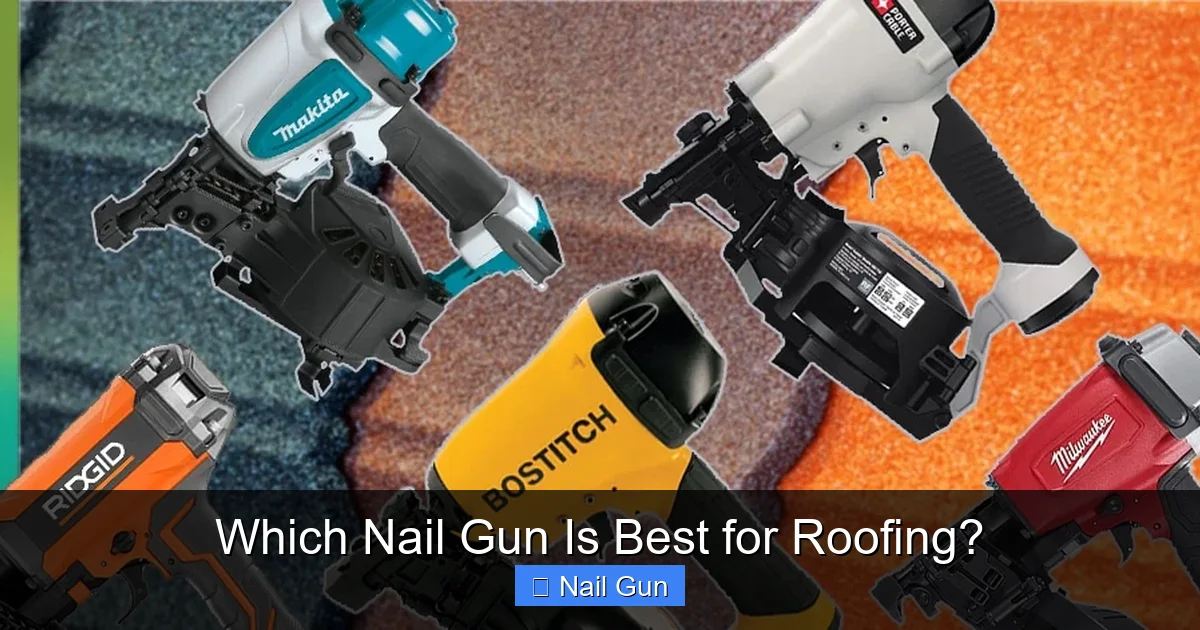
Visual guide about Which Nail Gun Is Best for Roofing?
Image source: iroofing.org
Roofing nail guns are specialized tools designed to drive nails quickly and securely into roofing materials. Unlike finish nailers or framing nailers, roofing nailers are built to handle thick, durable materials like asphalt shingles, felt paper, and plywood sheathing.
These tools use either pneumatic (air-powered), cordless (battery-powered), or gas-powered systems. For most roofing jobs, pneumatic nail guns are the go-to choice due to their power, reliability, and consistent performance.
Types of Roofing Nail Guns
There are two main types of roofing nail guns: coil-style and strip-style.
Coil Nail Guns: These use a long, coiled magazine that holds up to 120 nails. This design allows for fewer reloads, making them ideal for large roofing jobs. They’re heavier than strip models but offer greater efficiency on big projects.
Strip Nail Guns: These use straight or curved strips of nails, typically holding 20–40 nails per load. They’re lighter and more compact, which makes them easier to handle on steep or uneven roofs. However, you’ll need to reload more often.
For most roofing professionals, coil nail guns are the preferred choice due to their high capacity and speed. But if you’re doing a small repair or working in tight spaces, a strip nailer might be more convenient.
Key Features to Look For
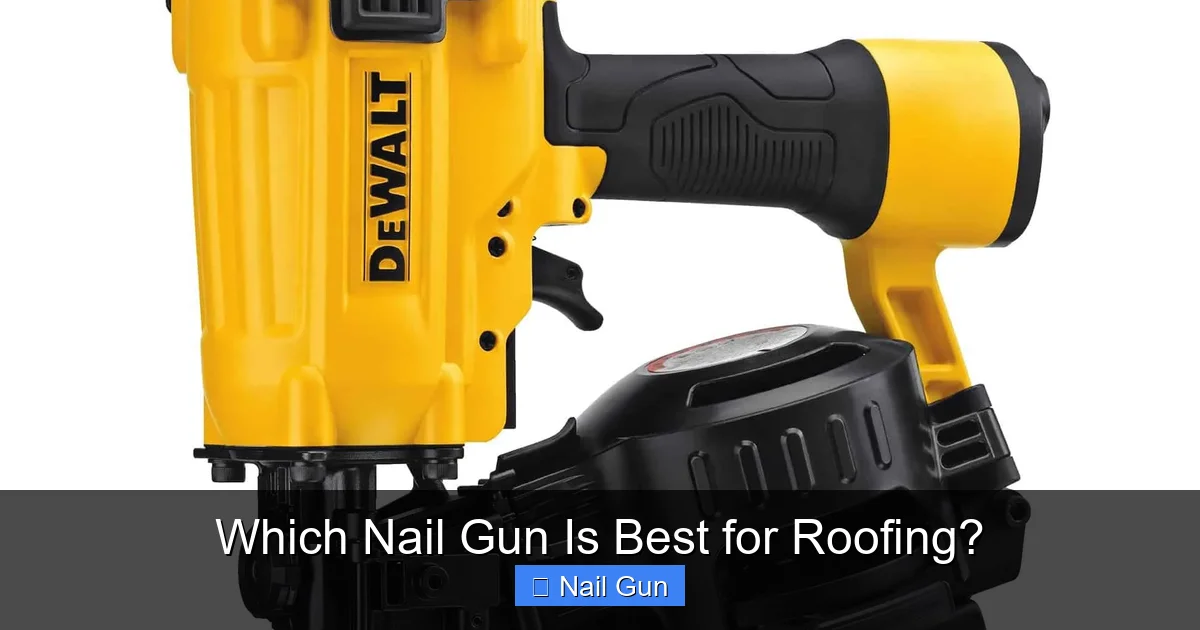
Visual guide about Which Nail Gun Is Best for Roofing?
Image source: putproductreviews.com
Not all roofing nail guns are created equal. Here are the most important features to consider when shopping for one.
1. Nail Compatibility
Roofing nails are typically 1¼” to 2″ long and come with large, flat heads to prevent pull-through. Make sure your nail gun is compatible with standard roofing nails, usually 0.120″ to 0.131″ in diameter.
Some models only accept specific nail sizes, so check the manufacturer’s specs before buying.
2. Depth Adjustment
A depth adjustment feature lets you control how deep the nail is driven. This is crucial for roofing because you don’t want nails sticking up or sinking too far into the shingles.
Look for a tool with tool-free depth adjustment—this makes it easy to fine-tune on the fly without needing a wrench or screwdriver.
3. Weight and Ergonomics
Roofing is physically demanding work. A heavy or poorly balanced nail gun can cause fatigue and increase the risk of injury.
Choose a model that’s lightweight (ideally under 5 lbs) and has a comfortable grip. Rubberized handles and balanced designs reduce hand strain during long hours on the roof.
4. Magazine Capacity
As mentioned earlier, coil nailers hold more nails than strip models. If you’re working on a large roof, a high-capacity magazine means fewer interruptions.
For example, the Bostitch RN46-1 holds up to 120 nails, while many strip nailers top out at 30–40.
5. Trigger Mechanism
Roofing nail guns usually have two trigger modes: sequential (single-fire) and bump-fire (contact trigger).
Sequential mode requires you to press the nose against the surface and then pull the trigger—this is safer and more precise.
Bump-fire mode lets you hold the trigger and “bump” the gun against the surface to fire nails rapidly. It’s faster but increases the risk of accidental firing.
Most professionals use sequential mode for safety, especially on steep roofs.
6. Air Requirements
Pneumatic nail guns require an air compressor. Check the tool’s CFM (cubic feet per minute) and PSI (pounds per square inch) requirements to ensure your compressor can keep up.
Most roofing nailers need 2.5–3.5 CFM at 70–120 PSI. If your compressor is too small, the gun won’t fire consistently.
Top Roofing Nail Gun Recommendations
Here are three of the best roofing nail guns on the market, based on performance, durability, and user reviews.
1. Bostitch RN46-1 Coil Roofing Nailer
This is a favorite among professionals. It’s lightweight (4.9 lbs), durable, and features a tool-free depth adjustment and jam-clearing mechanism. It uses 1½” to 2″ nails and has a 120-nail capacity.
Pros: Reliable, easy to maintain, excellent warranty.
Cons: Requires a good air compressor.
2. DeWalt D51855 Coil Roofing Nailer
Known for its rugged build and consistent performance, this DeWalt model is built to last. It has a magnesium housing, which reduces weight without sacrificing strength.
It also includes a tool-free depth adjustment and a no-mar tip to protect shingles.
Pros: Durable, lightweight, great for heavy use.
Cons: Slightly higher price point.
3. Hitachi NV45AB2 Coil Roofing Nailer
A reliable and affordable option, the Hitachi NV45AB2 offers solid performance at a lower cost. It’s lightweight (4.8 lbs) and features a side-loading magazine for quick reloading.
Pros: Budget-friendly, easy to use, good nail capacity.
Cons: Plastic components may wear faster over time.
Tips for Safe and Effective Use
Using a roofing nail gun safely and efficiently takes practice and attention to detail. Follow these tips to get the best results.
1. Wear Proper Safety Gear
Always wear safety glasses, gloves, and a hard hat. Roofing involves working at heights, so a harness and fall protection system are also essential.
2. Inspect Your Tool Before Use
Check for loose parts, air leaks, or damaged components. Make sure the magazine is loaded correctly and the safety tip is functioning.
3. Maintain Consistent Pressure
Press the nail gun firmly against the shingle before firing. Inconsistent pressure can cause nails to angle or not seat properly.
4. Keep Your Work Area Clean
Remove debris, nails, and tools from the roof surface. A cluttered workspace increases the risk of slips and misfires.
5. Store and Maintain Your Nail Gun
After use, clean the tool and apply a few drops of pneumatic tool oil to the air inlet. Store it in a dry, secure place to prevent rust and damage.
Regular maintenance extends the life of your nail gun and ensures reliable performance.
Troubleshooting Common Issues
Even the best nail guns can run into problems. Here’s how to fix common issues.
Nails Not Firing
Possible Causes: Low air pressure, empty magazine, jammed nail, or faulty trigger.
Solution: Check your compressor settings, reload nails, clear jams, and inspect the trigger mechanism.
Nails Sticking Out
Possible Causes: Depth setting too shallow, low air pressure, or worn driver blade.
Solution: Adjust the depth control, increase PSI, or replace the driver blade if necessary.
Double Firing or Misfires
Possible Causes: Dirty trigger mechanism, worn parts, or using the wrong trigger mode.
Solution: Clean the trigger assembly, replace worn components, and use sequential mode for better control.
Conclusion
Choosing the best nail gun for roofing depends on your specific needs, budget, and project size. For most users, a pneumatic coil nail gun like the Bostitch RN46-1 or DeWalt D51855 offers the best combination of power, capacity, and durability.
Remember to prioritize safety, maintain your tool regularly, and choose nails that match your gun’s specifications. With the right nail gun in hand, you’ll complete your roofing job faster, safer, and with professional-quality results.
Investing in a high-quality roofing nailer is not just about convenience—it’s about efficiency, safety, and long-term value. Take the time to research, compare models, and choose the one that fits your workflow. Your back, your shingles, and your timeline will thank you.
