


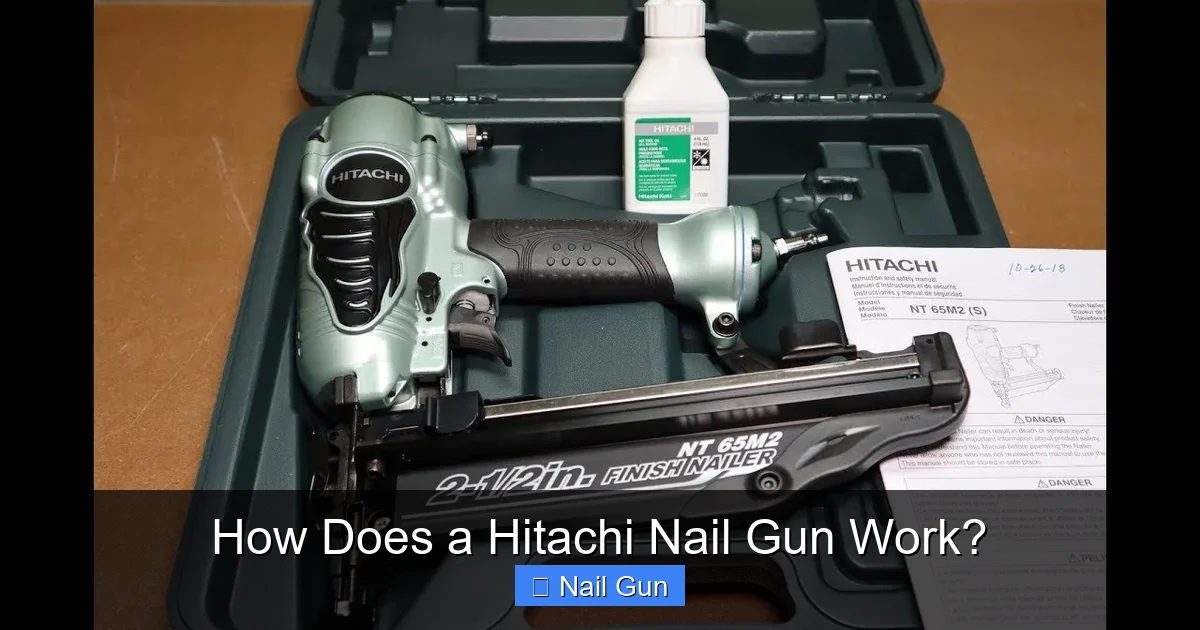
A Hitachi nail gun is a powerful pneumatic tool that drives nails into wood or other materials using compressed air. This guide explains how it works, how to use it safely, and how to maintain it for long-lasting performance.
Key Takeaways
- Hitachi nail guns use compressed air to generate force: An air compressor powers the tool, creating pressure that drives the piston and fires nails.
- They feature a sequential or bump firing mode: Choose between precision placement or rapid nailing depending on your project needs.
- Safety is critical when operating the tool: Always wear eye and ear protection, and never point the gun at people or yourself.
- Regular maintenance extends tool life: Clean the magazine, lubricate moving parts, and check for worn components.
- Proper nail loading ensures smooth operation: Use only compatible nails and load them correctly to avoid jams.
- Troubleshooting common issues saves time: Learn to fix jams, misfires, and air leaks quickly and safely.
- Hitachi nail guns are known for durability and precision: Their ergonomic design and reliable performance make them a favorite among professionals.
How Does a Hitachi Nail Gun Work?
If you’ve ever watched a construction worker zip through framing or trim work with lightning speed, chances are they were using a Hitachi nail gun. These powerful tools are staples in carpentry, roofing, and DIY projects—but how exactly do they work? In this guide, we’ll break down the mechanics, operation, and maintenance of a Hitachi nail gun so you can use it safely and effectively.
Whether you’re a seasoned contractor or a weekend warrior, understanding how your nail gun functions helps you get the best results and avoid common mistakes. We’ll walk you through the inner workings, step-by-step usage, safety tips, and troubleshooting—all in simple, easy-to-follow language.
Understanding the Basics: What Is a Hitachi Nail Gun?
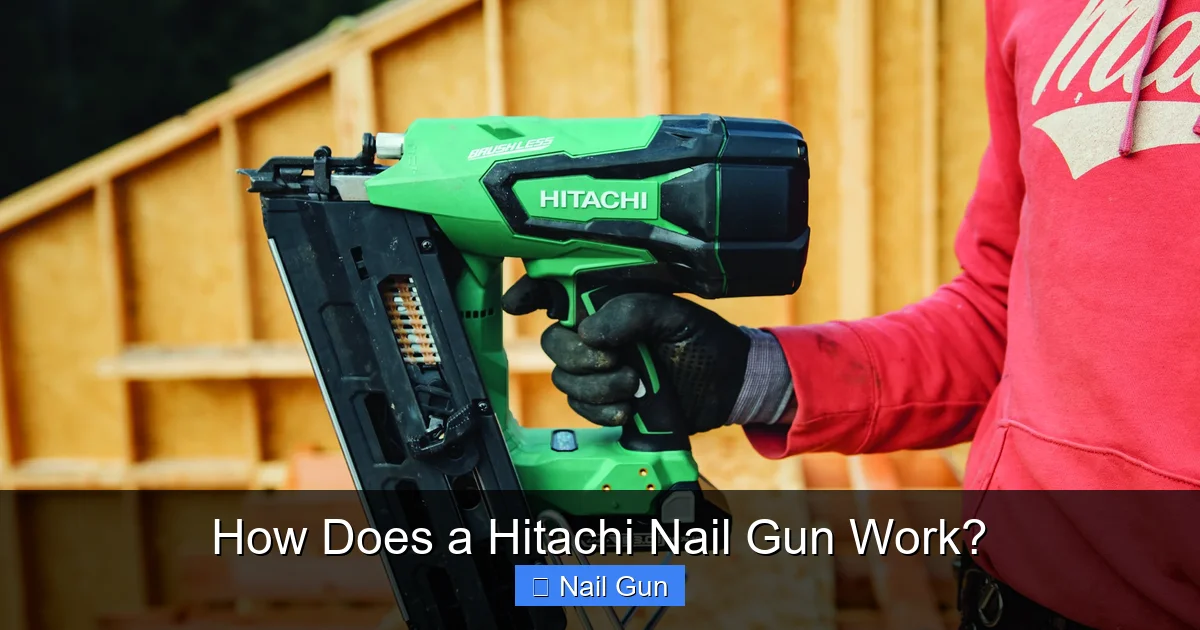
Visual guide about How Does a Hitachi Nail Gun Work?
Image source: cdnassets.hw.net
A Hitachi nail gun is a pneumatic tool that uses compressed air to drive nails into various materials like wood, drywall, or even light metal. Unlike manual hammers, these tools deliver consistent force with minimal effort, making them ideal for large projects.
Hitachi (now known as Metabo HPT in many regions) has been a trusted name in power tools for decades. Their nail guns are known for reliability, precision, and ergonomic design. Most models are powered by an external air compressor, though some newer versions offer cordless battery-powered options.
Types of Hitachi Nail Guns
Before diving into how they work, it’s helpful to know the main types:
- Framing Nailers: Used for heavy-duty tasks like building decks or framing walls. They handle large nails (2 to 3.5 inches).
- Finish Nailers: Ideal for trim, molding, and cabinetry. They use thinner nails and leave smaller holes.
- Brad Nailers: For delicate work like attaching thin moldings. They use very small nails (18-gauge).
- Roofing Nailers: Designed for shingle installation, using coil-style nails.
Each type operates on the same basic principle but is optimized for specific tasks.
How the Hitachi Nail Gun Works: The Step-by-Step Process
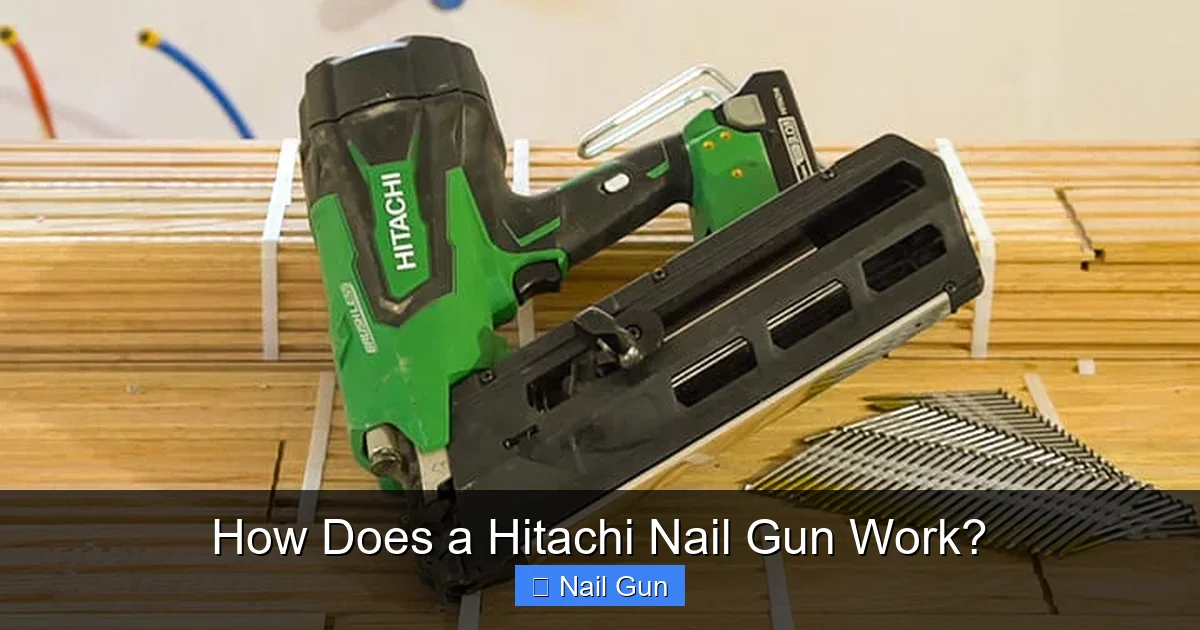
Visual guide about How Does a Hitachi Nail Gun Work?
Image source: nailerguy.com
Now, let’s get into the heart of the matter: how does a Hitachi nail gun actually fire a nail? The process involves air pressure, a piston, and a driver blade—all working in sync.
Step 1: Connect to an Air Compressor
The first step is connecting your nail gun to an air compressor using a standard air hose. The compressor stores pressurized air, which is released when you pull the trigger.
Tip: Make sure your compressor is set to the recommended PSI (pounds per square inch) for your specific Hitachi model—usually between 70 and 120 PSI. Too little pressure results in weak drives; too much can damage the tool or materials.
Step 2: Load the Nails
Open the magazine (the long slot where nails are stored) and insert a strip or coil of nails. Most Hitachi nail guns use collated nails—nails held together by plastic or wire strips for smooth feeding.
Example: A 16-gauge finish nailer might use a 100-nail strip. Slide it into the magazine with the points facing down and the collation strip aligned with the feed mechanism.
Close the magazine securely. Some models have a latch or spring mechanism that holds the nails in place.
Step 3: Build Air Pressure
Once connected and loaded, turn on the air compressor. The tool will begin to pressurize. You’ll hear a slight hiss as air fills the chamber inside the nail gun.
The internal mechanism includes a cylinder and a piston. When air pressure builds, it pushes the piston forward—this is what drives the nail.
Step 4: Position and Fire
Place the nose of the nail gun firmly against the workpiece. This activates the safety tip—a critical feature that prevents accidental firing.
Now, pull the trigger. Here’s what happens inside:
- Air rushes into the cylinder.
- The piston is forced forward rapidly.
- The driver blade (attached to the piston) strikes the nail.
- The nail is driven into the material in a fraction of a second.
After firing, the piston resets, and the cycle is ready to repeat.
Step 5: Choose Your Firing Mode
Hitachi nail guns typically offer two firing modes:
- Sequential (or Single Fire): You must press the safety tip and then pull the trigger for each nail. This mode offers maximum control and safety—ideal for precision work.
- Bump (or Contact) Fire: Hold the trigger and “bump” the safety tip against the workpiece to fire nails rapidly. Great for speed, but requires more caution.
Switch between modes using a selector switch, usually located near the trigger.
Safety First: Using Your Hitachi Nail Gun Responsibly
Even though nail guns are efficient, they can be dangerous if mishandled. Follow these safety guidelines every time:
- Wear protective gear: Safety glasses and ear protection are a must. Nails can ricochet, and the noise level is high.
- Never point the gun at anyone: Treat it like a firearm—always assume it’s loaded.
- Disconnect the air hose when not in use: This prevents accidental firing during adjustments or storage.
- Keep your hands clear of the firing area: Use clamps or jigs when working in tight spaces.
- Read the manual: Each Hitachi model has specific instructions—don’t skip this step.
Maintenance Tips to Keep Your Nail Gun Running Smoothly
A well-maintained nail gun lasts longer and performs better. Here’s how to care for your Hitachi tool:
Daily Cleaning
After each use, wipe down the exterior with a clean cloth. Blow out dust and debris from the magazine and nosepiece using compressed air.
Lubrication
Most pneumatic nail guns need regular lubrication. Add a few drops of pneumatic tool oil into the air inlet before each use. This keeps the piston and seals moving smoothly.
Note: Use only oil designed for air tools—motor oil or WD-40 can damage internal components.
Check for Wear and Tear
Inspect the driver blade, O-rings, and magazine for signs of damage. Replace worn parts promptly to avoid malfunctions.
Store Properly
Keep your nail gun in a dry, clean place. Use a protective case if available. Avoid extreme temperatures, which can affect seals and lubrication.
Troubleshooting Common Issues
Even the best tools can run into problems. Here’s how to fix the most common issues with your Hitachi nail gun:
Nail Jams
Symptom: Nails won’t feed or the gun won’t fire.
Solution: Disconnect the air hose, open the magazine, and remove any stuck nails. Check that the nail strip is properly aligned and not bent.
Misfires or Weak Drives
Symptom: Nails don’t go in all the way or the gun fails to fire.
Solution: Check the air pressure—too low and the piston won’t have enough force. Also, ensure the driver blade isn’t worn and that you’re using the correct nail size.
Air Leaks
Symptom: Hissing sound when the trigger is released.
Solution: Inspect the O-rings and seals. Replace damaged parts. Make sure all connections are tight.
Double Firing
Symptom: The gun fires two nails with one trigger pull.
Solution: This often happens in bump mode if the trigger is held too long. Practice controlled movements, or switch to sequential mode for better accuracy.
Conclusion
A Hitachi nail gun is a marvel of engineering—simple in concept, powerful in execution. By using compressed air to drive a piston and fire nails with precision, these tools save time and effort on countless projects. Whether you’re framing a house or installing baseboards, understanding how your nail gun works helps you use it safely and effectively.
Remember to follow safety protocols, maintain your tool regularly, and troubleshoot issues quickly. With proper care, your Hitachi nail gun will be a reliable partner for years to come.
Now that you know how it works, you’re ready to tackle your next project with confidence. Happy nailing!
