


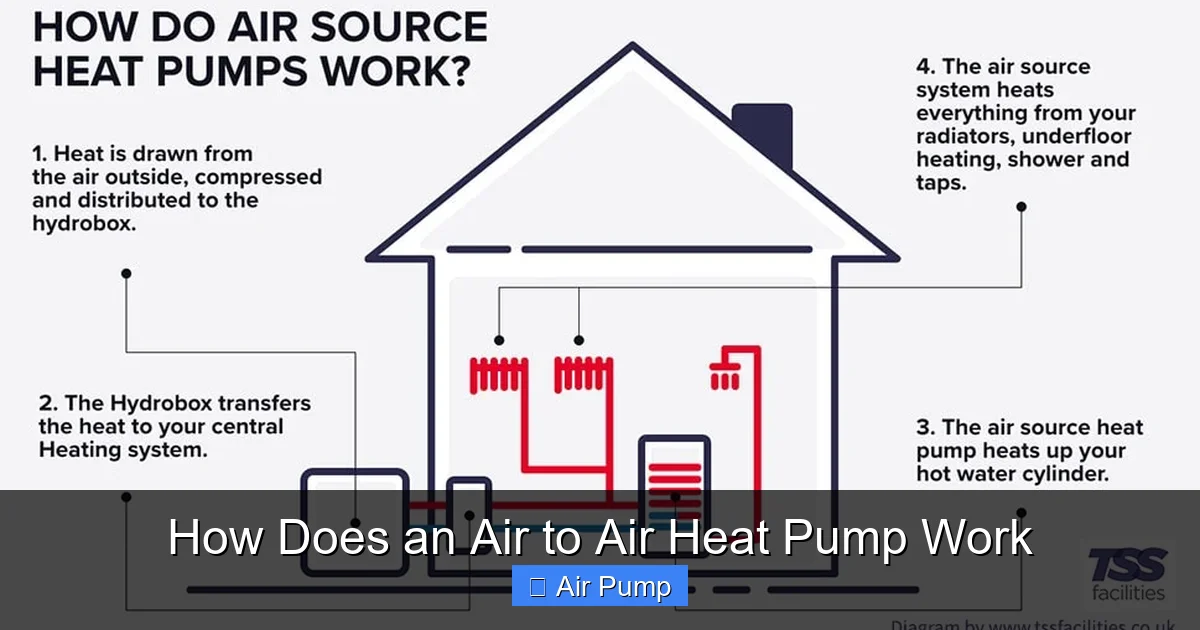
An air to air heat pump is a device that transfers heat between the outside and inside of your home. It uses refrigeration principles to provide efficient heating in winter and cooling in summer. This guide explains step-by-step how these systems operate and their advantages.
How Does an Air to Air Heat Pump Work
If you’re curious about how an air to air heat pump keeps your home warm in winter and cool in summer, you’re in the right place. These systems are becoming popular because they are energy-efficient and environmentally friendly. In this guide, you’ll learn how they operate, their components, and tips for optimal use. Let’s dive into the fascinating science behind these devices.
Key Takeaways
- How it works: An air to air heat pump transfers heat from the outside air to warm your home or vice versa.
- Refrigeration cycle: It uses a refrigerant fluid that absorbs and releases heat through evaporation and condensation.
- Efficiency: Air to air heat pumps are energy-efficient, reducing your electricity bills compared to traditional heating systems.
- Cooling mode: Besides heating, they can also cool your home by reversing the refrigeration cycle.
- Installation tips: Proper placement and regular maintenance ensure optimal performance of your heat pump.
- Limitations: Effectiveness can decrease in extremely cold climates, but modern models are improving.
What Is an Air to Air Heat Pump?
An air to air heat pump is a heating and cooling system that extracts heat from the outside air and transfers it inside your home. During winter, it pulls heat from the cold air outside—even when it’s chilly—and brings it inside to warm your space. In summer, it reverses this process, removing heat from indoors and releasing it outside, effectively cooling your home.
This technology makes use of the refrigeration cycle, similar to how a refrigerator or air conditioner works. Its efficiency and flexibility make it a popular choice for residential heating and cooling solutions.
Understanding the Basic Components
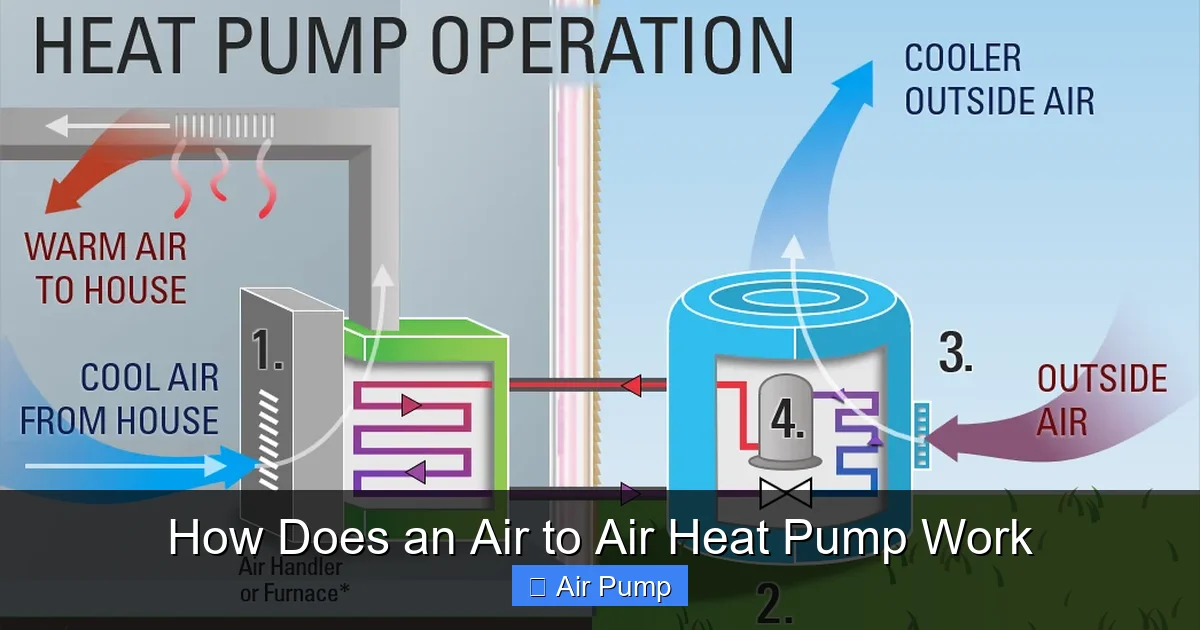
Before explaining how an air to air heat pump works, it’s helpful to know its main parts:
Visual guide about How Does an Air to Air Heat Pump Work
Image source: 2040energy.com
- Compressor: The “heart” of the system that compresses refrigerant, raising its temperature and pressure.
- Condenser Coil: Where refrigerant releases heat and condenses from a gas to a liquid.
- Evaporator Coil: Where refrigerant absorbs heat and evaporates from a liquid to a gas.
- Expansion Valve: Controls refrigerant flow, reducing pressure before it enters the evaporator.
- Refrigerant: The working fluid that moves heat throughout the system.
The Refrigeration Cycle: The Heart of Operation
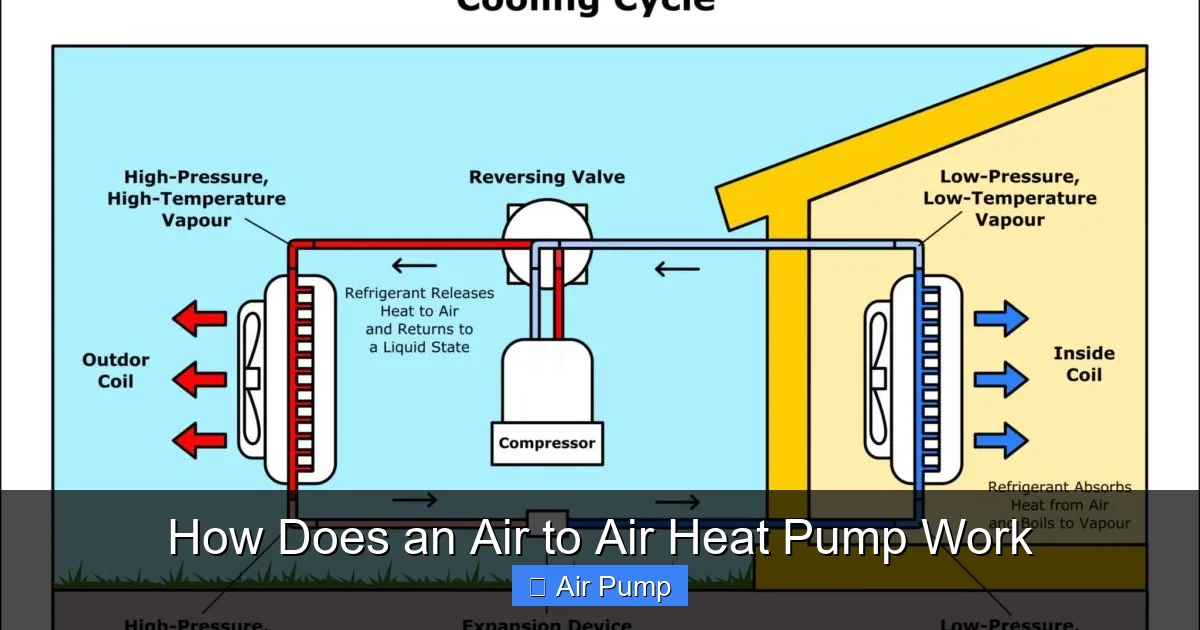
The core process that makes an air to air heat pump work is the refrigeration cycle. Let’s break down each step:
Visual guide about How Does an Air to Air Heat Pump Work
Image source: maitzhomeservices.com
Step 1: Evaporation (Heat Absorption)
The cycle begins with the refrigerant in a low-pressure, cold liquid state passing through the evaporator coil outside. Even in cold weather, the refrigerant absorbs heat from the surrounding air. As it absorbs heat, the refrigerant evaporates into a gas.
Tip: Modern heat pumps are designed to operate efficiently at very low outdoor temperatures by using specially formulated refrigerants.
Step 2: Compression
The gaseous refrigerant then flows into the compressor. The compressor compresses the refrigerant, increasing its temperature and pressure. This hot, high-pressure gas then moves toward the condenser coil inside your home.
Step 3: Condensation (Heat Release)
Inside the condenser coil, the high-pressure refrigerant releases heat to the indoor air. As it cools, the refrigerant condenses back into a liquid. This process heats the indoor space, providing warmth during winter months.
Step 4: Expansion
The liquid refrigerant passes through the expansion valve, which reduces its pressure. The refrigerant then re-enters the evaporator coil outside, and the cycle repeats.
How the Reversal Function Works
Most air to air heat pumps feature a reversing valve. This component allows the system to switch between heating and cooling modes. When cooling is needed, the reversing valve reverses the flow of refrigerant, making the indoor coil act as an evaporator and the outdoor coil as a condenser, removing heat from inside your home.
Tip: Modern heat pumps can switch between modes seamlessly, providing year-round comfort.
Step-by-Step Operation in Heating Mode
Here’s how the heat pump works during winter:
- The outdoor fan pulls outside air over the evaporator coil.
- The refrigerant absorbs heat and evaporates.
- The compressor compresses the refrigerant, raising its temperature.
- The warm refrigerant releases heat inside via the indoor coil (acting as the condenser).
- The indoor fan distributes warm air through your home.
- The refrigerant cools and cycles back outside to repeat the process.
Step-by-Step Operation in Cooling Mode
During summer, the system reverses the cycle:
- The indoor fan pulls warm air from inside your home over the indoor coil.
- The refrigerant absorbs heat and evaporates.
- The compressor raises the refrigerant’s temperature and pressure.
- The refrigerant releases heat outside via the outdoor coil.
- The outdoor fan expels warm air.
- The cycle repeats to cool the indoor environment.
Practical Tips for Optimal Performance
- Proper placement: Install the outdoor unit in a shaded, well-ventilated area to maximize efficiency.
- Regular maintenance: Clean filters, coils, and check refrigerant levels annually.
- Thermostat settings: Use programmable thermostats for better energy savings.
- Insulation: Improve home insulation to reduce workload on the heat pump.
Common Troubleshooting Tips
- System not heating or cooling: Check thermostat settings and circuit breakers.
- Strange noises: Inspect for debris or loose parts; call a technician if needed.
- Reduced efficiency: Ensure filters are clean and refrigerant levels are adequate.
- Frost buildup: Defrost cycle may be needed; ensure outdoor fan is working properly.
Conclusion
Understanding how an air to air heat pump works can help you appreciate its efficiency and versatility. By transferring heat from the outside air, it provides an eco-friendly way to heat and cool your home all year round. Proper installation, maintenance, and understanding of its operation are key to maximizing its benefits. With advances in technology, modern heat pumps are more effective in colder climates and continue to be a sustainable choice for home comfort.
