



Adjusting the pressure on your nail gun is essential for achieving perfect results and ensuring safety. This guide walks you through each step, from understanding your tool to fine-tuning the pressure for different tasks, so you can work confidently and efficiently.
How to Adjust Pressure on Nail Gun
If you’re working with a nail gun, one of the most important skills to master is adjusting the pressure. Proper pressure ensures your nails are driven in correctly, preventing damage to your workpiece and maintaining safety. Whether you’re a DIY enthusiast or a professional, this comprehensive guide will teach you how to adjust the pressure on your nail gun effectively.
Key Takeaways
- Understanding your nail gun: Know your tool’s specifications and pressure adjustment features.
- Locating the pressure regulator: Find the pressure adjustment knob or dial on your nail gun.
- Setting the correct pressure: Use a compressor with a pressure gauge to fine-tune the nail gun’s pressure.
- Testing and adjusting: Always test on scrap material before working on your project.
- Adjusting for different tasks: Increase pressure for hard materials and decrease for softer ones.
- Safety tips: Turn off the nail gun and disconnect it before making adjustments to prevent accidents.
- Troubleshooting: Learn common issues related to pressure settings and how to fix them.
Understanding Your Nail Gun and Compressor
Before diving into adjustments, it’s crucial to understand the components involved. A nail gun (also called a pneumatic nailer) works in tandem with an air compressor. The compressor supplies compressed air, which powers the nail gun. The pressure at which the compressor delivers air directly affects how the nail gun operates.
Key Components
- Air compressor: Provides the pressurized air. It usually has a pressure gauge and a regulator.
- Regulator: Controls the output pressure from the compressor.
- Pressure adjustment knob/dial: Found on the nail gun or compressor, used to set the desired pressure.
- Nail gun: The tool that drives nails into materials, with a built-in pressure regulator or adjustment feature.
Step 1: Gather Your Tools and Safety Equipment
Before adjusting your nail gun pressure, ensure you have the right tools and safety gear:
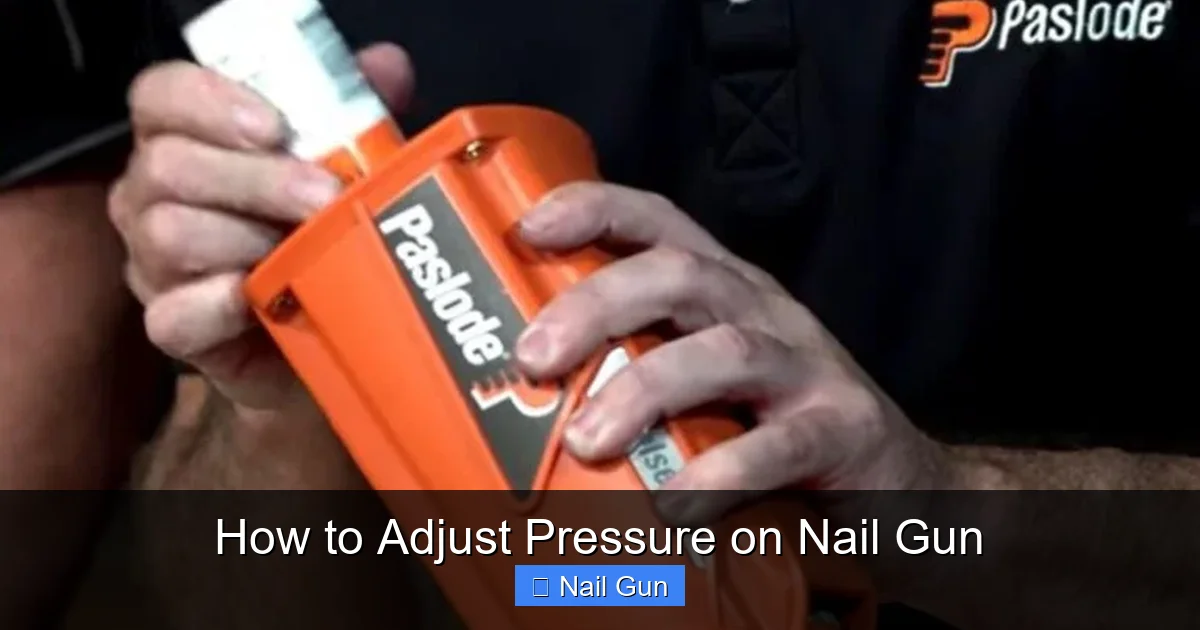
Visual guide about How to Adjust Pressure on Nail Gun
Image source: toolsmirror.com
- Air compressor with pressure gauge
- Adjustable wrench or screwdriver (if needed)
- Safety goggles and gloves
- Scrap wood or test material
Safety first! Always disconnect the nail gun from the air supply before making adjustments.
Step 2: Turn Off and Disconnect the Nail Gun
Why?
This prevents accidental firing or injury while you’re adjusting settings.

Visual guide about How to Adjust Pressure on Nail Gun
Image source: i.ytimg.com
How?
- Switch off the nail gun if it has a power switch.
- Disconnect the air hose from the nail gun.
- Release remaining air pressure by pressing the trigger in a safe area.
Step 3: Locate the Pressure Adjustment Control
The location varies by model:
- On the nail gun: Look for a small dial, knob, or screw near the contact tip or on the side.
- On the compressor: Adjust the pressure at the compressor’s regulator, which controls the air delivered to the nailer.
Consult your nail gun’s manual if you’re unsure where the adjustment feature is.
Step 4: Adjust the Compressor Pressure
Set the compressor’s pressure first
This is often the main control point for nail gun pressure. Follow these steps:
- Connect your compressor to a power source and turn it on.
- Check the compressor’s pressure gauge. It should read “cut-in” (minimum) and “cut-out” (maximum) pressure levels.
- Locate the pressure regulator knob. Turn it clockwise to increase pressure, counterclockwise to decrease.
- Set the compressor’s pressure to the recommended level for your nail gun and project. Typical pressure ranges are between 70-120 PSI, depending on the nailer and material.
Tip: Always start at a lower pressure and gradually increase. You can fine-tune later on the nail gun itself.
Adjust the Nail Gun’s Pressure (if applicable)
Some nail guns have a built-in pressure control. If yours does, follow these steps:
- Locate the pressure adjustment screw or dial on the nail gun.
- Use a screwdriver or turn the dial to increase or decrease the pressure setting.
- Refer to the manual for the recommended pressure range for your specific model.
Step 5: Test on Scrap Material
Always test your adjustment before starting your actual project:
- Reconnect the air hose to the nail gun.
- Turn the nail gun back on.
- Set the nailer on a piece of scrap wood similar to your project material.
- Shoot a few nails and observe how they penetrate.
If nails are driven too deep or not enough, adjust the pressure accordingly and test again.
Step 6: Fine-Tune the Pressure Settings
Based on your test results, make small adjustments:
- If nails are over-penetrating or damaging the material, lower the pressure.
- If nails are not driving in fully, or they’re sticking out, increase the pressure.
Repeat testing until you achieve the desired nail depth and performance. Remember, consistency is key for professional results.
Step 7: Apply Proper Pressure for Different Tasks
Different materials require different pressure settings:
- Softwood (pine, cedar): Use lower pressure (around 70-90 PSI).
- Hardwood (oak, maple): Increase pressure (90-120 PSI).
- Composite or engineered wood: Adjust based on firmness; start at medium pressure.
- Specialized tasks: Consult your nail gun’s manual for specific recommendations.
Adjust the compressor or nail gun pressure accordingly to suit each task.
Step 8: Safety and Maintenance Tips
- Always disconnect: Turn off and disconnect the nail gun before making adjustments or clearing jams.
- Regular inspection: Check for leaks, damage, or wear in hoses and fittings.
- Clean the tool: Keep your nail gun clean for consistent performance.
- Use the correct nails: Use nails compatible with your nail gun to prevent jams and damage.
Troubleshooting Common Issues
- Nails not driving in properly: May need higher pressure or a different nail length.
- Over-penetration: Lower the pressure to prevent damage or safety hazards.
- Jamming or misfiring: Check for debris, adjust pressure, or replace worn parts.
- Air leaks: Tighten fittings or replace damaged hoses and seals.
Conclusion
Adjusting the pressure on your nail gun is straightforward but vital for safety and quality results. By understanding your tool’s components, carefully setting the compressor pressure, and testing on scrap material, you can achieve perfect nail penetration for any project. Regular maintenance and safety precautions will keep your nail gun working smoothly for years to come.
Final Tips
- Always follow the manufacturer’s recommended pressure settings.
- Start with lower pressure and increase gradually.
- Test before working on your actual project.
- Wear safety gear and disconnect the tool during adjustments.
🎥 Related Video: How to adjust the power of nailer
📺 Maker Technology 📡
