


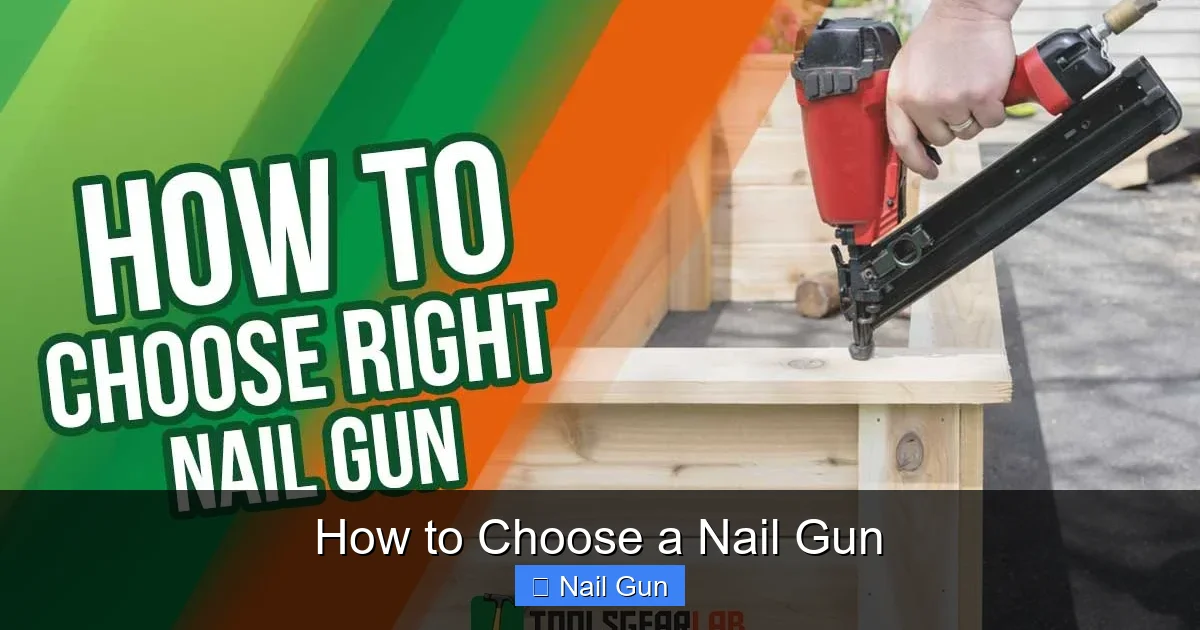
Choosing the right nail gun can make your projects easier and more efficient. In this guide, we’ll walk you through the essential factors to consider, including types, power sources, and features, so you can make an informed decision and find the perfect tool for your needs.
How to Choose a Nail Gun
If you’re tackling a woodworking project or remodeling job, a nail gun can be a real lifesaver. But with so many types and features available, choosing the right one can be overwhelming. This comprehensive guide will help you understand what to look for so you can pick the perfect nail gun for your needs.
Key Takeaways
- Identify your project needs: Different projects require different types of nail guns, such as framing or finishing nailers.
- Understand power sources: Nail guns can be pneumatic, electric, or gas-powered—each with pros and cons.
- Consider nail size and gauge: Ensure the nail gun supports the appropriate nail length and gauge for your work.
- Look for safety features: Features like contact tips and trigger locks help prevent accidents.
- Evaluate weight and ergonomics: Choose a lightweight, comfortable nail gun for extended use.
- Set a budget and compare brands: Balance quality and price to find a reliable nail gun within your budget.
Understanding the Basics of Nail Guns
A nail gun, also called a nailer, is a power tool designed to drive nails into wood or other materials quickly and efficiently. It saves you time and effort compared to manual nailing. But not all nailers are created equal. The right one depends on your project, experience, and preferences.
Step 1: Determine Your Project Type
Identify the kind of work you’ll do
The first step is to think about what you’ll use the nail gun for. Different projects require different types of nail guns. Here are some common types:
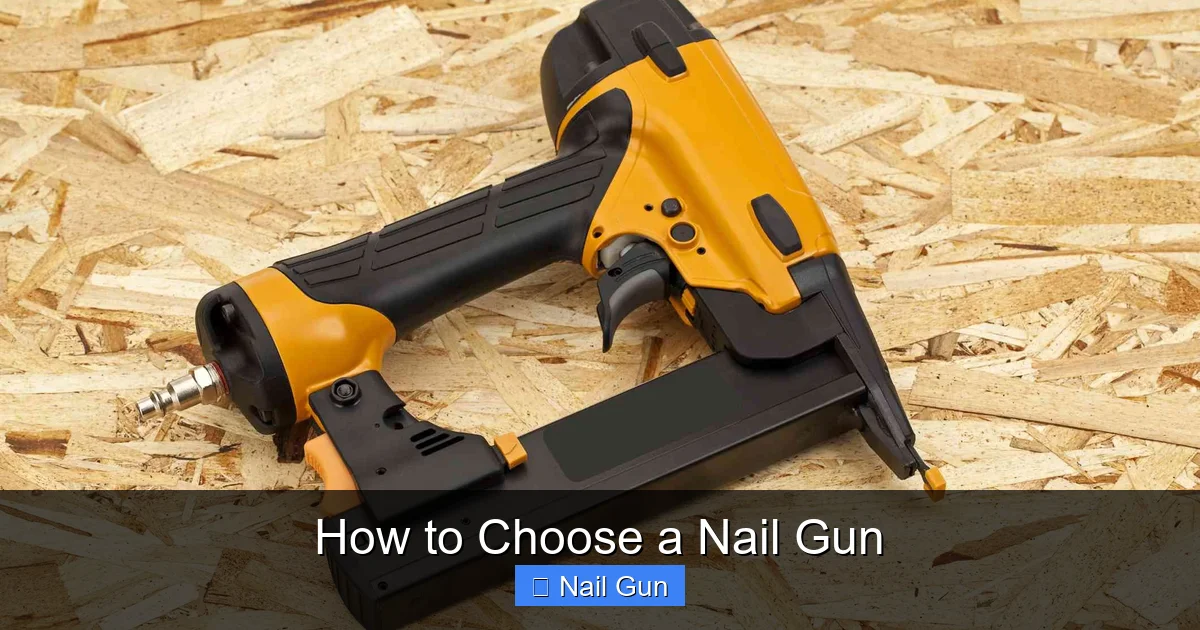
Visual guide about How to Choose a Nail Gun
Image source: thespruce.com
- Framing nailers: For building walls, decks, and framing projects. They handle larger nails (typically 2-3.5 inches).
- Finish nailers: For trim, molding, and cabinetry. They use smaller nails (1-2.5 inches) for a neat finish.
- Brad nailers: For delicate projects like furniture or intricate trim. They use very small nails (up to 2 inches).
- Pin nailers: For detailed work and small trim. They use very thin nails (up to 1.5 inches).
- Roofing nailers: For installing shingles and roofing materials.
Example:
If you’re building a deck, a framing nailer is ideal. For finishing carpentry or furniture, a finish nailer might be better.
Step 2: Choose the Power Source
Understand your options
Nail guns come with three main power sources:
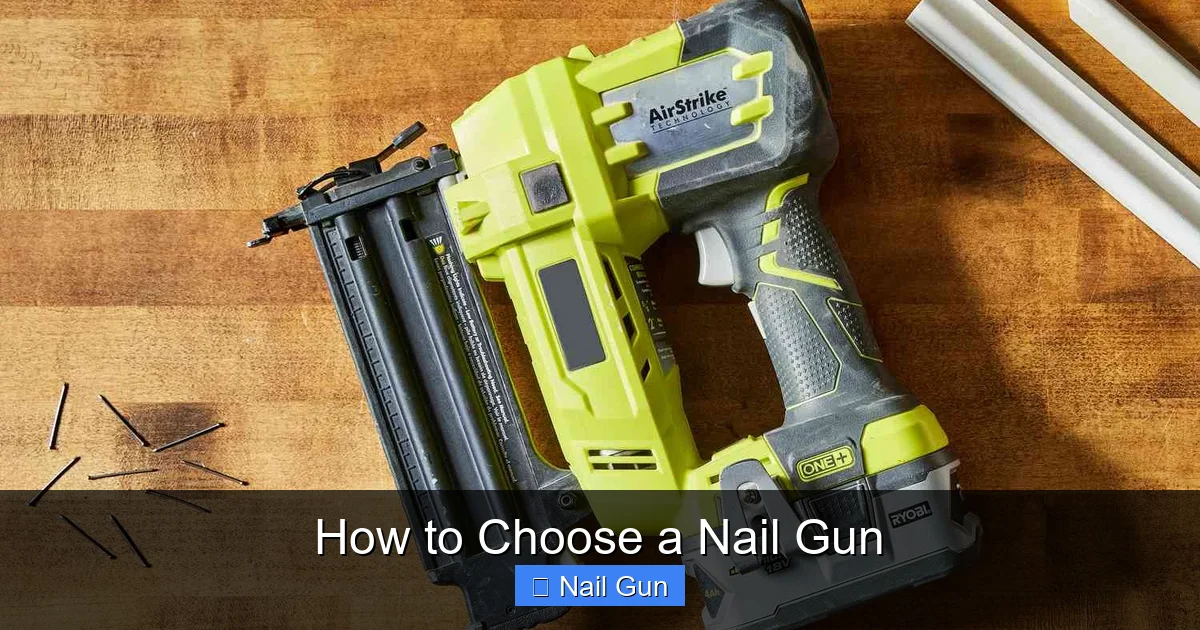
Visual guide about How to Choose a Nail Gun
Image source: thespruce.com
- Pneumatic (air-powered): Uses compressed air from an air compressor. They are powerful, reliable, and common in professional settings.
- Electric (cordless): Battery-powered nailers offer portability and ease of use. They are suitable for light to medium tasks.
- Gas-powered (cordless): Use a small fuel canister combined with a battery. They provide good mobility and power, often comparable to pneumatic tools.
Practical tips:
- If you already own an air compressor, a pneumatic nailer is cost-effective and powerful.
- For portability without hoses, cordless electric or gas nailers are better.
- Consider battery life and charging time for cordless options.
Step 3: Match Nail Size and Gauge to Your Project
Understanding nail specifications
Nail guns support different nail lengths and gauges. Choosing the right size ensures strong, secure fastening and prevents damage.
- Nail length: Usually ranges from 1 inch to 3.5 inches. Larger nails are used for framing; smaller nails for finish work.
- Gauge: Thicker nails have a lower gauge number (e.g., 10-gauge), while thinner nails have a higher gauge (e.g., 18-gauge). Match the gauge with your project for a neat finish.
Tip:
Always check the nailer’s specifications to ensure compatibility with your desired nails. Using incompatible nails can cause jams or damage.
Step 4: Prioritize Safety Features and Ergonomics
Safety features to look for
- Contact tip safety: Prevents accidental firing when the tip isn’t pressed against the surface.
- Trigger lock: Disables the trigger when not in use, reducing accidental firing.
- Anti-dry fire mechanism: Protects nails and tool from damage if nails run out.
Ergonomics and comfort
- Choose a lightweight model to reduce fatigue.
- Look for a comfortable grip and balanced weight distribution.
- Consider noise levels, especially for indoor use.
Step 5: Evaluate Additional Features and Budget
Features to consider
- Depth adjustment: Controls how deep nails are driven for a cleaner finish.
- Sequential or bump firing: Sequential firing offers precision; bump firing allows faster work.
- Magazine capacity: Larger capacity means fewer reloads.
- No-mar tip: Protects surfaces from scratches.
Budget tips:
- Set a realistic budget based on your project frequency and complexity.
- Read reviews and compare brands for reliability and durability.
- Consider purchasing a kit with extra nails and accessories for better value.
Step 6: Test Before Buying
If possible, try out the nailer in-store. Check for comfort, ease of use, and noise. Ensure the trigger feels responsive and safety features are accessible.
Troubleshooting Common Issues
- Jamming: Use compatible nails and clear jams carefully according to the manufacturer’s instructions.
- Misfiring: Check for proper nail loading and safety feature engagement.
- Inconsistent driving depth: Adjust the depth control and ensure the nailer is clean and well-maintained.
Conclusion
Choosing the right nail gun involves understanding your project needs, selecting the appropriate type and power source, and considering safety and ergonomic features. By following these steps, you can find a reliable tool that makes your work easier and more efficient. Remember, investing in a quality nailer tailored to your tasks will pay off in better results and safety.
Final Tips
- Always wear safety gear when operating a nail gun.
- Read the user manual thoroughly before use.
- Regular maintenance extends the lifespan of your nailer.
🎥 Related Video: Brad vs Pin vs Finish Nailer – Which Do You Choose?
📺 Ohio Power Tool
SHOP: https://www.ohiopowertool.com/categories/cordless-tools/cordless-nailers-nail-guns Whether its a brad, pin or finish nailer, …
