


Have you ever needed to drill a hole in a tin can but weren’t sure how to do it safely and easily? Whether you’re crafting a DIY project, creating a planter, or fixing something around the house, knowing the right way to drill through tin can save you time and frustration.
In this guide, you’ll learn simple steps and handy tips that make the job quick and hassle-free. Keep reading, and you’ll gain the confidence to handle tin cans like a pro—no special tools or experience needed!
Tools Needed
Drilling a hole in a tin can requires specific tools to do the job safely and effectively. Choosing the right equipment helps avoid damage and injury. Prepare your workspace and gather all necessary items before starting.
Choosing The Right Drill
Use a drill with adjustable speed settings. A cordless drill is easy to handle and move around. Pick a drill bit made for metal, such as a high-speed steel bit. The size of the bit depends on the hole you want to make. A smaller bit is better for precision and control.
Safety Gear Essentials
Wear safety goggles to protect your eyes from metal shards. Use gloves to avoid cuts from sharp edges. A dust mask can stop you from breathing in tiny metal particles. Keep a clean, clutter-free area to reduce accidents.
Additional Helpful Tools
Clamp the can firmly to prevent it from spinning. A marker helps to mark the exact drilling spot. Use a piece of wood under the can to protect your work surface. A file or sandpaper smooths sharp edges after drilling.

Credit: www.learningandexploringthroughplay.com
Preparing The Tin Can
Preparing the tin can is the first step before drilling a hole. This step makes drilling easier and safer. A clean, marked, and stable can ensures a smooth process. Take your time with these preparations.
Cleaning The Surface
Remove any dirt or labels from the can’s surface. Use warm water and soap to clean the area. Dry the can completely to avoid slipping during drilling. A clean surface helps you see where to drill clearly.
Marking The Drill Spot
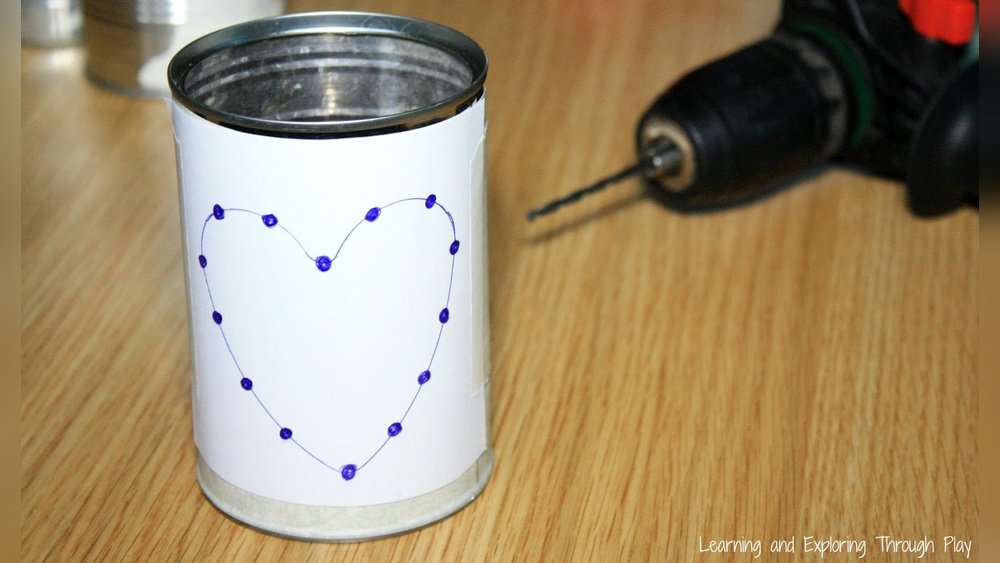
Choose the exact spot for the hole. Use a permanent marker or a pencil to mark it. Make the mark visible and small. This helps keep the drill bit steady on the spot.
Securing The Can
Hold the can firmly to stop it from moving. Use a clamp or place it between two heavy objects. Keep your hands away from the drill area. A stable can prevents accidents and makes drilling accurate.
Drilling Techniques
Drilling a hole in a tin can requires some care and the right techniques. Tin cans are thin and easy to damage. Using the correct drilling method helps make a clean hole without bending or cracking the can. Follow these steps to drill safely and smoothly.
Selecting The Drill Bit
Choose a drill bit made for metal. A high-speed steel (HSS) bit works well. Pick a small bit to start, about 1/8 inch wide. This size controls the hole shape and prevents tearing. Larger bits can be used later to widen the hole.
Starting The Hole
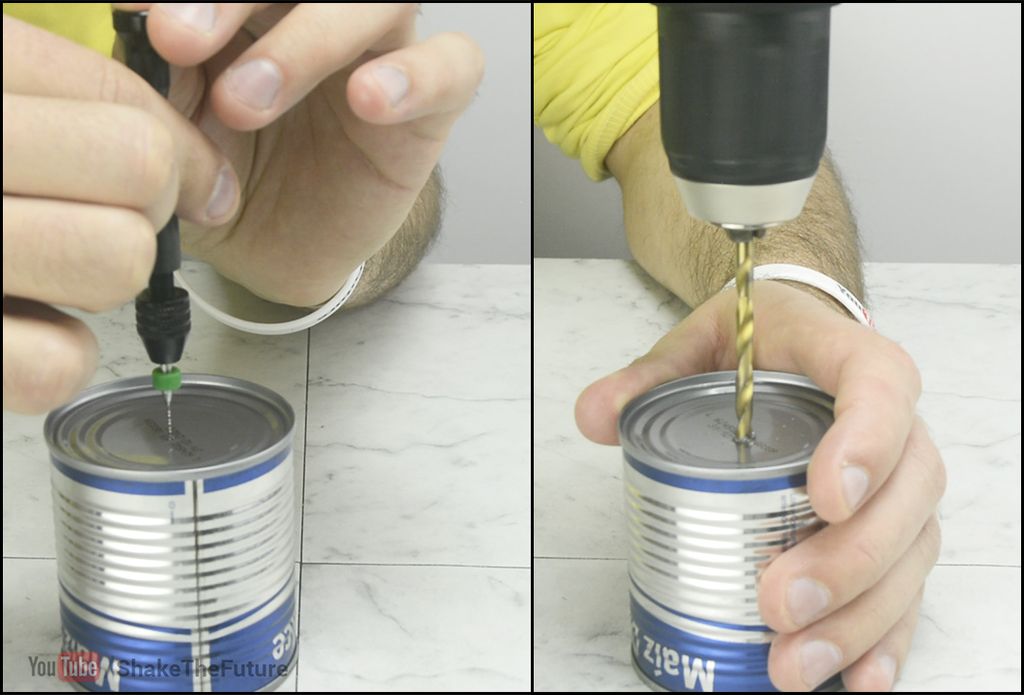
Mark the spot with a pencil or marker. Place the can on a firm surface. Hold it steady with one hand or clamp it gently. Begin drilling slowly at the mark. Let the bit cut through the tin without pushing hard. A slow start prevents slipping.
Maintaining Control
Keep the drill steady and straight. Use a low speed setting on your drill. Apply light pressure and let the bit do the work. Pause if the drill feels hot or the can vibrates too much. Control avoids dents and sharp edges around the hole.
Credit: www.instructables.com
Post-drilling Tips
After drilling a hole in a tin can, some important steps follow. These steps keep you safe and ensure the hole is ready for use. Taking time for post-drilling care improves your project’s finish and safety.
Removing Sharp Edges
Drilling leaves sharp, jagged metal around the hole. These edges can cut your skin. Use sandpaper or a metal file to smooth the edges. Gently rub the tool around the hole until no sharp bits remain. Wear gloves to protect your hands during this step.
Cleaning Up Debris
Small metal pieces can stick near the hole. These bits may cause injury or affect your project. Blow away the debris or use a soft brush to clean the area. Wipe the can with a damp cloth to remove dust. Keep the workspace clean to avoid accidents.
Checking The Hole Quality
Look closely at the hole for size and shape. The hole should be round and even. If it is too big or rough, fix it with a file or drill bit. Make sure the hole fits your project needs perfectly. A good hole means better results.
Common Mistakes To Avoid
Drilling a hole in a tin can might seem easy, but many make mistakes that cause trouble. These errors can damage the can or hurt you. Avoiding common mistakes makes the job safer and faster. Learn what to watch out for to get it right the first time.
Drilling Without Support
Never hold the tin can in the air while drilling. The can may spin or slip, causing injury. Place the can on a solid surface or clamp it down. Support keeps the can steady and helps drill a clean hole. It also stops the drill bit from bending or breaking.
Using Incorrect Drill Bits
Not all drill bits work on metal. Avoid using wood or plastic bits on a tin can. These bits dull quickly and may slip. Use a metal drill bit or a high-speed steel bit for best results. The right bit cuts cleanly and lasts longer.
Ignoring Safety Precautions
Skipping safety steps risks serious injury. Always wear safety glasses to protect your eyes. Gloves protect your hands from sharp edges. Work in a well-lit area and keep your fingers clear of the drill. Take your time to avoid accidents.

Credit: www.youtube.com
Frequently Asked Questions
How Do I Safely Drill A Hole In A Tin Can?
Wear protective gloves and goggles before drilling. Secure the can on a stable surface to avoid slipping. Use a sharp drill bit suitable for metal to ensure clean holes and reduce injury risk.
What Drill Bit Size Is Best For Tin Cans?
Use small to medium-sized drill bits, typically between 1/16 and 1/4 inch. This size range prevents tearing the tin and creates precise holes for various uses.
Can I Drill Holes Without Puncturing The Other Side?
Yes, gently apply pressure and drill slowly. Stop once the bit breaks through to avoid enlarging or damaging the opposite side.
How Do I Prevent Sharp Edges After Drilling?
Use a metal file or sandpaper to smooth rough edges. This reduces the risk of cuts and creates a safer, cleaner finish around the hole.
Conclusion
Drilling a hole in a tin can is simple and quick. Use the right tools and take safety steps. Mark the spot clearly before you start drilling. Hold the can steady to avoid slips. Clean the edges after drilling to prevent cuts.
This skill helps in many DIY projects. Practice a few times to get comfortable. Soon, you will do it with confidence and ease. Keep these tips in mind for best results.
