


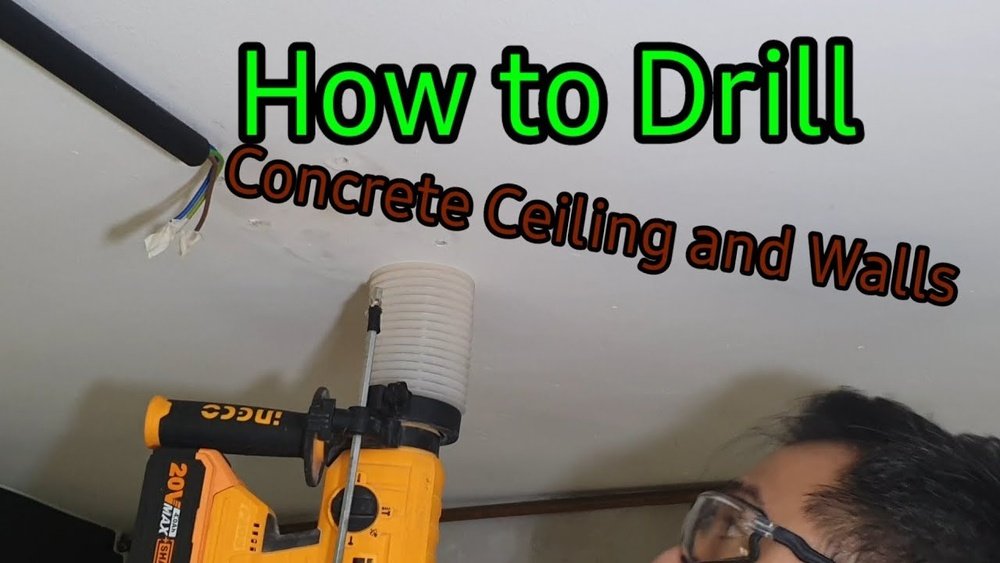
Are you planning to hang something heavy or install fixtures on your concrete ceiling but don’t know where to start? Drilling into concrete can seem tough and risky if you’re not sure how to do it right.
But with the right tools and simple steps, you can tackle this task confidently and safely. In this guide, you’ll discover exactly how to drill into your concrete ceiling without cracks or damage. Keep reading, and by the end, you’ll feel ready to handle the job like a pro.
Tools Needed
Drilling into a concrete ceiling requires the right tools. Using proper equipment makes the job easier and safer. This section covers the key tools needed for a successful drill.
Choosing The Right Drill
Pick a hammer drill for concrete ceilings. It combines rotation and pounding action. This helps break the hard surface quickly. Corded drills give steady power. Battery-powered ones offer more freedom but less strength. Choose a drill with adjustable speed for better control.
Selecting Drill Bits
Use masonry drill bits for concrete. They have a special tip to cut through hard material. Carbide-tipped bits last longer and drill faster. Match the bit size to your anchor or screw. Replace dull bits to avoid damage and slow work.
Safety Gear Essentials
Wear safety glasses to protect your eyes from dust and chips. Use a dust mask to avoid breathing concrete particles. Ear protection helps reduce noise from the drill. Gloves protect your hands from vibration and sharp edges. Secure a hard hat if working overhead in construction areas.
Preparing The Ceiling
Preparing the ceiling is an important step before drilling into concrete. It helps avoid mistakes and keeps the work safe. Proper preparation saves time and prevents damage to the ceiling or tools.
Locating Studs And Wiring
Check the ceiling for wooden studs and electrical wiring. Use a stud finder or metal detector to find these hidden elements. Avoid drilling near wires to prevent electric shocks. Mark the safe spots clearly for your drill points.
Marking Drill Points
Measure and mark the exact spots where you will drill. Use a pencil or tape to make small marks on the ceiling. Double-check the measurements to ensure accuracy. Clear marks help guide the drill and keep holes in the right place.
Clearing The Work Area
Remove furniture and cover the floor with a drop cloth. This protects your belongings from dust and debris. Keep the area well-lit and free of obstacles. A clean workspace helps you work faster and safer.
Drilling Techniques
Drilling into a concrete ceiling requires special care and proper techniques. Using the right methods helps prevent damage to your tools and the ceiling. It also ensures the hole is clean and accurate. Learn how to control your drill and keep the work area tidy.
Setting Drill Speed And Mode
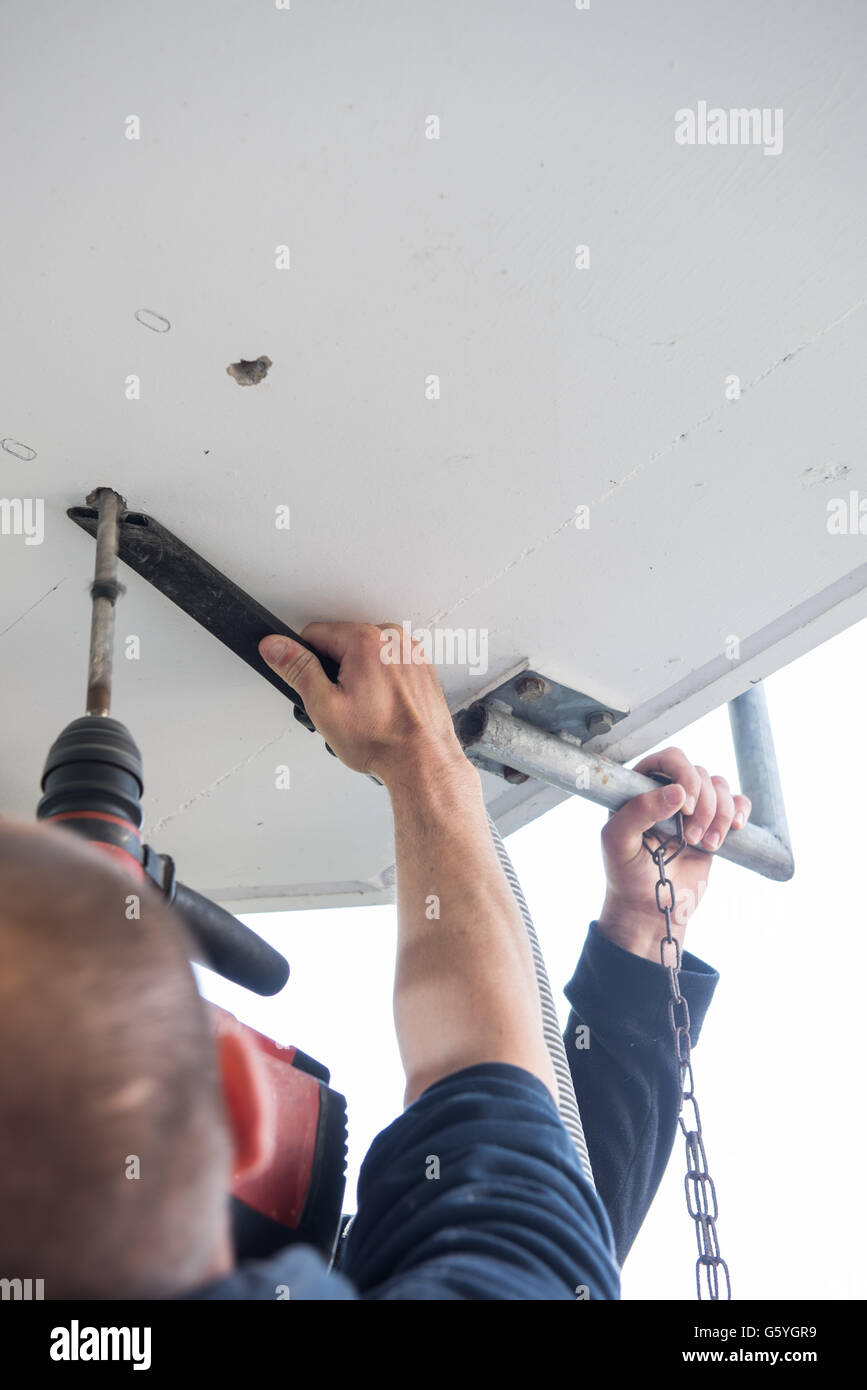
Choose a drill with a hammer function for concrete. This mode combines rotation and hammering. Set the speed to low or medium. High speed can overheat the bit and damage the ceiling. Start slow to find the right pace. Adjust speed as needed for smooth drilling.
Applying Proper Pressure
Press the drill firmly but gently. Too much force can break the bit or crack the ceiling. Too little pressure slows drilling and wears out the bit. Let the drill do the work. Keep steady pressure and avoid pushing hard. Pause occasionally to check progress and clear debris.
Managing Dust And Debris
Concrete dust can be harmful and messy. Use a vacuum or dust collector near the drill. Wear a mask to protect your lungs. Clear dust from the hole often. This keeps the drill bit cool and improves drilling speed. Clean the area regularly to maintain visibility and safety.

Credit: diy.stackexchange.com
Troubleshooting Common Issues
Drilling into a concrete ceiling can be tough. Problems may slow you down or affect your work. Knowing how to fix common issues helps you finish the job smoothly. Below are some key problems and simple ways to solve them.
Dealing With Drill Bit Slippage
Drill bit slippage happens when the bit moves on the surface without drilling. This occurs if the bit tip is dull or the surface is smooth. Start by marking the spot with a center punch or nail. Use a hammer to create a small dent. This dent helps the bit grip the concrete better. Also, check that you use a masonry drill bit. It is made to drill into hard materials like concrete.
Handling Overheating Bits
Overheating makes the drill bit lose strength and break. It happens if you drill too fast or press too hard. To avoid this, use slow and steady pressure. Let the drill do the work without forcing it. Take breaks and pull the bit out often. This clears dust and lets the bit cool down. Using water to cool the bit can also help in some cases.
Fixing Inaccurate Holes
Sometimes holes turn out off-center or crooked. This can ruin your project. To fix this, double-check your marking before drilling. Hold the drill steady and straight during the process. Use both hands to keep control. If the hole starts to go wrong, stop and realign the drill. Practice on scrap concrete can improve your accuracy.
Finishing Touches
After drilling into a concrete ceiling, the job is not yet done. The finishing touches make sure your work lasts long and stays safe. Taking time to clean, install properly, and check stability matters a lot. These steps prevent damage and keep your fixtures strong.
Cleaning The Hole
Remove dust and debris from the drilled hole. Use a brush or a vacuum to clear the inside. Clean holes help anchors hold better. Dust can stop anchors from fitting tightly. Take a moment to ensure the hole is clear and smooth.
Installing Anchors Or Fixtures
Choose the right anchor for the weight and type of fixture. Push or tap anchors gently into the hole. Avoid forcing them, which can crack the concrete. Secure screws or bolts into the anchors firmly. Proper installation stops fixtures from falling or loosening.
Inspecting For Stability
Check if the fixture feels steady and fixed. Gently shake or press it to test strength. If it moves, tighten screws or try a different anchor. A stable fixture means safety and durability. Never hang anything heavy without confirming stability first.
Credit: www.alamy.com

Credit: www.youtube.com
Frequently Asked Questions
What Tools Are Needed To Drill Into A Concrete Ceiling?
You need a hammer drill, masonry drill bits, safety goggles, and a dust mask. These tools ensure efficient and safe drilling into concrete ceilings.
How Do I Choose The Right Drill Bit For Concrete?
Select a carbide-tipped masonry bit matching your anchor size. The right bit ensures clean holes and proper anchor fitting in concrete.
Can I Drill Into Concrete Ceilings Without A Hammer Drill?
Using a regular drill is possible but inefficient. A hammer drill provides the necessary impact to penetrate concrete effectively and quickly.
How To Avoid Cracking The Concrete Ceiling While Drilling?
Use a slow drill speed and steady pressure. Start with a smaller bit and gradually increase size to prevent cracks.
Conclusion
Drilling into a concrete ceiling takes care and the right tools. Start with a good drill and a carbide-tipped bit. Mark your spot clearly and wear safety gear. Take your time and keep the drill steady. Avoid rushing to prevent cracks or damage.
Clean the hole before inserting anchors or screws. Practice on scrap concrete if you can. Following these steps helps you work safely and effectively. Now, you can hang items or install fixtures with confidence. Simple steps make a tough job easier.
