


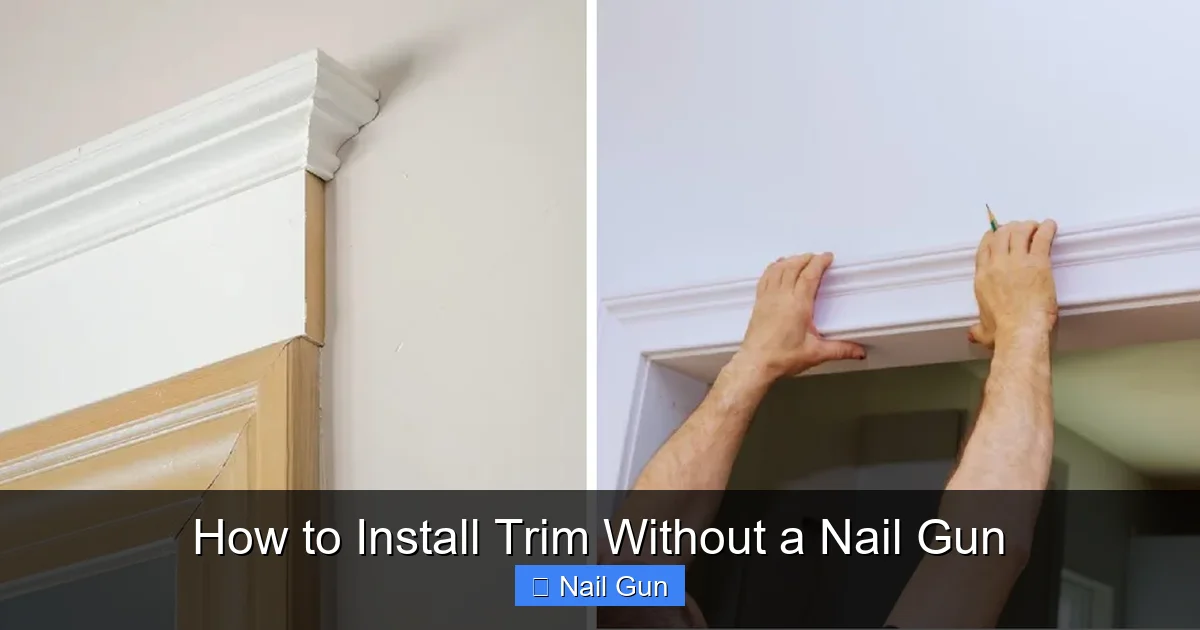
Installing trim without a nail gun is achievable with the right tools and techniques. This guide walks you through each step, offering practical tips to achieve a clean, professional finish without using a nail gun.
Key Takeaways
- Use alternative fasteners: Nails, screws, or construction adhesive can be effective substitutes for a nail gun.
- Proper preparation: Measure, cut, and sand the trim precisely for a perfect fit.
- Choose the right tools: Hammer, finishing nails, or a screwdriver are essential for manual installation.
- Secure the trim: Use clamps or painter’s tape to hold pieces in place while fastening.
- Finish with caulk and paint: Fill gaps and nail holes for a seamless look.
- Patience matters: Take your time to ensure accurate placement and a professional finish.
Introduction
Installing trim adds a beautiful finishing touch to any room. Usually, a nail gun makes this job easy and quick. But what if you don’t have one? Or if you prefer to avoid using power tools? Don’t worry! You can still install trim successfully with simple hand tools and some patience. In this guide, we’ll show you how to install trim without a nail gun, step by step. By the end, you’ll be able to achieve a professional-looking finish without power tools.
Tools and Materials Needed
- Measuring tape
- Carpenter’s pencil
- Saw (miter or hand saw)
- Hammer
- Finishing nails or brad nails
- Nail set (to countersink nails)
- Construction adhesive (optional)
- Clamps or painter’s tape
- Level or straightedge
- Caulk and caulk gun
- Sandpaper or sanding block
- Paint or stain (optional)
Step 1: Measure and Plan
Accurate Measurement
Start by measuring the length of each wall where you want to install trim. Use a tape measure and mark the measurements on your trim pieces with a pencil. Always double-check your measurements for accuracy.

Visual guide about How to Install Trim Without a Nail Gun
Image source: nailicy.com

Visual guide about How to Install Trim Without a Nail Gun
Image source: i.ytimg.com
Cutting the Trim
Using a miter saw or hand saw, cut the trim to the measured lengths. For corners, cut at 45-degree angles to create neat miter joints. Use a level or straightedge to mark straight cuts if doing it by hand.
Preparing for Installation
Sand any rough edges and ensure the pieces fit well. Dry-fit the pieces around the wall to check for fit and make adjustments as needed.
Step 2: Mark the Wall and Prepare for Fastening
Find the Studs
Use a stud finder or tap along the wall to locate studs. Mark their positions with a pencil. Attaching the trim to studs ensures a secure hold.
Mark the Placement
Use a level to draw a straight line where the bottom of the trim will sit. This helps keep your installation even and professional-looking.
Step 3: Attach the Trim
Using a Hammer and Nails
Position the trim against the wall along your marked line. Hammer in finishing nails at stud points or every 12-16 inches for stability. Keep the nails flush with the surface or slightly below.
Nail Set for a Clean Finish
Use a nail set to countersink the nails. Gently tap the nail set with a hammer to drive nails below the surface without damaging the trim.
Alternative Fastening Methods
- Screws: For extra hold, especially on thicker trim, use screws and a drill. Be sure to countersink screws and fill the holes later.
- Construction Adhesive: Apply a strong construction adhesive on the back of the trim for added security. Press firmly and clamp if needed.
Step 4: Secure and Finish
Clamping and Taping
If needed, use clamps or painter’s tape to hold the trim in place while the adhesive sets or while you secure it with nails or screws. This helps prevent shifting.
Fill Nail Holes and Gaps
Once all pieces are installed, fill nail holes and any gaps with wood filler or caulk. Smooth with a putty knife or your finger.
Sanding and Painting
Sand the filled areas for a smooth surface. Prime and paint or stain the trim to match your decor. A neat finish is key for a professional look.
Practical Tips and Tricks
- Use painter’s tape: Protect nearby surfaces and keep your work area tidy.
- Take your time: Rushing can lead to mistakes. Measure twice, cut once.
- Work in sections: Install the trim in manageable segments to stay organized.
- Match the nails: Use nails that are appropriate in size for your trim to avoid splitting.
- Use a level: Regularly check your work to keep the trim straight.
Troubleshooting Common Issues
- Nails bending or not penetrating: Ensure you are hitting studs or use a longer nail. Keep the hammer steady and straight.
- Gaps or uneven joints: Double-check measurements before cutting. Use wood filler to correct minor gaps.
- Peeling or cracking paint: Sand smooth before painting, and ensure the surface is clean and dry.
Conclusion
Installing trim without a nail gun is entirely doable with patience and the right tools. By measuring carefully, securing trim with nails or screws, and finishing with caulk and paint, you can achieve a polished look. Remember, practice makes perfect, and your effort will pay off with beautiful, professionally finished trim.
Additional Tips
If you’re installing a large amount of trim, consider renting a nail gun for speed. But for small projects or for those who prefer manual work, the techniques above will serve you well. Don’t rush—take your time, and enjoy transforming your space!
🎥 Related Video: How to Nail Trim with a Hammer
📺 Better Homes and Gardens
Learn how to install trim using a hammer. Subscribe to the Better Homes and Gardens Channel: …
