


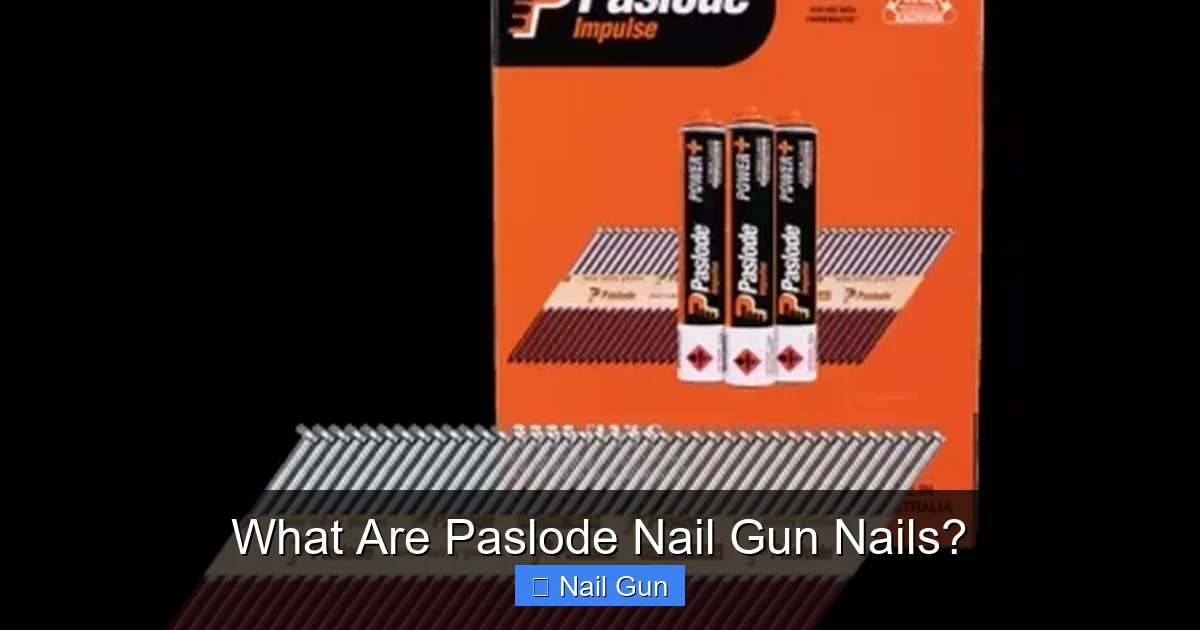
Paslode nail gun nails are specialized fasteners designed for use with Paslode cordless and pneumatic nail guns. They come in various types for framing, finishing, and roofing, ensuring strong, reliable performance on every job.
Key Takeaways
- Designed for Paslode Tools: Paslode nails are engineered to work seamlessly with Paslode nail guns, ensuring optimal performance and fewer jams.
- Available in Multiple Types: Choose from framing, finishing, brad, and roofing nails depending on your project needs.
- Collated for Efficiency: Most Paslode nails come in strips or coils, allowing for fast, continuous nailing without constant reloading.
- Durable Materials: Made from galvanized steel or stainless steel to resist rust and corrosion, especially in outdoor or high-moisture environments.
- Proper Sizing Matters: Using the correct nail length and gauge prevents damage to materials and ensures strong holds.
- Easy to Load and Use: Paslode nail guns are designed for quick reloading, making them ideal for professionals and DIYers alike.
- Compatible with Other Brands: While optimized for Paslode, many Paslode-style nails work in other cordless nailers with similar feed systems.
What Are Paslode Nail Gun Nails?
If you’ve ever worked on a construction site, tackled a home renovation, or built a deck, you’ve probably seen or used a nail gun. But not all nails are created equal—especially when it comes to power tools like Paslode nail guns. So, what exactly are Paslode nail gun nails?
In simple terms, Paslode nail gun nails are precision-engineered fasteners made specifically for use with Paslode cordless and pneumatic nail guns. These nails are designed to feed smoothly into the tool, fire consistently, and deliver strong, reliable holds in wood, metal, and other building materials. Whether you’re framing a house, installing trim, or securing shingles, Paslode nails are built to get the job done quickly and efficiently.
Unlike standard nails you’d buy at a hardware store, Paslode nails are collated—meaning they’re connected in strips or coils using plastic, wire, or paper strips. This allows them to be loaded into the nail gun’s magazine and fired in rapid succession without manual reloading after every nail. This feature is a game-changer for professionals and serious DIYers who value speed and consistency.
Why Choose Paslode Nails?
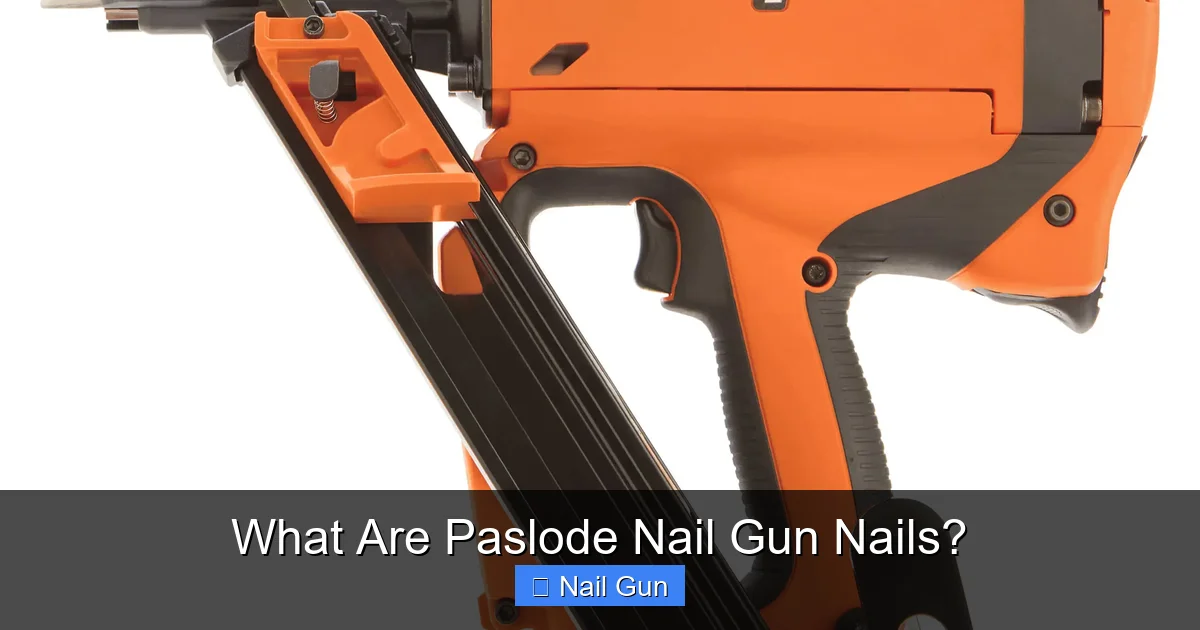
Visual guide about What Are Paslode Nail Gun Nails?
Image source: paslode.com
Paslode has been a trusted name in the construction industry for decades, known for innovation and reliability. Their nail guns are popular among contractors, carpenters, and builders—and for good reason. But the tool is only as good as the nails it uses.
Here’s why Paslode nails stand out:
- Precision Fit: Paslode nails are manufactured to exact specifications, ensuring they feed smoothly into the gun without jamming or misfiring.
- Consistent Performance: Whether you’re driving nails into dense hardwood or soft pine, Paslode nails deliver consistent depth and holding power.
- Reduced Downtime: With fewer jams and misfires, you spend less time troubleshooting and more time working.
- Long-Lasting Durability: Many Paslode nails are coated or made from corrosion-resistant materials, making them ideal for outdoor projects.
Types of Paslode Nail Gun Nails
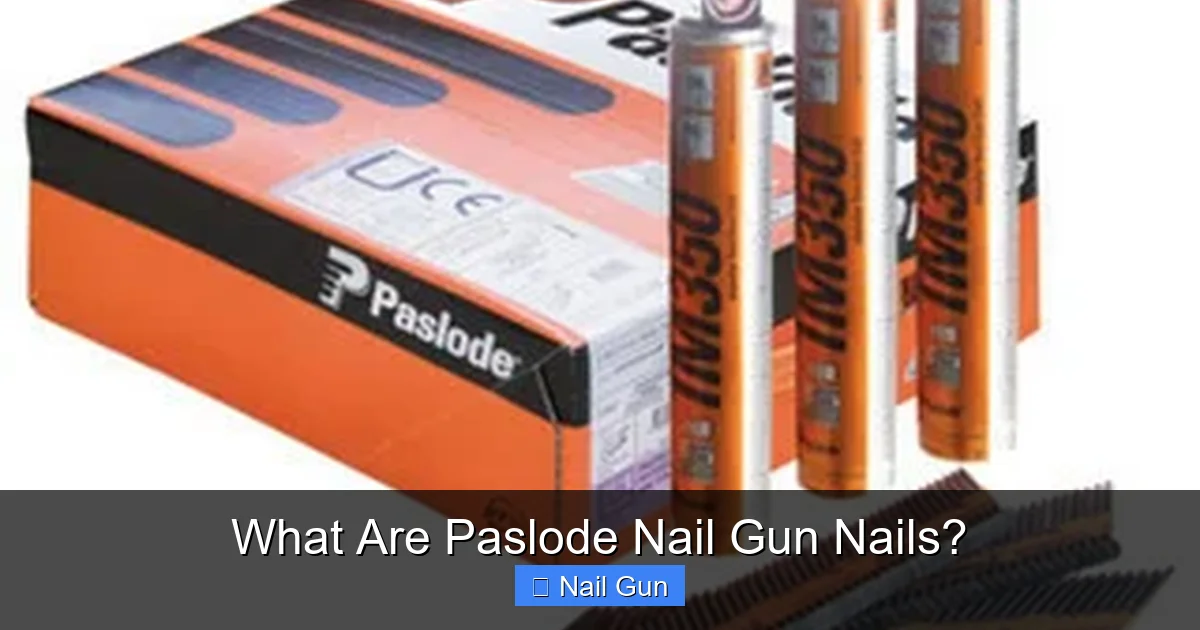
Visual guide about What Are Paslode Nail Gun Nails?
Image source: cdn11.bigcommerce.com
Not all Paslode nails are the same. They come in different styles, sizes, and materials, each suited for specific applications. Understanding the types available will help you choose the right nail for your project.
Framing Nails
Framing nails are the heavy-duty workhorses of the nail world. They’re long, thick, and designed to secure large structural pieces like wall studs, floor joists, and roof trusses.
- Common Sizes: 2″ to 3-1/2″ in length, 0.113″ to 0.131″ in diameter (gauge)
- Material: Usually galvanized steel for rust resistance
- Best For: House framing, deck building, fencing, and other structural work
Tip: Always check your local building codes—some areas require hot-dipped galvanized or stainless steel nails for outdoor framing to prevent corrosion.
Finishing Nails
Finishing nails are thinner and shorter than framing nails, designed for delicate work where appearance matters. They leave smaller holes and are often used with wood filler for a clean finish.
- Common Sizes: 15-gauge (1.62mm) and 16-gauge (1.52mm), ranging from 1″ to 2-1/2″
- Material: Bright steel, galvanized, or stainless steel
- Best For: Trim work, crown molding, baseboards, cabinet installation
Pro Tip: Use 15-gauge nails for heavier trim and 16-gauge for lighter moldings. The extra thickness of 15-gauge nails provides better holding power.
Brad Nails
Brad nails are even thinner than finishing nails—typically 18-gauge—and are nearly invisible when driven in. They’re perfect for lightweight trim and delicate materials that might split with larger nails.
- Common Sizes: 5/8″ to 2″ in length
- Material: Usually bright or galvanized steel
- Best For: Thin moldings, decorative trim, picture frames, and small craft projects
Note: While brad nails hold well in softwoods, they may not be strong enough for load-bearing applications.
Roofing Nails
Roofing nails are short, thick, and often come with large heads to prevent pull-through. They’re essential for securing shingles, underlayment, and roofing felt.
- Common Sizes: 3/4″ to 1-1/4″ in length, with 0.120″ shank diameter
- Material: Galvanized or stainless steel to withstand weather
- Best For: Asphalt shingles, roll roofing, and roof decking
Safety Tip: Always wear gloves and eye protection when handling roofing nails—their large heads can cause injury if mishandled.
How to Choose the Right Paslode Nails
Picking the right nail isn’t just about size—it’s about matching the nail to your tool, material, and project. Here’s a step-by-step guide to help you choose wisely.
Step 1: Check Your Nail Gun Model
Not all Paslode nail guns use the same nails. Some are designed for framing, others for finishing. Always refer to your tool’s user manual or the manufacturer’s website to confirm compatible nail types and sizes.
Example: The Paslode Impulse Framing Nailer (model IM350) uses 2″ to 3-1/2″ 30-degree paper-collated framing nails. Using the wrong angle or collation type can cause jams or damage the tool.
Step 2: Match Nail Gauge and Length to Your Project
The gauge (thickness) and length of the nail should match the material you’re fastening.
- Thick Materials: Use longer, thicker nails (e.g., 3″ framing nails for 2x4s)
- Thin or Delicate Materials: Use shorter, thinner nails (e.g., 18-gauge brads for trim)
Rule of Thumb: The nail should be at least 2.5 times the thickness of the material being fastened.
Step 3: Consider the Environment
If your project will be exposed to moisture, humidity, or outdoor elements, choose corrosion-resistant nails.
- Indoor Projects: Bright steel nails are fine
- Outdoor or High-Moisture Areas: Use galvanized or stainless steel nails
Example: For a deck or outdoor pergola, always use hot-dipped galvanized or stainless steel nails to prevent rust and ensure longevity.
Step 4: Verify Collation Type
Paslode nails come in different collation styles:
- Paper-Collated: Common for framing nails; easy to load and dispose of
- Plastic-Collated: Durable and weather-resistant, but can leave residue
- Wire-Collated: Strong hold, often used in industrial settings
Make sure your nail gun is compatible with the collation type. Most Paslode cordless framing nailers use paper-collated nails.
How to Load Paslode Nails
Loading nails into a Paslode nail gun is quick and easy—once you know how. Follow these steps for smooth operation.
Step 1: Turn Off the Tool
Always disconnect the power source (remove the battery or unplug the air hose) before loading nails. This prevents accidental firing.
Step 2: Open the Magazine
Slide or lift the magazine cover to access the nail chamber. On most Paslode models, this is located at the front or bottom of the tool.
Step 3: Insert the Nail Strip
Place the collated nail strip into the magazine, with the nails pointing downward and the collation strip facing the correct direction (usually marked inside the magazine).
Step 4: Close and Lock the Magazine
Secure the magazine cover and ensure it clicks into place. Some models have a latch or safety lock.
Step 5: Reconnect Power and Test
Reattach the battery or air hose. Perform a test fire into a scrap piece of wood to ensure proper feeding and firing.
Safety Reminder: Never point the nail gun at yourself or others, even when testing.
Troubleshooting Common Issues
Even with the right nails, problems can happen. Here’s how to fix common issues.
Nail Jams
Cause: Dirt, debris, or using the wrong nail size.
Solution: Turn off the tool, remove the battery, and clear the jam using the tool’s jam-clearing mechanism. Clean the magazine regularly.
Misfires or Weak Drives
Cause: Low battery (cordless models), low air pressure (pneumatic), or dirty firing mechanism.
Solution: Charge the battery or adjust air pressure to the recommended PSI (usually 70–120 PSI). Clean the nosepiece and driver blade.
Nails Not Feeding
Cause: Magazine not fully closed, damaged collation strip, or worn feed mechanism.
Solution: Reopen and reseat the magazine. Replace damaged nail strips. If the problem persists, inspect the feed pawl for wear.
Conclusion
Paslode nail gun nails are more than just fasteners—they’re a critical part of your tool’s performance. Designed for precision, durability, and efficiency, they help you work faster and smarter on everything from framing to finishing. By choosing the right type, size, and material for your project, you’ll ensure strong, lasting results every time.
Whether you’re a professional contractor or a weekend warrior, understanding what Paslode nails are and how to use them properly will save you time, money, and frustration. So next time you reach for your nail gun, make sure you’re loading the right Paslode nails—your project will thank you.
