


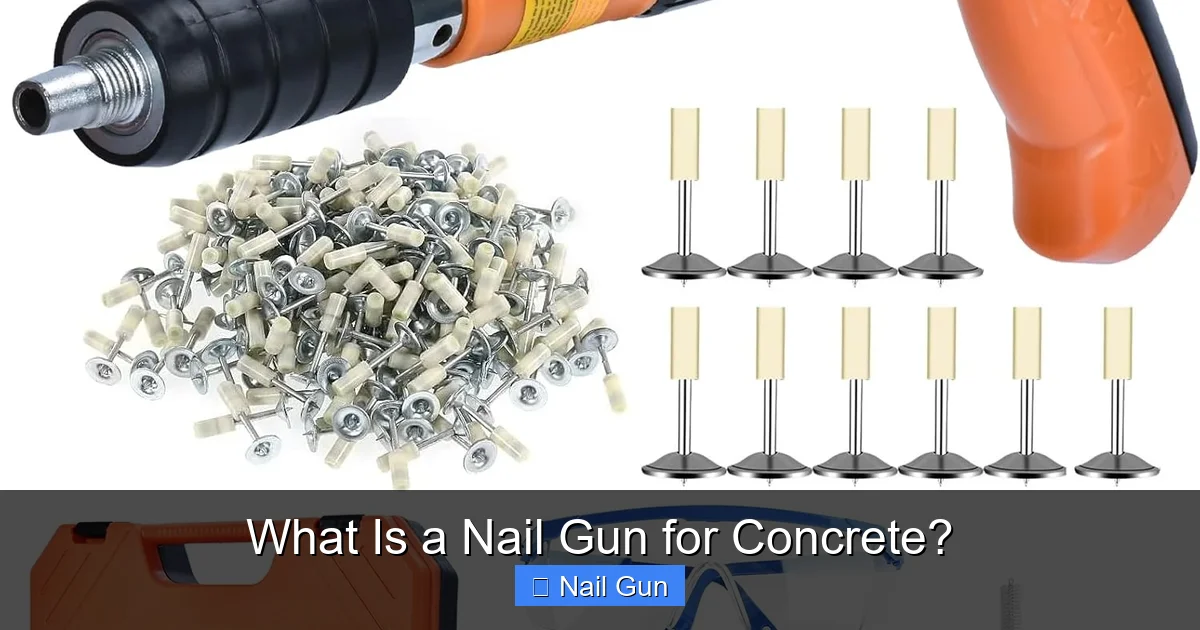
A nail gun for concrete—also called a concrete nailer or powder-actuated tool—drives fasteners into concrete, brick, or steel using explosive charges or compressed air. This guide explains how it works, the different types, safety practices, and how to use one effectively for construction and DIY projects.
Key Takeaways
- Concrete nail guns use explosive charges or air pressure to drive nails into hard surfaces like concrete and masonry.
- They are essential for fastening wood, metal, or fixtures to concrete walls, floors, or foundations without drilling.
- Safety gear is non-negotiable—always wear eye and ear protection, gloves, and a hard hat when operating.
- Choose the right tool type: powder-actuated, pneumatic, or gas-powered, based on your project needs.
- Proper technique matters—angle, pressure, and fastener selection affect performance and safety.
- Not all concrete is the same—test in a hidden area first to avoid cracking or misfires.
- Maintenance keeps your tool reliable—clean and inspect regularly to prevent jams and malfunctions.
What Is a Nail Gun for Concrete?
If you’ve ever tried to hammer a nail into concrete, you know it’s nearly impossible with a regular hammer. That’s where a nail gun for concrete comes in. Also known as a concrete nailer, powder-actuated tool (PAT), or direct fastening tool, this powerful device drives nails, pins, or screws into hard surfaces like concrete, brick, block, or steel.
Unlike standard nail guns that use air compressors or batteries to drive nails into wood, concrete nailers rely on high-impact force generated by either explosive charges (similar to bullets), compressed air, or gas combustion. This makes them ideal for construction, renovation, and industrial applications where strong, permanent fasteners are needed.
In this guide, you’ll learn exactly how these tools work, the different types available, how to choose the right one, and step-by-step instructions for safe and effective use—whether you’re a DIY enthusiast or a professional contractor.
How Does a Concrete Nail Gun Work?
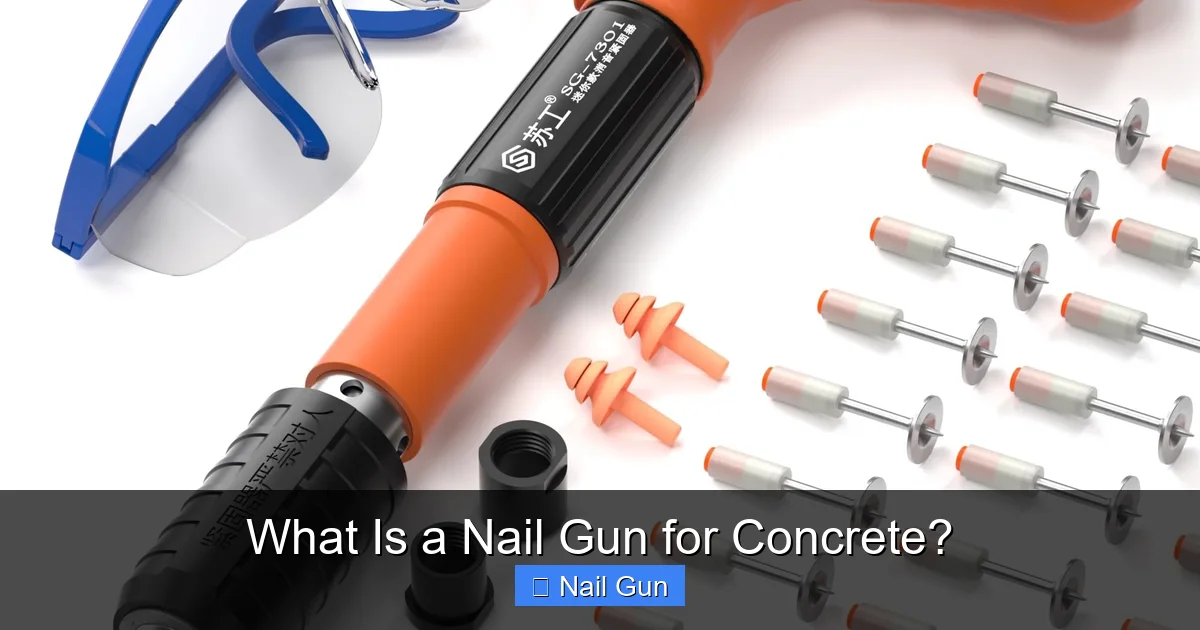
Concrete nail guns operate using one of three power sources: powder-actuated, pneumatic (air-powered), or gas-powered. Each method delivers enough force to penetrate dense materials without pre-drilling.
Visual guide about What Is a Nail Gun for Concrete?
Image source: m.media-amazon.com
Powder-Actuated Tools (Most Common)
These tools use small, color-coded explosive charges—similar to shotgun shells—that are loaded into the tool’s chamber. When the trigger is pulled, a firing pin strikes the charge, creating a controlled explosion that drives the fastener into the concrete.
- Low-powered loads (yellow or red) are for softer concrete or shallow fastening.
- High-powered loads (black or brown) are for hard concrete or deep penetration.
These tools are highly effective but require proper training and safety precautions due to the use of explosives.
Pneumatic Concrete Nailers
Powered by an air compressor, pneumatic nail guns use compressed air to drive fasteners. They’re quieter and cleaner than powder-actuated tools but require a constant air supply, making them less portable.
Best for indoor projects or workshops where noise and fumes are concerns. They’re often used for attaching furring strips, electrical boxes, or conduit to concrete walls.
Gas-Powered Nail Guns
These cordless tools use a small internal combustion engine fueled by butane or propane cartridges. They combine the portability of battery tools with the power of combustion, making them great for outdoor or remote job sites.
While convenient, they produce exhaust fumes and require regular fuel cartridge changes.
Types of Concrete Nail Guns
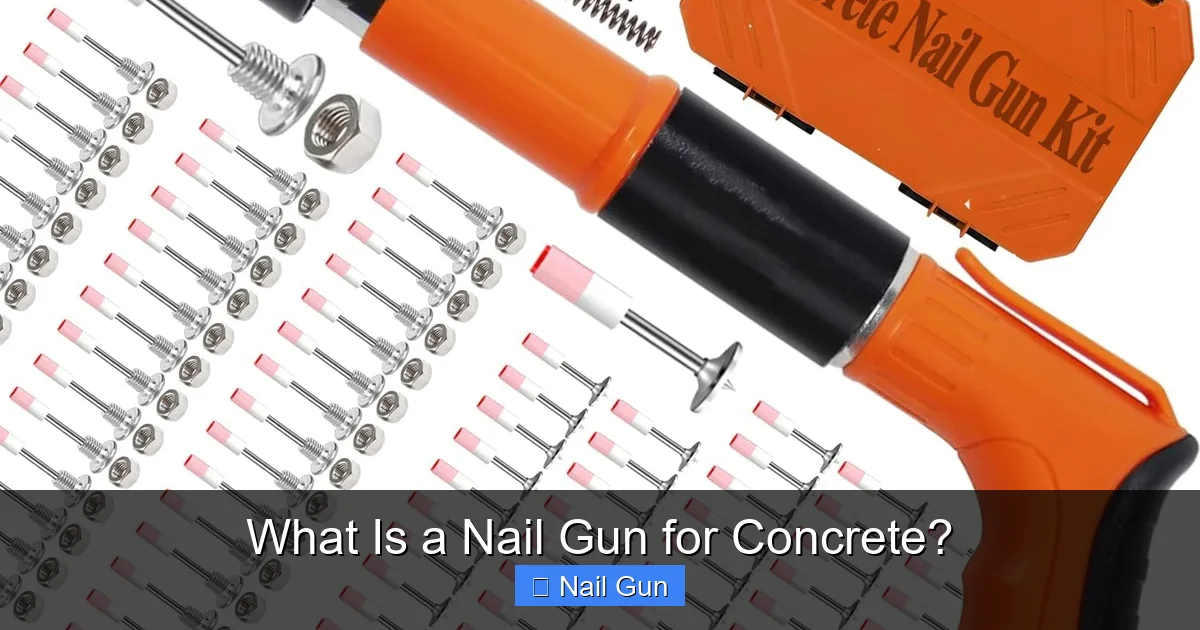
Not all concrete nailers are the same. Choosing the right type depends on your project, environment, and power needs.
Visual guide about What Is a Nail Gun for Concrete?
Image source: m.media-amazon.com
Hand-Held Powder-Actuated Tools
The most common type, these are lightweight, portable, and ideal for small to medium jobs. They’re often used for attaching wood framing, metal tracks, or insulation to concrete.
Example: Fastening a wooden sill plate to a concrete foundation before building a wall.
Heavy-Duty Powder-Actuated Tools
Designed for industrial use, these tools can drive longer and thicker fasteners into extremely hard concrete. They’re commonly used in bridge construction, highway barriers, or structural steel fastening.
Pneumatic Concrete Nailers
Best for repetitive tasks in controlled environments. Since they don’t use explosives, they’re safer in enclosed spaces and produce no fumes.
Example: Installing drywall track on a concrete ceiling in a basement renovation.
Gas-Powered Direct Fastening Tools
Perfect for outdoor projects where electricity or air compressors aren’t available. They’re often used in roofing, decking, or metal stud framing.
Choosing the Right Nail Gun for Concrete
With so many options, picking the right tool can feel overwhelming. Here’s how to make the best choice for your needs.
Consider the Material You’re Fastening
- Wood to concrete? A standard powder-actuated tool with 1-inch pins works well.
- Metal to concrete? Use a heavy-duty model with high-strength fasteners.
- Insulation or lightweight fixtures? A low-power pneumatic nailer may be sufficient.
Evaluate Power Source and Portability
If you’re working on a remote job site, a gas-powered or cordless powder-actuated tool offers the most freedom. For indoor or shop work, a pneumatic model may be quieter and cleaner.
Check Local Regulations
In some areas, powder-actuated tools require special licensing or training due to safety concerns. Always check local laws before purchasing or using one.
Match Fastener to Tool
Concrete nailers only work with specific fasteners—usually hardened steel pins with threaded or smooth shanks. Make sure your tool is compatible with the nails you plan to use.
Step-by-Step: How to Use a Nail Gun for Concrete
Using a concrete nail gun safely and effectively requires preparation, the right technique, and attention to detail. Follow these steps for best results.
Step 1: Gather Your Tools and Safety Gear
Before you start, make sure you have:
- The concrete nail gun
- Appropriate fasteners (pins or nails)
- Correct power loads (for powder-actuated tools)
- Safety glasses
- Hearing protection (earplugs or earmuffs)
- Work gloves
- Hard hat (if working overhead or in hazardous areas)
- Dust mask (to avoid inhaling concrete particles)
Step 2: Inspect the Work Area
Check the concrete surface for cracks, spalling, or weak spots. Avoid fastening near edges or within 3 inches of a crack, as this can cause the concrete to split.
Also, scan for hidden utilities—water pipes, electrical wires, or rebar—using a stud finder or concrete scanner.
Step 3: Select the Right Fastener and Load
Choose a fastener length that penetrates at least 1 inch into the concrete. For powder-actuated tools, match the load power to the concrete hardness:
- Soft concrete: Use yellow or red loads.
- Medium concrete: Green or purple loads.
- Hard concrete: Black or brown loads.
Never use a higher-powered load than necessary—it can damage the tool or surface.
Step 4: Load the Tool
For powder-actuated tools:
- Open the breech or chamber.
- Insert the correct power load.
- Load the fastener into the muzzle.
- Close and lock the tool.
For pneumatic or gas tools, follow the manufacturer’s instructions for loading fasteners and fuel.
Step 5: Position and Fire
Hold the tool perpendicular (90 degrees) to the surface. Apply firm, steady pressure—don’t tilt or angle the nailer.
Press the muzzle firmly against the concrete, then pull the trigger. The tool will drive the fastener in one smooth motion.
If the fastener doesn’t sink fully, do not fire again in the same spot. Move to a new location and use a higher-powered load if needed.
Step 6: Inspect and Repeat
After firing, check that the fastener is secure and flush with the surface. If it’s loose or sticking out, remove it and try again with a longer pin or stronger load.
Safety Tips and Best Practices
Safety is critical when using a concrete nail gun. These tools are powerful and can cause serious injury if mishandled.
- Never point the tool at anyone, even when unloaded.
- Keep your hands and body clear of the muzzle and firing path.
- Use only in well-ventilated areas—especially with powder-actuated tools that produce fumes.
- Store power loads and tools separately in a secure, dry place.
- Never modify or disassemble the tool while loaded.
- Test in a scrap piece of concrete before starting your project.
Troubleshooting Common Issues
Even with proper use, problems can occur. Here’s how to fix the most common issues.
Fastener Doesn’t Sink Fully
Cause: Weak load, soft fastener, or angled firing.
Solution: Use a higher-powered load, ensure the tool is perpendicular, and check fastener quality.
Tool Fails to Fire
Cause: Empty load chamber, broken firing pin, or low air pressure (pneumatic).
Solution: Reload, inspect the tool, or check compressor settings.
Concrete Cracks or Spalls
Cause: Fastening too close to an edge, using too much power, or weak concrete.
Solution: Move the fastener location, reduce load power, or pre-drill if necessary.
Tool Jams
Cause: Dirt, debris, or bent fasteners.
Solution: Clean the muzzle and chamber regularly. Use only manufacturer-recommended fasteners.
Maintenance and Care
To keep your concrete nail gun in top condition, follow these maintenance tips:
- Clean after each use—wipe down the tool and remove dust or concrete residue.
- Lubricate moving parts as recommended by the manufacturer.
- Inspect seals and O-rings for wear or damage.
- Store in a dry, secure place away from children and moisture.
- Schedule professional servicing annually for heavy-use tools.
Conclusion
A nail gun for concrete is a powerful, time-saving tool that makes fastening to hard surfaces fast and efficient. Whether you’re building a deck, installing drywall, or securing structural elements, the right concrete nailer can make all the difference.
By understanding how these tools work, choosing the correct type, and following safety and usage guidelines, you can complete your projects with confidence and precision. Always prioritize safety, maintain your equipment, and when in doubt, consult the manufacturer’s instructions or a professional.
With the knowledge from this guide, you’re ready to tackle concrete fastening like a pro—safely, effectively, and efficiently.
