


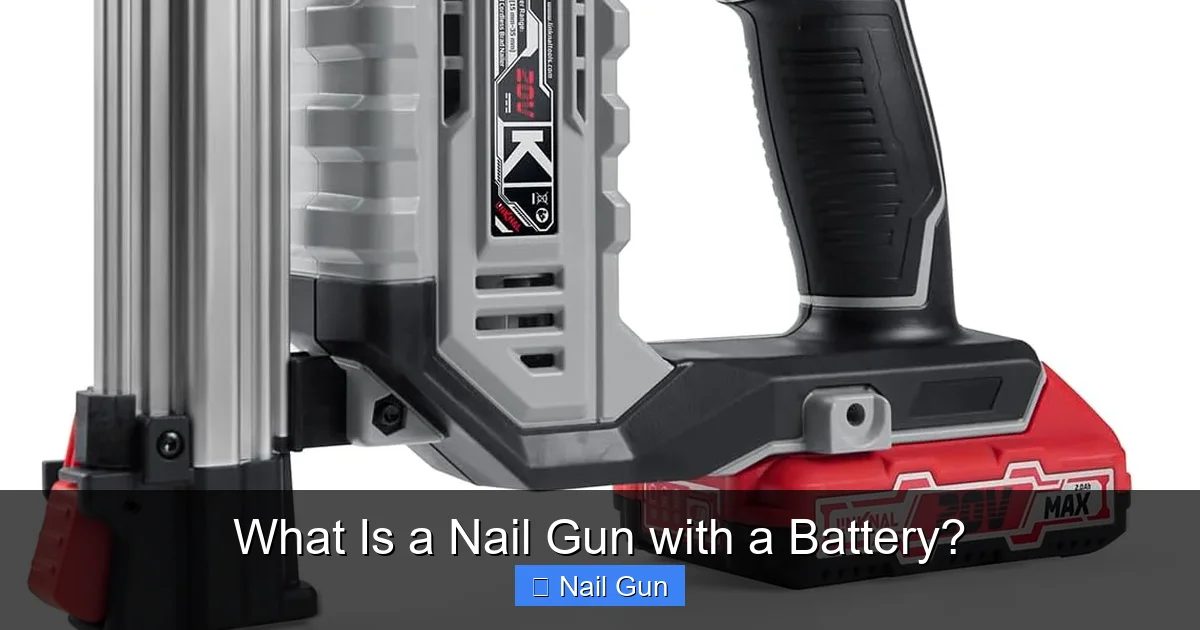
A nail gun with a battery is a cordless power tool that drives nails using compressed air generated by a rechargeable lithium-ion battery. It offers portability, convenience, and professional-grade performance without the hassle of cords or hoses.
Key Takeaways
- Battery-powered nail guns are cordless tools that use rechargeable batteries to drive nails into wood, drywall, or other materials.
- They use pneumatic-like force through internal combustion or compressed air mechanisms powered by the battery.
- Ideal for jobsites without power outlets, they offer freedom of movement and reduce tripping hazards.
- Available in various types—including framing, finish, brad, and stapling nailers—each suited for different tasks.
- Maintenance is simple: keep the battery charged, clean the magazine, and lubricate moving parts regularly.
- Popular brands include DeWalt, Milwaukee, and Ryobi, offering reliable performance and long battery life.
- Always wear safety gear like goggles and gloves when operating a battery nail gun.
What Is a Nail Gun with a Battery?
A nail gun with a battery is a modern, cordless power tool designed to drive nails quickly and efficiently into various materials—such as wood, drywall, or metal—using energy from a rechargeable lithium-ion battery. Unlike traditional pneumatic nail guns that require an air compressor and hose, battery-powered models offer full mobility and convenience, making them a favorite among contractors, carpenters, and DIY enthusiasts.
These tools combine the power of pneumatic systems with the flexibility of cordless technology. They’re perfect for tight spaces, remote job sites, or indoor projects where dragging around a compressor is impractical. Whether you’re building a deck, installing trim, or assembling furniture, a battery nail gun can save you time and effort.
In this guide, you’ll learn how battery nail guns work, the different types available, how to choose the right one, and essential tips for safe and effective use. We’ll also cover maintenance, troubleshooting, and answer common questions to help you get the most out of your tool.
How Does a Battery-Powered Nail Gun Work?
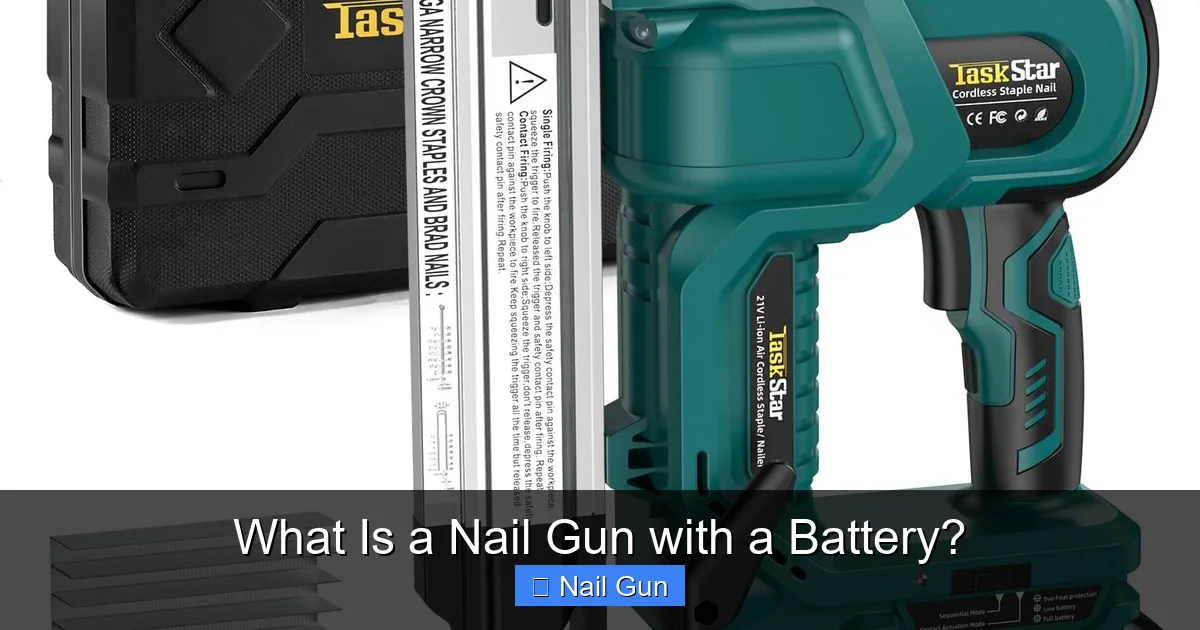
Visual guide about What Is a Nail Gun with a Battery?
Image source: m.media-amazon.com
Battery nail guns may look simple, but they use advanced engineering to deliver consistent driving power. Most models use one of two technologies: compressed air or internal combustion.
Compressed Air (Gasless) Mechanism
These nailers use a small electric motor powered by the battery to compress air in a chamber. When you pull the trigger, the compressed air is released rapidly, driving the nail into the material. This system mimics traditional pneumatic nail guns but eliminates the need for an external compressor.
Internal Combustion (Gas-Assisted) Mechanism
Some high-powered models, especially framing nailers, use a small amount of fuel (like butane) combined with the battery. The battery sparks a tiny combustion reaction that generates the force needed to drive large nails. These are more powerful but require fuel cells in addition to battery charging.
Both systems are designed to deliver consistent depth and power, ensuring nails are driven flush or countersunk as needed. The battery typically lasts for hundreds of shots per charge, depending on the model and usage.
Types of Battery Nail Guns
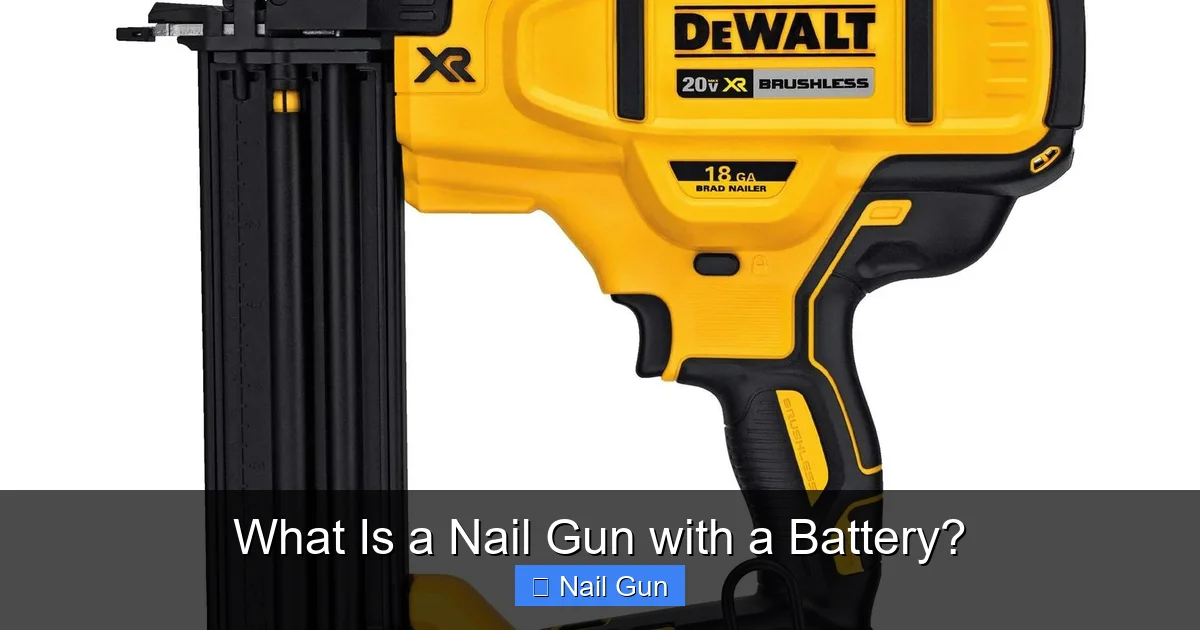
Visual guide about What Is a Nail Gun with a Battery?
Image source: easygetproduct.com
Not all battery nail guns are the same. Choosing the right type depends on your project needs. Here are the most common kinds:
Framing Nailers
These heavy-duty tools drive large nails (2 to 3.5 inches) into lumber for structural work like building decks, framing walls, or constructing sheds. They’re powerful and often use gas-assisted systems for maximum driving force.
Finish Nailers
Ideal for trim work, molding, and cabinetry, finish nailers use smaller nails (15 to 16 gauge) and leave minimal holes. They’re lightweight and precise, perfect for detailed carpentry.
Brad Nailers
Even smaller than finish nailers, brad nailers use 18 to 23-gauge nails. They’re great for delicate trim, paneling, and attaching thin materials without splitting the wood.
Staple Guns
Some battery-powered tools can also drive staples for upholstery, insulation, or securing wires. These are versatile additions to any toolkit.
Pin Nailers
Used for ultra-fine work like attaching veneers or thin moldings, pin nailers leave nearly invisible holes. They’re ideal for high-end finish work.
How to Choose the Right Battery Nail Gun
With so many options, picking the best battery nail gun can feel overwhelming. Here’s a step-by-step guide to help you decide:
Step 1: Identify Your Project Needs
Ask yourself: What will I be building or repairing? If it’s heavy construction, go for a framing nailer. For trim or furniture, a finish or brad nailer is better.
Step 2: Consider Nail Size and Gauge
Make sure the nailer accepts the nail sizes you’ll be using. Check the tool’s specifications for compatible nail lengths and gauges.
Step 3: Evaluate Battery Life and Power
Look for models with long-lasting lithium-ion batteries (like 20V or 18V). Higher voltage usually means more power. Also, check how many shots per charge the tool delivers.
Step 4: Check Weight and Ergonomics
A lightweight, well-balanced nailer reduces fatigue during long projects. Test the grip and balance if possible.
Step 5: Look for Safety and Convenience Features
Features like tool-free depth adjustment, jam-clearing mechanisms, and LED lights can make a big difference. Also, ensure it has a safety tip to prevent accidental firing.
Step 6: Compare Brands and Warranties
Stick with reputable brands like DeWalt, Milwaukee, Makita, or Ryobi. They offer better support, spare parts, and longer warranties.
How to Use a Battery Nail Gun Safely and Effectively
Using a battery nail gun is straightforward, but safety and technique are crucial. Follow these steps for best results:
Step 1: Charge the Battery Fully
Always start with a fully charged battery. Most modern nail guns have indicator lights to show charge level.
Step 2: Load the Nails Correctly
Open the magazine and insert the nail strip according to the manufacturer’s instructions. Make sure the nails are aligned and the magazine is securely closed.
Step 3: Adjust the Depth Setting
Use the depth adjustment wheel to control how deep the nail is driven. Test on a scrap piece of wood and adjust as needed.
Step 4: Wear Safety Gear
Put on safety goggles to protect your eyes from flying debris and gloves to improve grip and protect your hands.
Step 5: Position the Nailer Properly
Place the nose of the nailer firmly against the workpiece. Keep your hands away from the firing area.
Step 6: Fire the Nail
Press the safety tip against the surface, then pull the trigger. The nail should drive in smoothly. If it jams, release the trigger and clear the jam using the tool’s release mechanism.
Step 7: Maintain a Steady Pace
Avoid rapid firing, which can overheat the motor or cause jams. Let the tool reset between shots.
Tips for Better Performance
- Use the right nails: Match nail type and size to your project and tool specifications.
- Keep the tool clean: Wipe away dust and debris after each use.
- Lubricate moving parts: Apply a few drops of pneumatic tool oil monthly to keep mechanisms smooth.
- Store in a dry place: Moisture can damage the battery and internal components.
- Rotate batteries: If you have multiple batteries, alternate them to extend overall lifespan.
Troubleshooting Common Issues
Even the best tools can have problems. Here’s how to fix common issues:
Nail Gun Won’t Fire
Check if the battery is charged and properly inserted. Ensure the magazine is loaded and the safety tip is pressed firmly against the surface.
Jams or Misfeeds
Clear the jam using the tool’s release lever. Remove any bent or stuck nails. Avoid forcing the mechanism.
Inconsistent Depth
Adjust the depth setting. Also, check if the battery is low—weak power can reduce driving force.
Overheating
Let the tool cool down after extended use. Avoid continuous firing for more than a few minutes at a time.
Battery Drains Quickly
Ensure the battery is fully charged and not old or damaged. Store batteries at room temperature.
Maintenance and Care
Proper maintenance extends the life of your battery nail gun. Follow these tips:
- Clean the magazine and nosepiece after each use.
- Lubricate moving parts monthly with tool oil.
- Inspect the battery contacts for dirt or corrosion.
- Store the tool and batteries in a cool, dry place.
- Replace worn parts like O-rings or seals as recommended.
Conclusion
A nail gun with a battery is a powerful, portable, and convenient tool that brings professional results to any project. Whether you’re a weekend warrior or a full-time contractor, it eliminates the hassle of cords and compressors while delivering consistent performance. By understanding how it works, choosing the right model, and following safety and maintenance best practices, you’ll get years of reliable service from your battery nail gun. Invest in a quality tool, treat it well, and it will become one of your most trusted companions on the job.
