


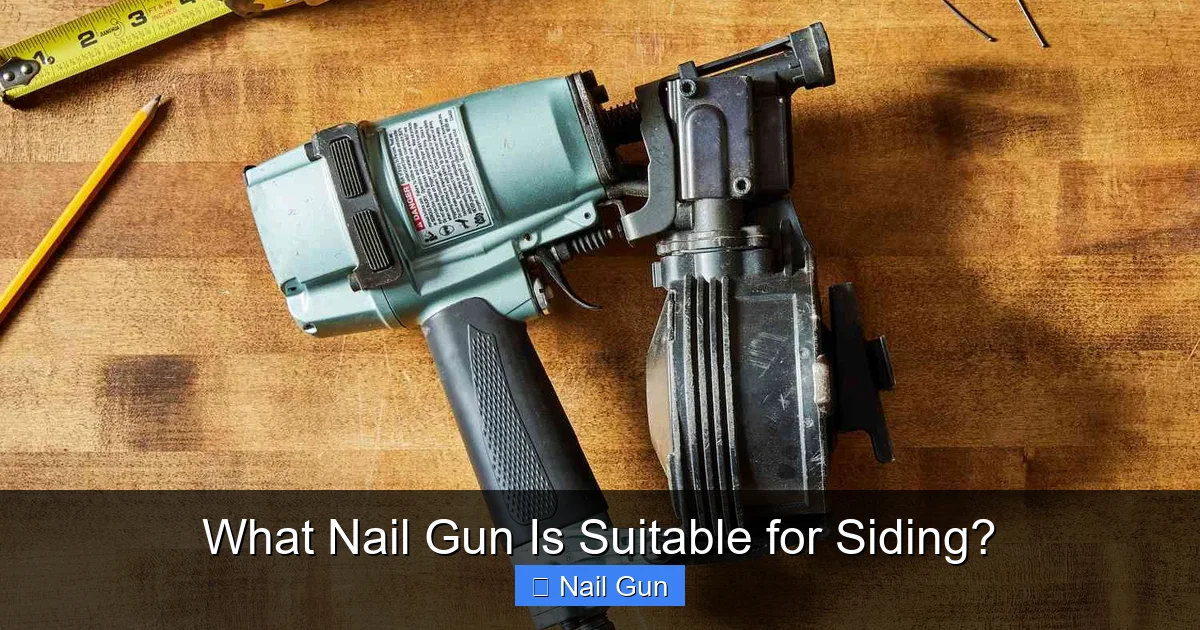
Choosing the right nail gun for siding ensures a secure, long-lasting installation. This guide covers the best types, key features, and expert tips to help you pick the perfect tool for your project.
Key Takeaways
- Coil siding nail guns are ideal for large projects: They hold more nails and reduce reload frequency, making them perfect for extensive siding jobs.
- Use 15- to 16-gauge nails for most siding materials: These provide strong hold without splitting wood or damaging fiber cement.
- Fiber cement siding requires specialized tools: Choose a nail gun with adjustable depth and corrosion-resistant nails to prevent cracking and rust.
- Air-powered nailers offer power and consistency: Pneumatic nail guns are lightweight and reliable for long workdays.
- Safety and precision matter: Look for depth adjustment, no-mar tips, and safety triggers to protect materials and users.
- Match the nail gun to your siding material: Wood, vinyl, and fiber cement each have unique requirements for nail type and driving force.
- Brand and warranty add long-term value: Trusted brands like DeWalt, Bostitch, and Hitachi offer durable tools with solid customer support.
What Nail Gun Is Suitable for Siding?
If you’re installing siding—whether it’s wood, vinyl, or fiber cement—you need the right tool for the job. Using the wrong nail gun can lead to cracked panels, loose boards, or even safety hazards. That’s why choosing the best nail gun for siding is crucial for a professional, long-lasting finish.
In this guide, you’ll learn how to pick the perfect nail gun for your siding project. We’ll cover the different types of nail guns, the best features to look for, and how to match your tool to your siding material. Whether you’re a DIY homeowner or a professional contractor, this step-by-step guide will help you work smarter, faster, and safer.
Step 1: Understand the Types of Nail Guns for Siding
Not all nail guns are created equal. For siding, you’ll want a tool that drives nails cleanly, holds enough fasteners, and works efficiently over long periods. Here are the main types used in siding installation:
Coil-Style Nail Guns
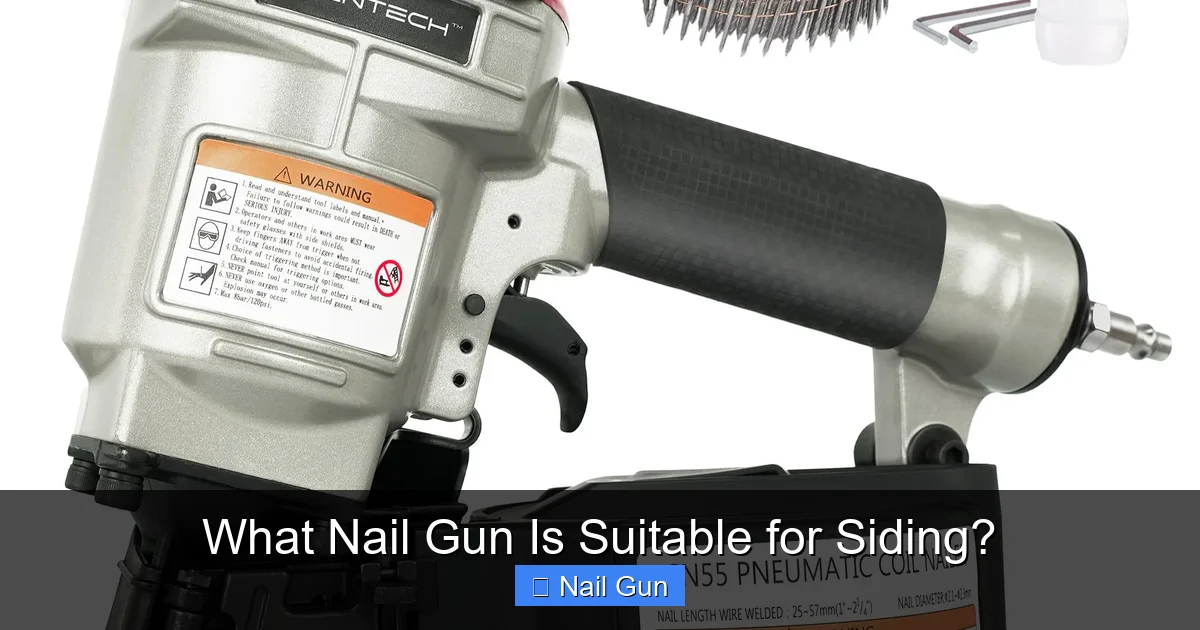
Coil nail guns are the top choice for most siding projects. They use a coiled strip of nails, which means fewer reloads and more continuous work. This is especially helpful when covering large areas like entire house exteriors.
Visual guide about What Nail Gun Is Suitable for Siding?
Image source: images-na.ssl-images-amazon.com
These nailers typically use 15- or 16-gauge nails, which are strong enough to secure siding without splitting the material. They’re commonly pneumatic (air-powered), though cordless models are available.
Framing Nailers (Less Common)
While framing nailers are powerful, they’re usually overkill for siding. They drive large 2- to 3-inch nails designed for structural framing, not delicate siding panels. However, some contractors use them for rough wood siding if extra holding power is needed.
Finish Nailers
Finish nailers use thinner 15- to 18-gauge nails and are better suited for trim and moldings. They’re not ideal for full siding jobs because they hold fewer nails and may not drive fasteners deep enough in dense materials like fiber cement.
Brad Nailers
Brad nailers are too light-duty for siding. They’re meant for small decorative trim and won’t provide the holding strength needed to secure siding panels against wind and weather.
Step 2: Match the Nail Gun to Your Siding Material
Different siding materials require different approaches. Using the wrong nail or tool can damage the material or lead to premature failure.
Wood Siding
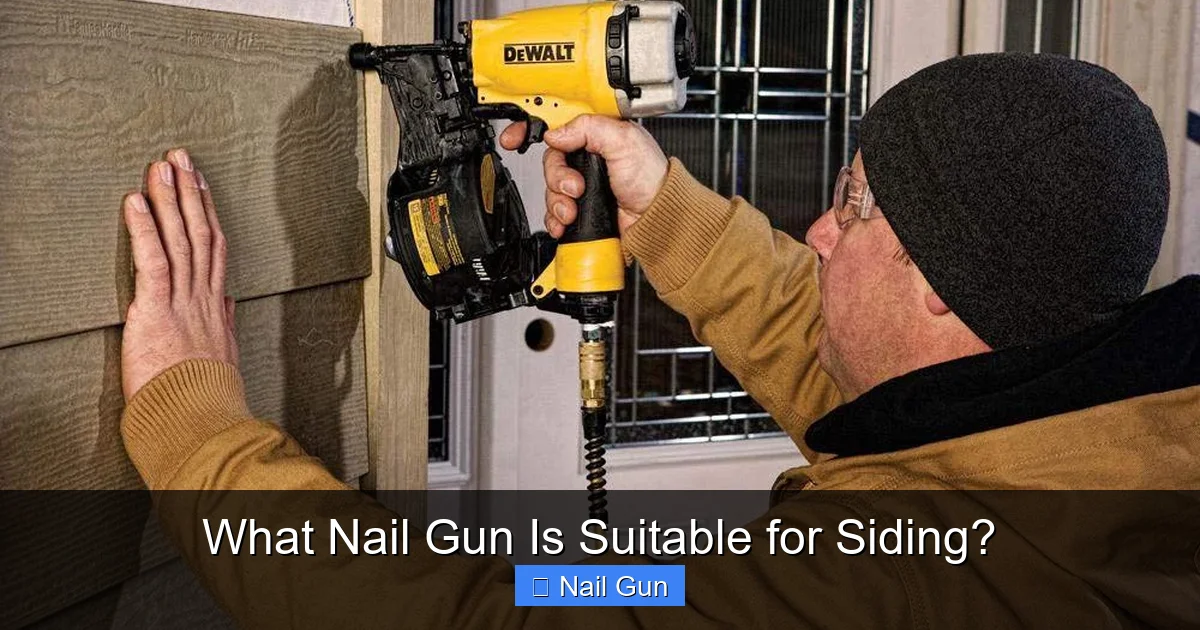
Wood siding is forgiving and works well with most coil nail guns. Use 15- or 16-gauge galvanized or stainless steel nails to prevent rust. Avoid overdriving nails, as this can split the wood.
Visual guide about What Nail Gun Is Suitable for Siding?
Image source: images-na.ssl-images-amazon.com
Tip: Choose a nail gun with adjustable depth control so you can fine-tune how deep the nail goes. This helps avoid surface damage and ensures a secure hold.
Vinyl Siding
Vinyl is lightweight and flexible, so it doesn’t need heavy-duty nails. However, it expands and contracts with temperature changes, so nails should be driven in loosely—never tight.
Use a coil nail gun with 15-gauge nails, but make sure the tool has a no-mar tip to avoid scratching the vinyl surface. Pneumatic models are preferred for their consistent power and lightweight design.
Fiber Cement Siding
Fiber cement is dense and brittle, making it the most challenging siding material to nail. You need a powerful nail gun that can drive nails without cracking the panels.
Look for a coil nail gun with high driving power and depth adjustment. Use 16-gauge, 1¼-inch to 1½-inch galvanized or stainless steel nails. Some professionals prefer pneumatic tools for their reliability and consistent performance.
Step 3: Choose the Right Nail Type and Size
The nail you use is just as important as the nail gun. Here’s what to consider:
Nail Gauge
Most siding projects use 15- or 16-gauge nails. These are strong enough to hold siding securely but thin enough to avoid splitting wood or cracking fiber cement.
Nail Length
For wood and vinyl siding, 1¼-inch to 1½-inch nails are standard. Fiber cement may require slightly longer nails (up to 2 inches) to penetrate the material and anchor into the wall sheathing.
Nail Coating
Galvanized or stainless steel nails resist rust and corrosion, which is essential for outdoor siding exposed to rain and humidity. Electro-galvanized nails are affordable but may not last as long as hot-dipped galvanized or stainless steel.
Step 4: Consider Power Source and Features
Nail guns come in three main power types: pneumatic (air-powered), cordless (battery-powered), and electric. Each has pros and cons.
Pneumatic Nail Guns
Pneumatic nail guns are the most popular for siding. They’re lightweight, powerful, and offer consistent performance. You’ll need an air compressor, but the setup is reliable for long jobs.
Best for: Professionals and serious DIYers working on large projects.
Cordless Nail Guns
Cordless models run on lithium-ion batteries and use compressed air or fuel cells to drive nails. They’re convenient for jobs without easy access to electricity or air lines.
Modern cordless nail guns are powerful enough for fiber cement and wood siding. Look for models with brushless motors for longer battery life and durability.
Electric Nail Guns
Electric nail guns plug into an outlet and are less common for siding. They’re quieter than pneumatic tools but may lack the power needed for dense materials like fiber cement.
Step 5: Look for Key Features
Not all nail guns are built the same. These features make a big difference in performance and ease of use:
Depth Adjustment
This allows you to control how deep the nail is driven. It’s essential for preventing surface damage and ensuring a secure hold.
No-Mar Tip
A rubber or plastic tip protects the siding surface from scratches and dents, especially important for vinyl and prefinished wood.
Sequential or Contact Trigger
Sequential triggers require you to press the tip and then pull the trigger—safer and more precise. Contact triggers let you “bump fire” for speed, but they increase the risk of accidental firing.
Magazine Capacity
Coil nail guns typically hold 150 to 300 nails, reducing reload time. For large jobs, high capacity is a big advantage.
Weight and Ergonomics
A lightweight, well-balanced nail gun reduces fatigue during long installations. Look for models with comfortable grips and minimal vibration.
Step 6: Recommended Nail Guns for Siding
Here are some top-rated nail guns trusted by professionals:
DeWalt D51255K 15-Gauge Coil Siding Nailer
This pneumatic nailer is a favorite for fiber cement and wood siding. It features adjustable depth, a no-mar tip, and a durable aluminum body. It drives 15-gauge nails from 1¼ to 2½ inches.
Bostitch N66C-1 16-Gauge Coil Siding Nailer
Lightweight and reliable, this tool is great for vinyl and wood siding. It has a tool-free depth adjustment and a 360-degree adjustable exhaust to keep debris away from your work.
Hitachi NV65AH2 16-Gauge Coil Siding Nailer
Known for its power and precision, this nailer handles tough materials with ease. It includes a no-mar tip and depth adjustment, and it’s built to last.
Freeman PFS90 15-Gauge Cordless Siding Nailer
If you prefer cordless, this battery-powered model offers strong performance without the need for an air compressor. It’s ideal for remote job sites or quick repairs.
Troubleshooting Common Issues
Even the best tools can have problems. Here’s how to fix common siding nail gun issues:
Nails Not Driving Fully
Check air pressure (for pneumatic tools)—it should be 70–120 PSI. Also, ensure the depth setting isn’t too shallow and that the nails aren’t too long for the material.
Cracking Fiber Cement
Use shorter nails, reduce air pressure, or switch to a lower-power setting. Make sure the nail gun isn’t overdriving the fastener.
Jamming
Clear jams by disconnecting the air or battery, opening the magazine, and removing stuck nails. Use only recommended nail sizes and keep the tool clean.
Surface Damage
If the siding is scratched or dented, check the no-mar tip and depth setting. Avoid bump firing on delicate materials.
Conclusion
Choosing the right nail gun for siding doesn’t have to be overwhelming. Start by matching the tool to your siding material—wood, vinyl, or fiber cement—and select a coil-style nailer with the right gauge and power source. Look for key features like depth adjustment, no-mar tips, and high magazine capacity to improve efficiency and results.
Whether you go with a trusted pneumatic model like the DeWalt D51255K or a modern cordless option, investing in the right tool will save you time, reduce frustration, and deliver a professional-quality finish. Remember: the best nail gun for siding is one that fits your project, your budget, and your workflow.
With the tips in this guide, you’re ready to tackle any siding job with confidence.
