


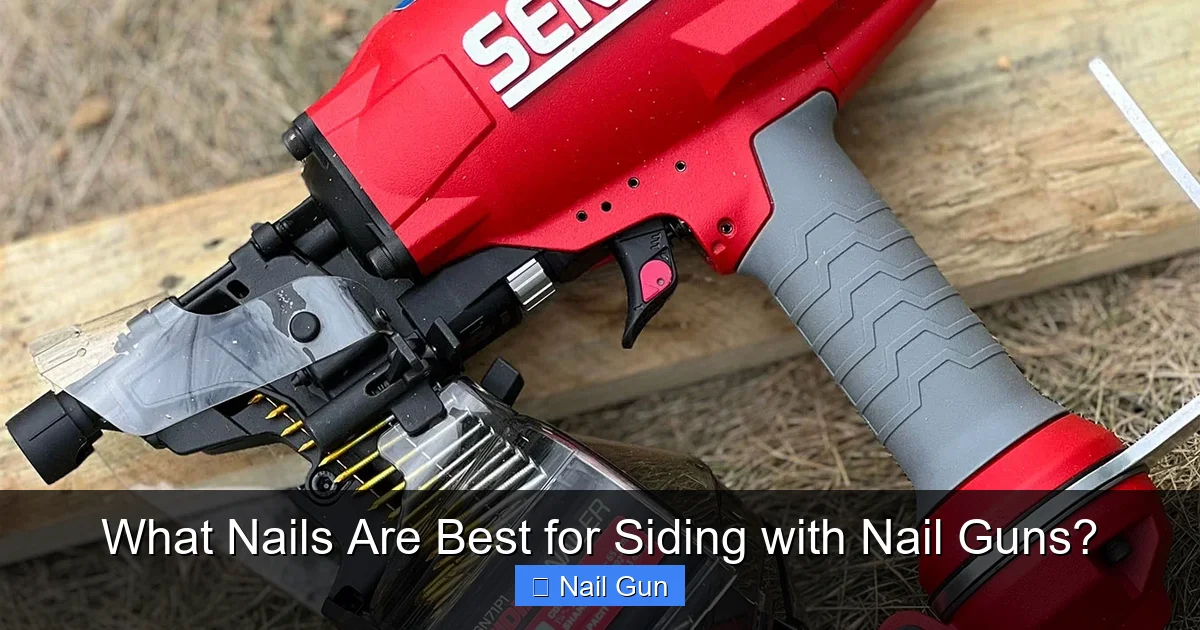
Choosing the right nails for siding with a nail gun ensures durability, weather resistance, and a professional finish. This guide covers nail types, sizes, materials, and expert tips to help you make the best choice for your project.
Key Takeaways
- Galvanized nails are essential: They resist rust and corrosion, especially in outdoor environments, making them ideal for siding.
- Ring shank nails offer superior hold: Their ridges prevent nails from loosening over time due to temperature changes and wood movement.
- Nail length matters: Use nails that are 1.5 to 2 times the thickness of the siding material to ensure a secure hold without over-penetration.
- Stainless steel nails last longest: Best for coastal or high-moisture areas, though more expensive than galvanized options.
- Match nail type to siding material: Vinyl, wood, fiber cement, and metal siding each require specific nail types for optimal performance.
- Use collated nails for efficiency: Coil or strip nails work best with nail guns, speeding up installation and reducing downtime.
- Check local building codes: Some regions have specific requirements for nail type, spacing, and corrosion resistance.
What Nails Are Best for Siding with Nail Guns?
If you’re installing siding with a nail gun, choosing the right nails is just as important as using the right tool. The wrong nails can lead to loose panels, warping, rust stains, or even structural failure over time. Whether you’re working with vinyl, wood, fiber cement, or metal siding, using the correct nails ensures a secure, long-lasting, and professional-looking finish.
In this guide, you’ll learn everything you need to know about selecting the best nails for siding when using a nail gun. We’ll cover nail types, materials, sizes, and compatibility with different siding materials. You’ll also get practical tips, troubleshooting advice, and answers to common questions so you can tackle your project with confidence.
Why Nail Choice Matters for Siding
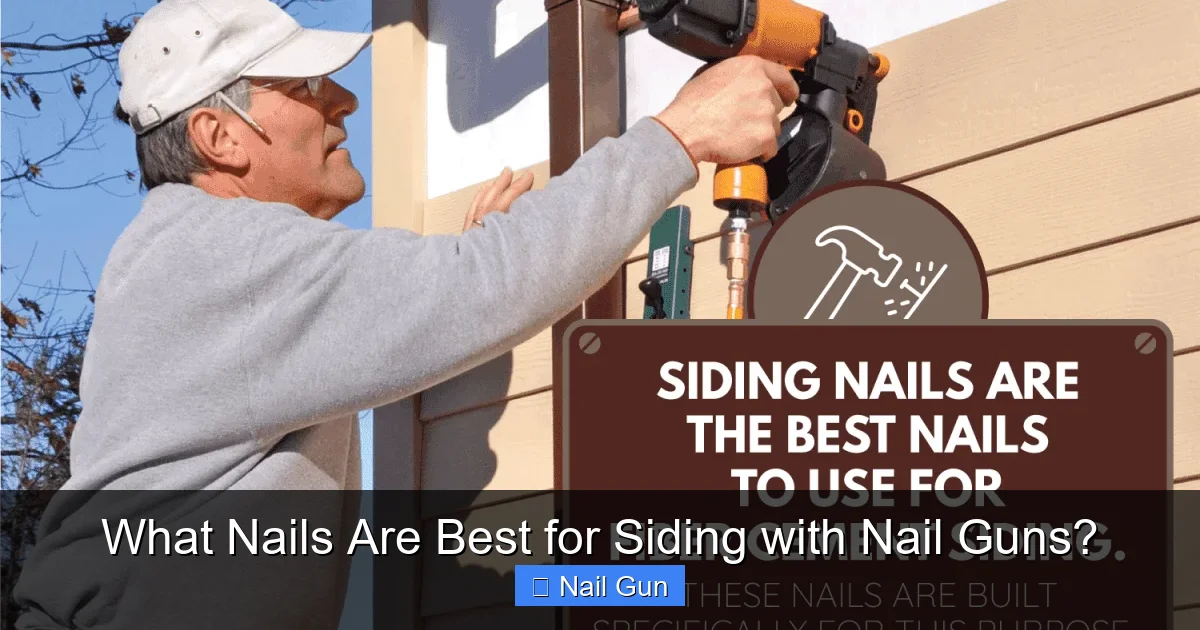
Visual guide about What Nails Are Best for Siding with Nail Guns?
Image source: houseoutside.com
Siding is exposed to the elements—rain, wind, snow, and temperature swings. Over time, these forces can cause nails to loosen, corrode, or fail. Using the wrong nails can result in:
- Siding panels that pop off or warp
- Rust stains that ruin the appearance
- Reduced structural integrity
- Increased maintenance and repair costs
A high-quality nail gun speeds up installation, but it’s only as good as the nails you feed into it. The right nails grip firmly, resist corrosion, and allow for natural expansion and contraction of the siding material. That’s why understanding nail specifications is crucial.
Types of Nails for Siding
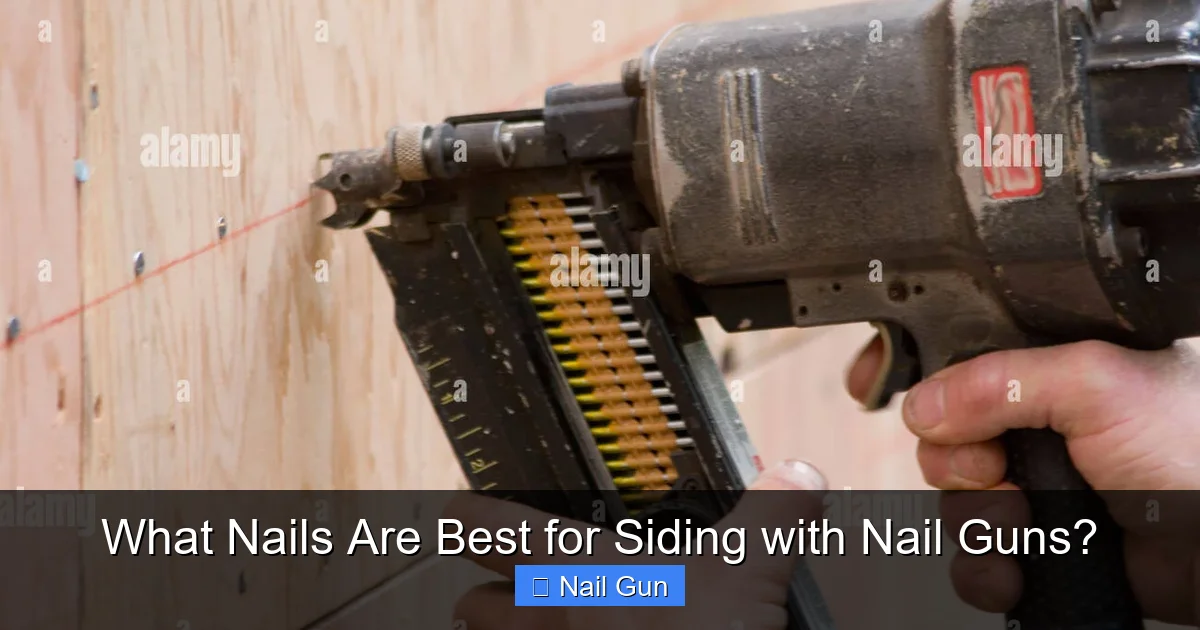
Visual guide about What Nails Are Best for Siding with Nail Guns?
Image source: c8.alamy.com
Not all nails are created equal. Here are the most common types used for siding with nail guns:
Ring Shank Nails
These nails feature ridges or rings along the shank, which provide exceptional holding power. They’re ideal for wood and fiber cement siding because they resist pulling out, even under stress. Ring shank nails are especially useful in areas with high winds or frequent temperature changes.
Spiral Shank Nails
Similar to ring shank nails, spiral shank nails have a twisted shaft that grips the material tightly. They’re a good alternative when ring shank nails aren’t available, though they may not hold quite as securely.
Smooth Shank Nails
These are the most basic type and are generally not recommended for siding. They lack the gripping power of ring or spiral shank nails and are more likely to loosen over time. However, they may be acceptable for temporary or lightweight applications.
Collated Nails
Designed specifically for nail guns, collated nails come in strips or coils held together by plastic, wire, or paper. They allow for rapid, continuous firing, which is a huge time-saver on large siding jobs. Most professional siding nail guns are built to use collated nails.
Best Nail Materials for Siding
The material of the nail determines how well it resists rust and corrosion. Here’s what to look for:
Galvanized Steel
Galvanized nails are coated with zinc to prevent rust. They’re affordable and widely available, making them a popular choice for most siding projects. There are two main types:
- Hot-dipped galvanized: Thicker coating, excellent for outdoor use and high-moisture areas.
- Electro-galvanized: Thinner coating, suitable for dry climates but less durable in wet conditions.
For best results, choose hot-dipped galvanized nails for any exterior siding job.
Stainless Steel
Stainless steel nails are the gold standard for corrosion resistance. They’re ideal for coastal areas, high-humidity regions, or projects where longevity is critical. While more expensive, they can last decades without rusting. Use 304 or 316 stainless steel—316 is better for saltwater environments.
Aluminum
Aluminum nails are lightweight and resist corrosion, but they’re softer than steel and can bend or break under pressure. They’re best used with aluminum siding or in low-stress applications.
Choosing the Right Nail Size
Nail length and diameter are critical for a secure installation. Here’s how to choose:
Nail Length
The general rule is to use nails that are 1.5 to 2 times the thickness of the siding material. For example:
- Vinyl siding: 1 to 1.25 inches (use corrosion-resistant nails to avoid staining)
- Wood siding: 1.5 to 2 inches (ring shank galvanized or stainless steel)
- Fiber cement siding: 1.5 to 2 inches (must be corrosion-resistant; stainless steel recommended)
- Metal siding: 1 to 1.5 inches (aluminum or stainless steel nails)
Avoid nails that are too long—they can penetrate too deeply and damage the wall structure or create gaps.
Nail Diameter (Gauge)
Most siding nails range from 10 to 12 gauge. Thicker nails (lower gauge number) provide more holding power but may split softer materials. For most applications:
- 10-gauge: Heavy-duty, best for thick wood or fiber cement
- 11-gauge: Standard for most siding jobs
- 12-gauge: Lighter, suitable for vinyl or thin wood
Matching Nails to Siding Materials
Different siding materials require different nail types. Here’s a quick reference:
Vinyl Siding
Use aluminum or stainless steel nails with a small head to avoid cracking the vinyl. Nails should be long enough to secure the panel but not so long they push through. Leave a small gap (about 1/32 inch) between the nail head and the siding to allow for expansion.
Wood Siding
Ring shank galvanized or stainless steel nails are best. They hold firmly and resist pulling out. Pre-drilling may be needed for hardwoods to prevent splitting.
Fiber Cement Siding
This dense material requires strong, corrosion-resistant nails. Stainless steel or hot-dipped galvanized ring shank nails are ideal. Use a nail gun with adjustable depth to avoid overdriving.
Metal Siding
Aluminum or stainless steel nails prevent galvanic corrosion (rust caused by dissimilar metals). Use self-tapping screws or nails designed for metal-to-metal fastening.
Using a Nail Gun for Siding: Best Practices
A nail gun makes siding installation faster and more consistent, but proper technique is key.
Choose the Right Nail Gun
Use a siding nailer designed for exterior trim and siding. These tools are typically pneumatic or cordless and accept collated nails. Look for models with adjustable depth settings and a no-mar tip to protect the siding surface.
Set the Correct Depth
Overdriving nails can crack or warp siding. Underdriving leaves panels loose. Adjust the depth so the nail is flush with the surface—never countersunk.
Maintain Proper Spacing
Follow manufacturer guidelines for nail spacing. Typically, nails should be placed every 16 to 24 inches along the top edge of each panel and at stud locations. Avoid placing nails too close to edges, which can cause splitting.
Work in Sections
Install siding in manageable sections, starting from the bottom and working up. This ensures proper overlap and water drainage.
Troubleshooting Common Issues
Even with the best nails, problems can arise. Here’s how to fix them:
Nails Popping Out
This usually means the nails are too short or not driven deep enough. Switch to longer nails or adjust the nail gun depth.
Rust Stains on Siding
Caused by non-galvanized or low-quality nails. Replace with hot-dipped galvanized or stainless steel nails.
Siding Warping or Buckling
Often due to overdriven nails or lack of expansion gaps. Re-nail with proper spacing and leave room for movement.
Nail Gun Jamming
Check for bent nails, incorrect collation, or debris in the magazine. Clean the tool regularly and use high-quality collated nails.
Final Tips for Success
- Always wear safety glasses and hearing protection when using a nail gun.
- Store nails in a dry place to prevent rust before use.
- Test nail depth on a scrap piece of siding before starting.
- Follow local building codes—some areas require specific nail types or spacing.
- Consider climate: coastal or humid regions demand stainless steel or heavy-duty galvanized nails.
Conclusion
Choosing the best nails for siding with a nail gun doesn’t have to be complicated. Focus on corrosion resistance, proper length, and shank type, and match the nail to your siding material. Ring shank, galvanized or stainless steel nails are your best bet for most projects. With the right nails and a quality nail gun, you’ll get a secure, professional installation that stands up to the elements for years to come.
Investing a little time in selecting the right nails now can save you from costly repairs and headaches down the road. Whether you’re a DIYer or a pro, this guide gives you the knowledge to make the right choice—every time.
