

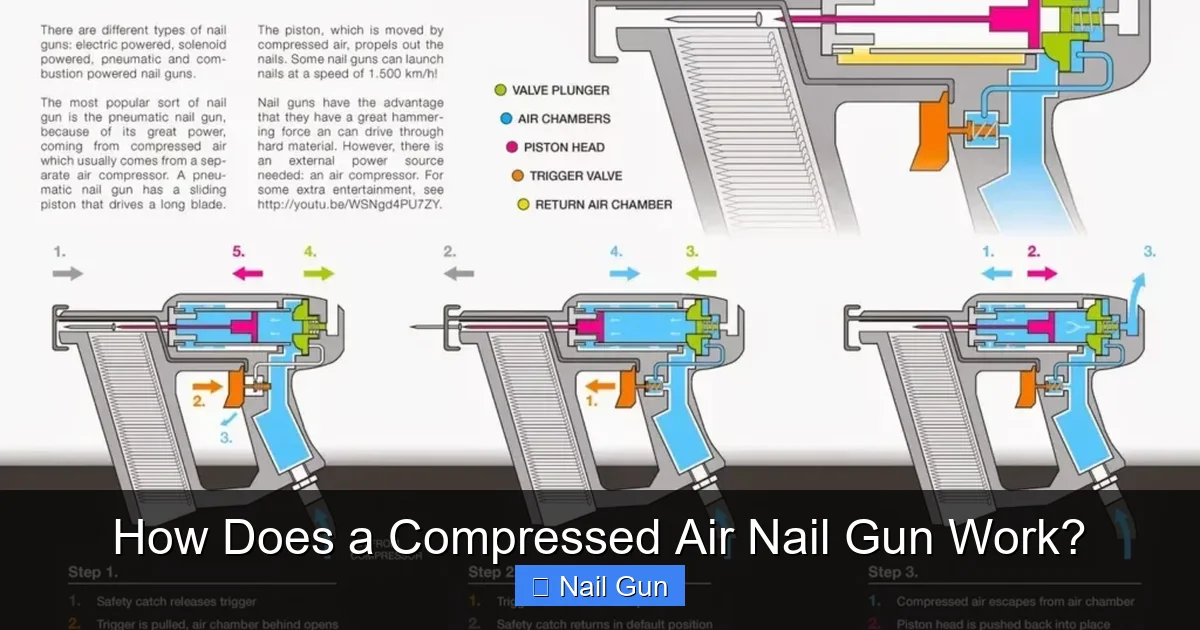
A compressed air nail gun uses pressurized air to drive nails into wood or other materials quickly and efficiently. This guide breaks down the inner workings, components, and safe operation of pneumatic nail guns for DIYers and professionals alike.
Key Takeaways
- Compressed air powers the nail gun: An air compressor generates high-pressure air that fuels the tool’s firing mechanism.
- A piston drives the nail: Air pressure forces a piston forward, which strikes the nail and drives it into the material.
- Trigger mechanisms control firing: Sequential and contact triggers offer different levels of control and speed.
- Proper maintenance ensures longevity: Regular cleaning, lubrication, and air filter checks keep the nail gun running smoothly.
- Safety is essential: Always wear eye and ear protection, and disconnect the air supply when not in use.
- Different nails for different jobs: Choose the right nail type and size based on your project needs.
- Troubleshooting is straightforward: Common issues like misfires or jams can often be fixed with simple adjustments.
How Does a Compressed Air Nail Gun Work?
If you’ve ever watched a construction worker zip through framing or trim work with lightning speed, chances are they were using a compressed air nail gun—also known as a pneumatic nail gun. These powerful tools have revolutionized woodworking, carpentry, and home improvement by making nailing faster, easier, and more consistent than using a hammer. But how exactly does a compressed air nail gun work?
In this comprehensive guide, we’ll walk you through the mechanics behind pneumatic nail guns, explain each key component, and show you how air pressure transforms into a driving force strong enough to sink nails deep into wood. You’ll also learn about safety practices, maintenance tips, and troubleshooting common problems. Whether you’re a DIY enthusiast or a professional contractor, understanding how your tools work helps you use them more effectively and safely.
The Basics: What Is a Compressed Air Nail Gun?
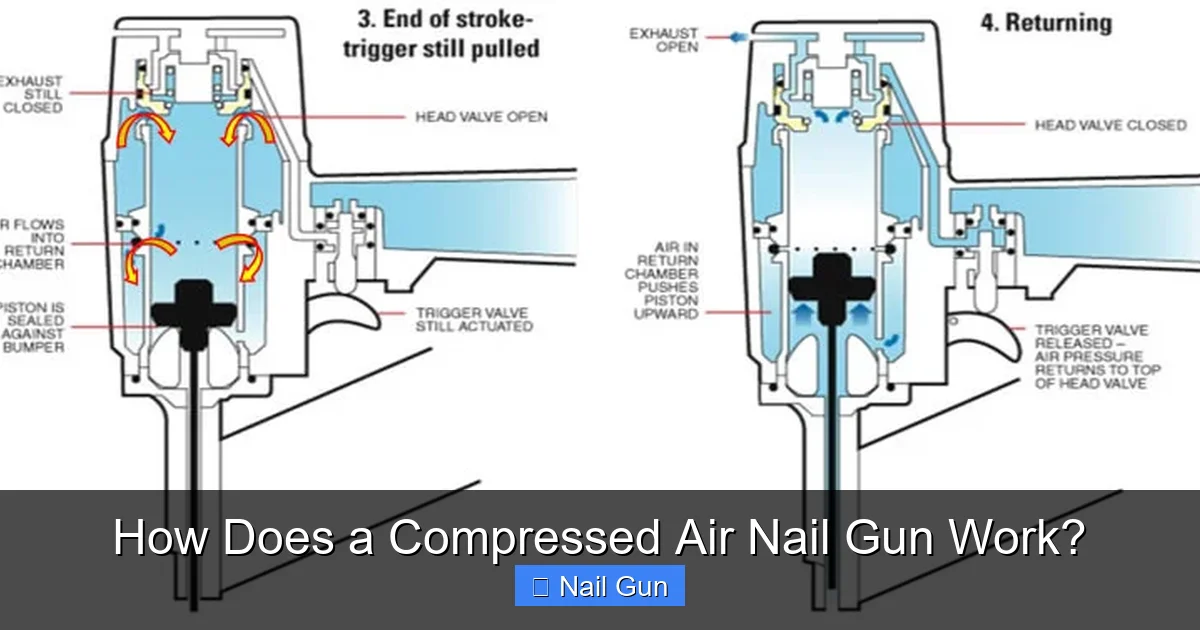
Visual guide about How Does a Compressed Air Nail Gun Work?
Image source: toolsmirror.com
A compressed air nail gun is a power tool that uses pressurized air to drive nails into various materials like wood, drywall, or even concrete (with the right attachments). Unlike battery-powered or electric nail guns, pneumatic models rely entirely on an external air compressor to function.
These tools are popular because they’re lightweight, durable, and capable of high-speed, repetitive nailing—perfect for large projects like building decks, installing flooring, or assembling furniture. They come in various types, including brad nailers, finish nailers, framing nailers, and roofing nailers, each designed for specific tasks.
Step-by-Step: How the Nail Gun Fires a Nail
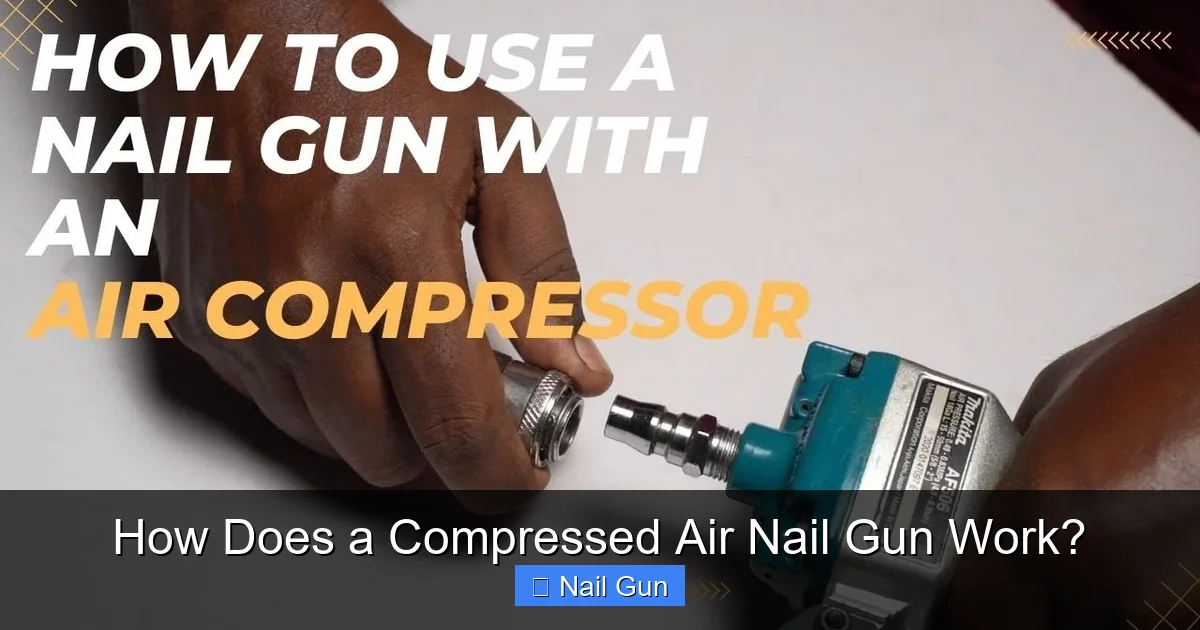
Visual guide about How Does a Compressed Air Nail Gun Work?
Image source: i.ytimg.com
Let’s break down the process of how a compressed air nail gun works, step by step.
1. Air Compressor Generates Pressure
Everything starts with the air compressor. This machine sucks in ambient air and compresses it into a storage tank, building up pressure—usually between 70 and 120 PSI (pounds per square inch). The compressor is connected to the nail gun via a flexible air hose.
Tip: Always check your nail gun’s manual for the recommended PSI range. Too little pressure won’t drive nails properly; too much can damage the tool or material.
2. Air Travels Through the Hose
When you press the trigger, a valve opens, allowing compressed air to flow from the tank through the hose and into the nail gun. The air enters the tool’s air chamber, where it builds up behind a piston.
3. The Piston Is Activated
Inside the nail gun is a cylindrical chamber containing a piston—a movable metal rod. When enough air pressure accumulates behind the piston, it overcomes the resistance of a return spring and rapidly moves forward.
This sudden forward motion is what creates the driving force. The piston strikes a driver blade (also called a driver or punch), which is aligned with the nail in the magazine.
4. The Driver Blade Hits the Nail
The driver blade transfers the kinetic energy from the piston directly to the head of the nail. In a fraction of a second, the nail is forced out of the magazine and into the workpiece.
The speed and force depend on the air pressure and the design of the tool. Most pneumatic nail guns can drive nails in under 0.1 seconds—much faster than any human could with a hammer.
5. The Piston Resets
After the nail is fired, the air valve closes, and the pressure behind the piston drops. A return spring (or sometimes reverse air pressure) pushes the piston back to its original position, ready for the next shot.
Meanwhile, a new nail is automatically fed into place from the magazine, thanks to a spring-loaded mechanism. This allows for rapid, continuous nailing with minimal downtime.
Key Components of a Compressed Air Nail Gun
Understanding the parts of your nail gun helps you maintain it and troubleshoot issues. Here are the main components:
Air Inlet
This is where the air hose connects to the tool. It regulates the flow of compressed air into the nail gun. A filter or regulator is often attached here to ensure clean, consistent air pressure.
Trigger Mechanism
The trigger controls when the nail is fired. There are two main types:
- Sequential Trigger: Requires you to press the nose of the tool against the workpiece first, then pull the trigger. This is the safest option and often required on job sites.
- Contact Trigger: Allows you to hold the trigger and “bump” the nose against the material to fire rapidly. Faster but riskier if not used carefully.
Piston and Driver Blade
As explained earlier, the piston converts air pressure into mechanical force. The driver blade is the part that actually hits the nail. Both are made of hardened steel to withstand repeated impacts.
Magazine
This is the compartment that holds a strip or coil of nails. It uses a spring to push nails forward as each one is fired. Magazines vary in capacity—some hold 50 nails, others over 100.
Exhaust Port
After the piston fires, the used air is released through an exhaust port, usually located near the handle. Some models allow you to adjust the direction of the exhaust to keep debris away from your face.
Safety Tips When Using a Compressed Air Nail Gun
Pneumatic nail guns are powerful tools and can cause serious injury if misused. Follow these safety guidelines:
- Always wear safety goggles and hearing protection. Nails can ricochet, and the firing sound is loud.
- Keep your hands and body away from the firing area. Never point the gun at anyone, even if it’s not connected to air.
- Disconnect the air hose when loading nails or performing maintenance. This prevents accidental firing.
- Use the correct PSI setting. Too much pressure can cause nails to split wood or bounce back.
- Inspect the tool before each use. Look for leaks, loose parts, or worn components.
Maintenance and Care
A well-maintained nail gun lasts longer and performs better. Here’s how to keep yours in top shape:
Clean After Each Use
Dust, wood chips, and debris can clog the mechanism. Use a can of compressed air to blow out the magazine, nosepiece, and exhaust port.
Lubricate Moving Parts
Most pneumatic nail guns require regular lubrication. Add a few drops of pneumatic tool oil into the air inlet before each use. This keeps the piston and seals moving smoothly.
Tip: Use only oil designed for pneumatic tools. Motor oil or WD-40 can damage internal seals.
Check the Air Filter
A dirty air filter reduces performance and can damage the compressor. Clean or replace it according to the manufacturer’s instructions.
Store Properly
Keep your nail gun in a dry, clean place. Avoid extreme temperatures, which can affect seals and lubrication.
Troubleshooting Common Problems
Even the best tools can have issues. Here’s how to fix the most common problems:
Misfires or Weak Nails
- Check air pressure—too low and nails won’t drive fully.
- Ensure the compressor is large enough for the tool.
- Clean the exhaust port and magazine.
Nail Jams
- Turn off the air and open the magazine.
- Remove the jammed nail with pliers or a nail removal tool.
- Check for bent nails or debris in the feed mechanism.
Air Leaks
- Inspect the air hose for cracks or loose connections.
- Check O-rings and seals inside the tool—replace if worn.
- Ensure the air inlet is tight and not cross-threaded.
Double Firing
- This often happens with contact triggers.
- Make sure you’re not holding the trigger while bumping the tool.
- Switch to sequential mode for more control.
Choosing the Right Nail Gun for Your Project
Not all nail guns are the same. Match the tool to your task:
- Brad Nailer: For delicate trim and molding. Uses thin 18-gauge nails.
- Finish Nailer: For baseboards and cabinetry. Uses 15- or 16-gauge nails.
- Framing Nailer: For heavy-duty construction. Drives large 2- to 3.5-inch nails.
- Roofing Nailer: For shingles and roofing felt. Uses coil nails with large heads.
- Staple Gun: For upholstery or insulation. Uses staples instead of nails.
Conclusion
A compressed air nail gun works by converting the energy from pressurized air into a powerful driving force that fires nails with precision and speed. From the air compressor to the piston and driver blade, each component plays a vital role in the tool’s operation. With proper use, maintenance, and safety practices, a pneumatic nail gun can be a reliable workhorse for years.
Whether you’re building a deck, installing trim, or tackling a DIY project, understanding how your nail gun works helps you get the job done faster and safer. So the next time you pull the trigger, you’ll know exactly what’s happening inside that sleek, powerful tool.
